

 | Today's Date:



Pentagon Weighed Defense Production Act to Bring Back Nvidia CEO Huang
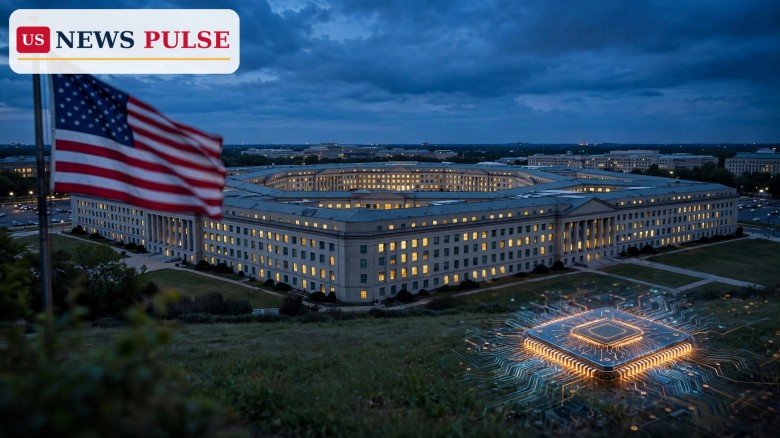
Defense Secretary Pete Hegseth and deputy Steve Feinberg discussed invoking a 1950 wartime law to pressure Nvidia's board into bringing back Jensen Huang as chief executive, the Washington Post reported Wednesday. The account, based on three people familiar with the talks who spoke on condition of anonymity, says the Pentagon leaders weighed using the Defense Production Act as leverage in the days before Huang returned to the top job on Monday morning. The Pentagon has denied the report. The disclosure adds a new chapter to a saga that has already drawn in the president, the Justice Department and Congress.
Key Points
- Hegseth and Feinberg discussed invoking the 1950 Defense Production Act to pressure Nvidia's board to reinstate Huang, the Post reported, citing three sources.
- The law lets the president direct private industry in wartime or emergencies, but not make personnel changes at a private company.
- The reported leverage: force Nvidia to shift production toward less profitable military projects.
- A Pentagon official denied it, saying no such proposal was made by the secretary, deputy secretary or under secretary.
- Huang returned as Nvidia chief on Monday, after Trump and Vance pressed the board.
What Happened
The discussions took place over the weekend before Huang's return, the Post reported at 22:54 UTC on Wednesday, November 25. The idea circulated first among Silicon Valley technology leaders, then reached the Pentagon and the White House, reflecting how important the administration views Nvidia and Huang to national security and the AI race with China. It is unclear whether the idea was ever presented to Nvidia. A Trump administration official told the Post how the leverage would have worked: "Essentially they could use the DPA to force Nvidia to shift more of its production to military projects." The Pentagon's response was an unqualified denial. An official told the Post: "The conversations described between DOW senior leaders never happened and no such proposal was made by the Secretary, Deputy Secretary, or Under Secretary." The White House referred questions to the Pentagon.
Background: The Huang Saga So Far
Huang resigned on November 12 after reports that he had an affair with Alice Huang, a former executive at Megaspeed International, a major Nvidia customer suspected of links to China's Ministry of State Security. Megaspeed is accused of smuggling Nvidia chips to China, and Commerce added it and six others to its Entity List on November 23. Trump intervened personally, and Vance secured assurances for Nvidia's directors that the administration did not consider Huang a national security threat. Trump has backed calls for his reinstatement, while Nvidia's board ruled out his return. Reuters reported on Tuesday that the Justice Department never formally investigated Huang before Trump pushed for his return, and that Attorney General Todd Blanche concluded there was no evidence he had broken any laws. Officials told Congress on Tuesday there was no evidence China directed Alice Huang to spy on the Nvidia chief, the Wall Street Journal reported. Trump has played down concerns, saying: "Nobody's proven that she's a spy. She may not be a spy." S&P put Nvidia's AA rating on CreditWatch Negative, and shares fell 3.9 percent to $149.30 after Monday's 31.5 percent rally. Huang is due to testify before the Senate Banking Committee on December 3.
The Defense Production Act: What the Law Can and Cannot Do
The Defense Production Act was passed in 1950, in the early years of the Cold War, and grants the president broad authority to intervene in the economy and mobilise private industry for military production during wartime or national emergencies. It lets the government prioritise essential materials, and it has often been used outside wartime. Trump invoked it in his first term for Covid-19 health supplies and to prompt General Motors to make ventilators. Biden used it for fire hoses in 2021 and baby formula in 2022. What the Pentagon reportedly considered was different: using the law as leverage to pressure a board over who runs the company. The statute does not allow the president to change personnel at a private company. The threat was economic: force Nvidia toward less profitable military work, at a cost to commercial profits.
Reactions
The Pentagon's denial was categorical, rejecting the proposal and the talks themselves. Trump has been open about his own role, saying he intervened because picking the wrong person to replace Huang "would be a terrible thing for our country in many ways", and he has said he would consider pardoning Huang if necessary. He has urged Huang to "tell the truth" to Congress before House and Senate hearings on December 1 and 3. The reinstatement has angered members of Congress in both parties. Senate Democratic leader Chuck Schumer has accused Huang of shipping "extremely advanced chips to China, violating US export control law", while Republican Senator Kevin Cramer has said "we might even have to put a babysitter on Jensen Huang". Beijing has denied any Chinese plot to spy on Huang, and Nvidia says its investigation is in its early stages.
Why It Matters
Even as an idea only discussed, the reported plan matters because it shows how far the administration was prepared to consider going to keep one executive in place at one company. Nvidia makes the chips that power the world's most advanced artificial intelligence systems, and the government views its technology as central to the contest with China. Using an emergency economic power to influence who runs such a company would set a precedent reaching well beyond Nvidia, blurring the line between national security and corporate governance. Boards answer to shareholders, not the Pentagon, and investors have begun pricing in the governance risk S&P cites: long board tenure, key-man risk, no succession plan.
What Happens Next
Huang faces a closed-door briefing on December 1 with three House committees, followed by a Senate Banking Committee hearing on December 3 titled "Protecting America's AI Advantage: Oversight of U.S. Export Controls". Lawmakers are expected to press Huang and officials on his return, and the Defense Production Act report is now likely to feature in that questioning. S&P has said its review of Nvidia's AA rating will conclude within 90 days.
Frequently Asked Questions
What is the Defense Production Act? A 1950 law giving the president broad authority to direct private industry in wartime or emergencies, including prioritising essential production.
Did the Pentagon use the law against Nvidia? No. The Post says it was discussed as leverage; the Pentagon denies it, and it is unclear whether the idea reached Nvidia.
Why did the administration reportedly want Huang back? It views Nvidia and Huang as vital to US national security and the AI race with China.
What happened to Jensen Huang? He resigned on November 12 amid reports of an affair with a former Megaspeed executive, and was reinstated on November 23 after Trump and Vance pressed the board.
What happens next? Huang testifies before three House committees on December 1 and the Senate on December 3.
Related coverage: No Evidence China Directed Alice Huang to Spy on Nvidia CEO, US Officials Say; DOJ Never Investigated Jensen Huang Before Trump Pushed His Nvidia Return, Reuters Finds; S&P Puts Nvidia's AA Credit Rating on Downgrade Watch Over Governance Failures.

The US News Pulse newsroom covers breaking news across the United States and the world, working from wire services, official statements and on-the-record sources. Every story is reviewed against our editorial standards before publication. Corrections and tips: info@usnewspulse.com
About our newsroomLeave a Comment