
Venezuela Oil Revenue: Secret KPMG Report Shows US Took $12 Billion in Nine Months
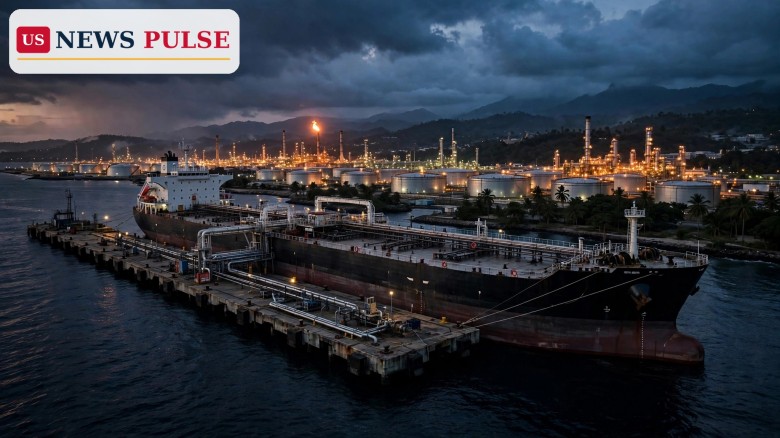
The United States took in more than $12 billion from Venezuela's oil exports in the first nine months of 2026 — and a confidential report by the global accounting firm KPMG cannot say where much of it ended up. The Venezuela oil revenue figures, reported by The New York Times on Tuesday, November 10, 2026, are the most detailed account yet of Washington's financial control over Venezuela since Maduro was toppled in January. They also raise an awkward question: if the money was meant to help the Venezuelan people, why can no one trace where it went?
Key Points
- A confidential KPMG report shows the US government received and disbursed more than $12 billion from Venezuela's natural resource exports in nine months.
- The money flowed through a US Treasury-run "Venezuela Custody Account", which took in $12.26 billion from January 3 to September 30, 2026, and held only about $170 million.
- Most of it — $11.7 billion — went back to Venezuela to prop up the bolivar through foreign-currency auctions run by commercial banks.
- The report does not establish whether the money stayed in Venezuela or who received it, and it does not cover all of Venezuela's export revenues.
- The figures fall well short of a proper audit, despite a State Department promise of quarterly KPMG audits — none made public.
What Happened
The New York Times reported on Tuesday that it had reviewed a confidential KPMG report on the "Venezuela Custody Account", set up by the US Treasury to manage revenues from Venezuela's natural resource exports. The account received $12.26 billion between January 3, 2026 — the date of the intervention that removed Maduro — and September 30, 2026. By the end of that period, it held a balance of only about $170 million.
Most of the money had been sent back to Venezuela. According to the report, $11.7 billion of it was used to support the bolivar through foreign-currency auctions held by the country's commercial banks. Sintesis Financiera puts such spending at $12.3 billion in the same period. But the report does not establish whether the money stayed in Venezuela, or who the ultimate recipients were.
Background and Context
The custody account was created after US forces ousted Maduro in January 2026, giving Washington direct control over Venezuela's oil and natural resource revenues — the country's main income. It was presented as temporary stewardship: Washington would hold the money for the benefit of the Venezuelan people.
Venezuela holds about 300 billion barrels of proven oil reserves, the largest in the world, and its crude suits Gulf Coast refineries built to process exactly that heavy oil. The State Department promised Congress that KPMG would conduct quarterly audits of the account. No audit has been released, and the report reviewed by the Times is not an audit at all, but a narrower review of the money that passed through the account.
Venezuela Oil Revenue: Where the Money Went
The central finding is the scale. In nine months, $12.26 billion entered the custody account and almost all of it left again. The $11.7 billion channelled into bolivar-support auctions was meant to steady Venezuela's currency and tame the inflation that has wrecked household incomes for years. Central banks sell dollars to commercial banks, which pass them to businesses and importers.
But auctions are also a known channel for leakage where oversight is weak. Dollars sold at an official rate can be resold at a profit, diverted to favoured buyers, or simply disappear into networks that are hard to trace. The KPMG report does not track the money past the auctions: it cannot say how much reached ordinary Venezuelans. That gap matters because $12 billion in nine months is roughly $44 million a day.
Reactions and Quotes
The report only became public because the Times obtained it. The administration had not released it, and the State Department has published none of the promised quarterly audits. In a letter dated September 21, 2026, Representatives Joaquin Castro, Gregory Meeks and Ami Bera demanded that the results of the KPMG work be released. The report stayed confidential until the Times reported on it in November. The figures also sit uneasily with the administration's account: President Donald Trump has claimed the oil revenue covered the cost of the operation. The KPMG numbers do not support that claim: the money was overwhelmingly sent back to Venezuela, not retained by the United States.
Why It Matters
This story matters for three reasons. First, accountability: when a government takes control of another country's oil money, the public in both countries has a right to know where it goes. A report that cannot trace $12 billion is a failure of the stewardship the arrangement was supposed to guarantee. Second, it matters for Venezuelans. The economy was destroyed long before the intervention, and millions have fled. If billions went to auctions with unidentified beneficiaries, the recovery may enrich the wrong people while ordinary Venezuelans see little change.
Third, it matters for the credibility of the Venezuela policy. The administration has urged US oil companies to invest about $100 billion to revive the energy sector, and ExxonMobil signed a memorandum with Venezuela and PDVSA on November 9 to evaluate a return. Investors and Congress will want clean handling of the money already flowing through Washington's hands.
What Happens Next
Pressure for disclosure is likely to grow. The House Democrats who demanded the audit results in September now have confirmation that a KPMG report exists, and they are likely to renew their demand that it — and the promised quarterly audits — be made public. With Democrats set to take control of Congress in January after the November 3 midterms, their oversight tools will get considerably sharper. The State Department will also face questions about the audits it promised and never published. For now, the KPMG report leaves the central question open: the United States collected $12.26 billion of Venezuela's oil money in nine months, and no one can yet say where it ended up.
Frequently Asked Questions
How much money did the US take in from Venezuela's oil exports? The KPMG report shows $12.26 billion deposited into the Treasury-run "Venezuela Custody Account" from January 3 to September 30, 2026.
Where did the money go? Most of it — $11.7 billion — went back to Venezuela to support the bolivar through currency auctions. Who ultimately received it is unknown.
What is the Venezuela Custody Account? An account set up by the US Treasury after the January 2026 intervention to manage Venezuela's natural resource export revenues.
Was the KPMG report a full audit? No. It falls well short of a proper audit, despite the State Department's promise of quarterly KPMG audits — none made public.
Did the oil money pay for the US military intervention? President Donald Trump has claimed so, but the figures cast doubt on it: the money was overwhelmingly returned to Venezuela.
Read more on US News Pulse: ExxonMobil Signs Venezuela Deal in First Step Back After Nearly 20 Years, Venezuela Oil Deal: Pentagon Takes 35% Stake in Biggest Oil Deal in History and Venezuelan Oil Arrives in Texas as First NABEP Cargo Goes to Exxon and Citgo.
© 2026 US News Pulse. All rights reserved.
 Print
 Save