


 | Today's Date:

ExxonMobil Signs Venezuela Deal in First Step Back After Nearly 20 Years
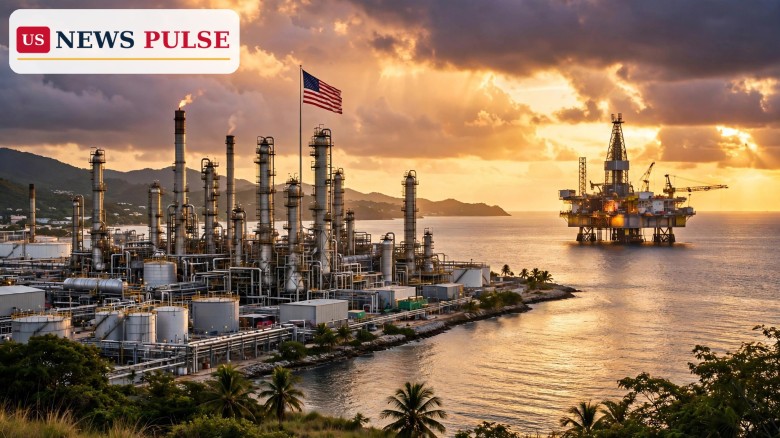
ExxonMobil has signed a deal with Venezuela to evaluate a return to the country nearly two decades after it was forced out, in the first formal step back into the world's largest oil reserves. The ExxonMobil Venezuela deal, a non-binding memorandum of understanding signed on Monday, November 9, 2026, with the Venezuelan government and state oil company PDVSA, opens the door to investment — but Exxon made clear that no money will flow until Caracas offers the legal and commercial protections it has demanded.
Key Points
- ExxonMobil signed a non-binding memorandum of understanding on Monday, November 9, 2026, with Venezuela's government and PDVSA to evaluate upstream oil opportunities.
- The deal is Exxon's first formal step toward returning to Venezuela nearly 20 years after its exit, but it commits the company to nothing yet.
- Exxon said any future investment would require stable policies, clear regulations, strong investment protections and competitive returns.
- The company did not say which fields it is evaluating, and a final joint-venture or production-sharing contract would still be needed.
- The move follows President Donald Trump's push for US oil companies to invest about $100 billion to revive Venezuela's energy sector after the ouster of President Nicolas Maduro in January 2026.
What Happened
ExxonMobil announced the agreement in a brief 38-word statement on Monday, saying it had signed a memorandum of understanding with the Venezuelan government and PDVSA to evaluate potential upstream oil opportunities. The company gave no detail about which fields or projects it is considering, and it did not set a timetable for any decision.
A spokesman stressed that the document is only a first step. Any future investment, he said, would require stable policies, clear regulations, strong investment protections and competitive returns, and a final joint-venture or production-sharing contract would still have to be negotiated. The deal comes ten months after the US ousted President Nicolas Maduro in January 2026, and follows President Donald Trump's push for American oil companies to invest about $100 billion to revive Venezuela's energy sector.
Background and Context
Exxon has a long and bruising history in Venezuela. Its assets were nationalised there twice in the last 50 years, and after the second seizure it won a $1.6 billion award from the World Bank's ICSID tribunal in 2014.
As recently as January 2026, Exxon chief executive Darren Woods sat in a White House meeting and called Venezuela "uninvestable" without major changes to its commercial frameworks, legal system and hydrocarbon laws. The memorandum does not resolve those concerns — it gives Exxon a framework to test whether they can be.
The prize, if the terms can be agreed, is enormous. Venezuela holds about 300 billion barrels of proven oil reserves, the largest in the world according to OPEC. But its industry has collapsed after years of underinvestment, sanctions and mismanagement: production that once exceeded three million barrels a day has fallen to a fraction of that, and its refineries, pipelines and ports need rebuilding.
ExxonMobil Venezuela Deal: What It Means for US Oil
The ExxonMobil Venezuela deal matters because Exxon is the company whose participation would make the American return to Venezuela real. Chevron's $7 billion commitment showed the door was open; Exxon's signature, even on a non-binding document, signals that the industry's biggest and most risk-averse player now believes the opportunity is worth a serious look.
For the Trump administration, the agreement is a political win: the president has presented the revival of Venezuela's oil sector as a central part of his policy since Maduro's removal. For investors, the deal is a test of whether the numbers can work. Venezuela's extra-heavy crude is expensive to produce and refine, and its legal framework for foreign oil companies remains untested. Exxon's demand for competitive returns means it will walk away if the fiscal terms are not right.
Reactions and Quotes
Exxon's own statement was deliberately spare — 38 words announcing the memorandum and nothing more. The company's spokesman added the conditions that will decide whether the deal goes any further: "stable policies, clear regulations, strong investment protections and competitive returns."
The contrast with January is striking. At the White House meeting that month, Woods called Venezuela "uninvestable" without major changes to its commercial frameworks, legal system and hydrocarbon laws. Ten months later, the company has taken its first step back — a sign that Caracas, under pressure from Washington, has at least begun to offer the kind of terms Exxon wants to hear about. Trump has repeatedly urged US oil companies to invest about $100 billion in Venezuela; Exxon's memorandum is the biggest endorsement of that strategy yet.
Why It Matters
Venezuela's oil matters to the United States for reasons that go beyond barrels. The country sits on the largest proven reserves on earth, and its crude is close to American refineries on the Gulf Coast that were built to process exactly the heavy oil Venezuela produces. It also matters geopolitically: for years, Venezuela's oil flowed to China and Russia, which lent Caracas money and took crude in return. An American-led revival would shift that balance, bringing Venezuela's energy trade back into the Western orbit.
For Venezuelans, whose economy the oil collapse destroyed and millions of whom have left, a genuine revival could fund rebuilding hospitals, schools and power grids — if revenues are managed honestly.
What Happens Next
The two sides will now begin the detailed evaluation the memorandum allows: technical studies of fields, reviews of the legal framework, and negotiations over the fiscal terms that would govern any joint venture or production-sharing contract. There is no deadline in the agreement.
The key test will be whether Caracas is willing to change its hydrocarbon laws and offer the investment protections Exxon has demanded. If the terms are not right, Exxon can walk away having spent little more than the cost of the studies. If it reaches a final agreement, it will set the template for the rest of the industry — and confirm that Venezuela, after two decades as a cautionary tale for foreign investors, is open for business again.
Frequently Asked Questions
What did ExxonMobil sign with Venezuela? A non-binding memorandum of understanding with the Venezuelan government and PDVSA, signed Monday, November 9, 2026, to evaluate upstream oil opportunities.
Is ExxonMobil investing in Venezuela now? Not yet — the memorandum commits Exxon to nothing, and any investment would still need a final joint-venture or production-sharing contract.
Why did Exxon leave Venezuela? Its assets were nationalised twice in the last 50 years. After the second seizure, Exxon won a $1.6 billion arbitration award from the World Bank's ICSID tribunal in 2014.
How much oil does Venezuela have? About 300 billion barrels, the largest proven reserves in the world, according to OPEC.
What is President Trump asking US oil companies to do? About $100 billion to revive the sector after Maduro's ouster in January 2026. Chevron agreed earlier this year to invest $7 billion.
Read more on US News Pulse: Venezuela Oil Deal: Pentagon Takes 35% Stake in Biggest Oil Deal in History, Venezuelan Oil Arrives in Texas as First NABEP Cargo Goes to Exxon and Citgo and Chevron Q3 Earnings Beat Wall Street Estimates as Refining Margins Soar.
Leave a Comment