
Slavyansk Refinery Drone Strike Sets Oil Plant Ablaze in Krasnodar Region
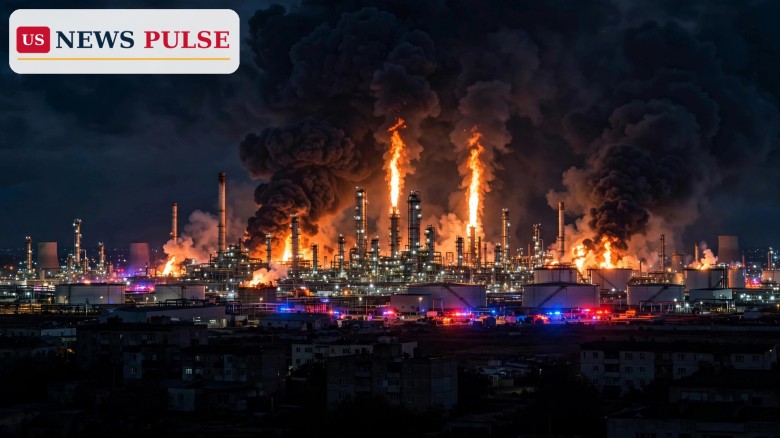
A Ukrainian drone strike set the Slavyansk ECO oil refinery ablaze in Russia's southern Krasnodar region in the early hours of Thursday, November 26, 2026, seriously damaging its main distillation unit and injuring four people. The Slavyansk refinery drone strike hit a plant already shut for repairs after a Ukrainian attack in September, and it was part of a wider overnight operation that also hit an oil pumping station in Bashkortostan, an airfield in Volgograd region and another refinery in Samara. Russia's Defence Ministry said its air defences intercepted 343 Ukrainian drones overnight, a claim that underlines the scale of the operation even as the fire burned at Slavyansk-on-Kuban.
Key Points
- Ukrainian military-intelligence drones struck the Slavyansk ECO refinery in Slavyansk-on-Kuban, Krasnodar Krai, early on Thursday, November 26, 2026, starting a fire.
- The operator said the atmospheric crude distillation unit was seriously damaged, heavy-product storage destroyed, tanks punctured and pipelines damaged, with an oil spill reported.
- Four people were injured in the attack on the Slavyansk district, two hospitalised, and apartment blocks and houses were damaged, the regional headquarters said.
- The refinery, annual capacity 5.2 million metric tons of crude, had been shut since a Ukrainian strike in September, when firefighters battled the blaze for five days.
- The strike was part of a wider overnight operation that also hit the Transneft Subkhankulovo oil station in Bashkortostan, the Marinovka airfield in Volgograd Oblast and the Kuibyshev refinery in Samara.
What Happened
The attack came in the early hours of Thursday, when long-range drones operated by Ukraine's military intelligence service, the DIU, reached the Slavyansk ECO refinery in Slavyansk-on-Kuban, a town in Krasnodar Krai in Russia's south. A fire broke out, and the operator reported serious damage across several parts of the plant. The atmospheric crude distillation unit, the core unit that separates crude oil into its usable fractions, was seriously damaged, and storage facilities for heavy petroleum products were destroyed.
Oil storage tanks were punctured, pipelines carrying heavy products and gasoline fractions were damaged, and the operator reported an oil spill. Four people were injured in the attack on the Slavyansk district, two of them taken to hospital, according to the Krasnodar regional operational headquarters, and apartment blocks and houses were also damaged. No deaths were reported.
Background: Ukraine's Refinery Campaign
Ukraine has intensified its attacks on Russian oil refineries since late October, after an energy truce declared by President Donald Trump in mid-October failed to hold. The campaign has become one of the most sustained elements of Kyiv's long-range war effort, with drones reaching deep into Russian territory night after night to hit the plants that turn crude oil into the fuel Russia's military and economy depend on.
The damage is now showing up in industry figures. Two industry sources cited by Reuters estimate Ukrainian drone attacks have cut Russian refineries' combined crude processing volumes by 45 percent since late October, a sharp fall in a matter of weeks. Slavyansk ECO illustrates the pattern: shut since the September strike, it was under repair when Thursday's drones destroyed equipment that was being restored, pushing any restart further into the future.
Slavyansk Refinery Drone Strike: Damage to a Key Fuel Supplier
The plant matters because of what it supplies. Slavyansk ECO has an annual capacity of 5.2 million metric tons of crude, about 9 percent of the refining capacity of Russia's Southern Federal District, and it is a key fuel supplier for Russian-occupied Crimea. Its loss tightens supply to a peninsula that already depends on a narrow set of routes for its energy.
The damage points to a long repair. A damaged atmospheric distillation unit cannot simply be patched and restarted; it is the first and most important stage of refining, and without it the plant cannot process crude at all. The strike also fits a pattern of hitting the same plants more than once, delaying restarts and consuming repair crews and spare parts.
Reactions
The operator reported the damage itself, saying on the Max messaging app that the atmospheric crude oil distillation unit had sustained significant damage and that storage and pipeline facilities had been hit. The company's account, carried by Reuters, is the fullest public description of the damage so far.
The Krasnodar regional headquarters confirmed four people injured, two hospitalised, and damage to homes. Russia's Defence Ministry said 343 Ukrainian drones were intercepted overnight, a figure that, if accurate, points to one of the largest Ukrainian drone operations of the war. Kyiv has previously said it will stop striking Russian energy targets only when Moscow does the same.
Why It Matters
The strike shows the refinery campaign is not slowing down, even against plants already offline. A 45 percent fall in combined crude processing volumes since late October is a serious blow to Russia's fuel supply, and every additional month a plant like Slavyansk stays shut deepens the shortfall, raising costs and complicating logistics.
The Crimea angle adds significance, since Slavyansk is a key fuel supplier for the occupied peninsula. The wider overnight operation matters too: strikes in one night on a pumping station in Bashkortostan, an airfield in Volgograd region and a refinery in Samara show Ukraine can hit targets across a vast area in a single wave, straining Russian air defences.
What Happens Next
The immediate question is how long Slavyansk ECO stays offline. The operator has given no timeline, and the damage to the distillation unit suggests the restart will be measured in months rather than weeks, especially if spare parts and specialist crews are short.
Attention will turn to whether Ukraine keeps up the pace, and to whether Russia can harden refineries already hit more than once. The broader energy war will shape the winter: Russia keeps attacking Ukraine's power grid, and Ukraine answers with strikes on Russian fuel, with neither side showing any sign of stepping back.
Frequently Asked Questions
What happened at the Slavyansk refinery?
Ukrainian long-range drones struck the Slavyansk ECO refinery in Slavyansk-on-Kuban, Krasnodar Krai, early on Thursday, November 26, 2026, starting a fire and seriously damaging its atmospheric crude distillation unit.
Was anyone hurt in the attack?
Four people were injured, two hospitalised, the Krasnodar regional headquarters said. Apartment blocks and houses were also damaged.
Was the refinery operating when it was hit?
No. It had been shut since a Ukrainian drone strike in September, when firefighters battled the blaze for five days, and was under repair.
Why is the Slavyansk refinery important?
It has an annual capacity of 5.2 million metric tons of crude, about 9 percent of the Southern Federal District's capacity, and is a key fuel supplier for Russian-occupied Crimea.
How much have Ukraine's refinery strikes cut Russian processing?
Industry sources estimate a 45 percent cut since late October, after an energy truce declared by President Donald Trump in mid-October failed to hold.
Related coverage: Ukraine Strikes Savasleyka Airbase Deep in Russia, Damaging Five Warplanes | US Approves $622 Million F-16 Sustainment Sale for Ukraine, Allies Pay | North Korea Halts Missile Shipments to Russia After Rift, Ukraine Says
© 2026 US News Pulse. All rights reserved.
 Print
 Save