

 | Today's Date:



Alaska Seaplane Case Reaches Supreme Court Over $95,000 Plane Seized for Beer
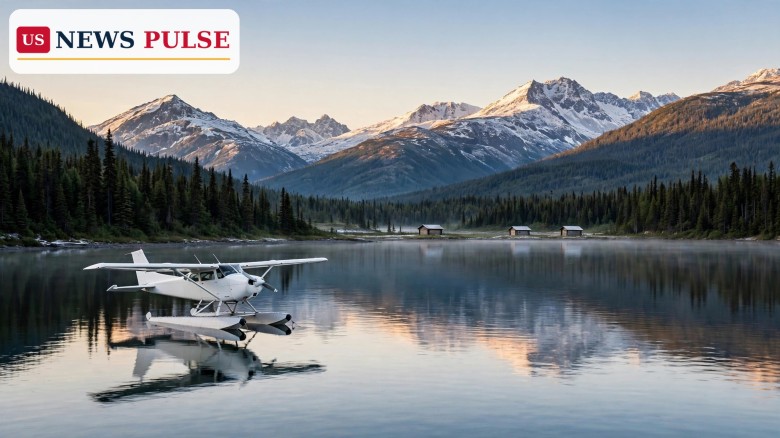
An 82-year-old Alaska bush pilot will ask the US Supreme Court on Tuesday to give him back the aeroplane the state took from him more than 14 years ago — a 1969 Cessna seaplane worth $95,000, seized because a passenger packed 72 cans of beer into her luggage for a flight to a village that bans alcohol. The Alaska seaplane case, Jouppi v. Alaska, asks the justices to decide when the government goes too far in taking a person's property as punishment.
Key Points
- The Supreme Court will hear oral arguments on Tuesday, December 1, 2026, in Jouppi v. Alaska.
- Alaska seized Ken Jouppi's 1969 Cessna in 2012 after troopers found 72 cans of beer in a passenger's luggage before a flight to Beaver, a dry village of about 50 people.
- A jury convicted Jouppi of a Class A misdemeanor; he served three days in jail and paid a $1,500 fine, but the state kept his plane.
- The Alaska Supreme Court upheld the forfeiture in April 2025; Jouppi says it violates the Eighth Amendment's ban on excessive fines.
What Happened
Ken Jouppi ran an air-taxi service in Alaska. In April 2012, he was preparing to fly a passenger and her groceries from Fairbanks to Beaver, a roadless Yukon River village whose residents had voted to ban alcohol. The passenger was travelling to celebrate her husband's birthday, and the beer was packed among her groceries.
As Jouppi loaded the plane, Alaska State Troopers searched it and found the beer in the passenger's luggage, including one six-pack visible in a plastic grocery bag. Jouppi testified that he did not know the beer was aboard. The trial judge found he had been wilfully blind to the visible six-pack. Alaska law requires forfeiture of an aircraft used in an alcohol offence, so the state took the Cessna.
A jury convicted Jouppi of a Class A misdemeanor, and he was ordered to serve three days in jail and pay $1,500. The trial judge found that taking the 1969 Cessna would be an excessive fine, but the Alaska Supreme Court upheld the forfeiture in April 2025.
Background and Context
Beaver has about 50 residents and no road to the rest of Alaska; it is reached mainly by air or by river. Like many remote communities in the state, its people voted to ban alcohol because of the damage drinking has done in small, isolated settlements, where help for addiction can be hours away by plane. There, a bush plane is a lifeline, carrying food, medicine, mail and people.
The case also sits inside a wider American debate about civil forfeiture, the power that lets law enforcement seize property linked to a crime. Police and prosecutors confiscate billions of dollars a year in cash, cars, homes and other property, often without the owner being convicted. Supporters say forfeiture takes the profit out of crime. Critics say it gives agencies a financial incentive to seize first and ask questions later.
In United States v. Bajakajian in 1998, the Supreme Court held that a punitive forfeiture violates the Eighth Amendment if it is grossly disproportionate to the offence. In Timbs v. Indiana in 2019, the court held that the Excessive Fines Clause applies to the states. Ratified in 1791, the Eighth Amendment bars excessive fines. Jouppi's case asks how that test should work in practice.
The Alaska Seaplane Case and the Excessive Fines Clause
The central question is how closely a court must look at what the defendant actually did. Jouppi's lawyers at the Institute for Justice argue that courts must weigh his own conduct. A man who did not know most of the beer was aboard, and who was at most wilfully blind to a single six-pack, should not lose a $95,000 aeroplane worth 9.5 times the maximum fine. Jouppi puts the plane's value today at about $150,000.
Alaska argues the plane was the means of the crime, and lawmakers were entitled to require forfeiture to deter illegal alcohol shipments. The Alaska Legislature's Legislative Council filed a brief urging the justices to uphold the forfeiture, and the US Solicitor General's office also backs that outcome and will argue on Tuesday.
Reactions and Quotes
Jouppi's legal team has framed the case as a test of whether the Constitution's protection against excessive fines means anything for ordinary people. "Ken isn't giving up. He's partnered with IJ to ask the U.S. Supreme Court to define what makes a fine unconstitutionally excessive," the Institute for Justice wrote. "As enforcement agencies (in the Court's own words) 'increasingly depend heavily on fines and fees as a source of general revenue,' it's critical that the Excessive Fines Clause actually protect ordinary people."
The MacArthur Justice Center, which filed an amicus brief with the Southern Poverty Law Center, stressed that the beer belonged to Jouppi's passenger. Alaska's supporters say the issue is the authority of dry villages to keep alcohol out, and the deterrent effect of a penalty that cannot be shrugged off as a cost of doing business.
Why It Matters
The ruling could guide courts nationwide on how closely they must examine an individual's conduct before the government can take property as punishment. A decision for Jouppi would give property owners a stronger defence in thousands of cases. A decision for Alaska would confirm that states may take valuable property for minor offences, so long as lawmakers have written the penalty into law. For the people of Beaver, the case is about whether their vote to ban alcohol can be enforced with real penalties. For Jouppi, it is about whether a three-day jail sentence and a $1,500 fine were the punishment, or only the beginning of it.
What Happens Next
The justices will hear arguments on Tuesday, December 1, 2026, with the US Solicitor General's office taking part on Alaska's side, and a decision is expected by the end of the court's term in summer 2027. If Jouppi wins, the case returns to the lower courts for a fresh decision on whether taking the Cessna was excessive. If Alaska wins, the forfeiture stands, and states keep broad power to seize property used in an offence.
Frequently Asked Questions
Why was Ken Jouppi's plane seized?
Troopers found 72 cans of beer in a passenger's luggage before a flight to Beaver, a village that bans alcohol.
What was Jouppi convicted of?
A jury convicted him of a Class A misdemeanor for transporting alcohol to a dry village. He served three days in jail and paid a $1,500 fine.
What is the Excessive Fines Clause?
It is part of the Eighth Amendment, which bars excessive fines. A punitive forfeiture is unconstitutional if grossly disproportionate to the offence.
What did the lower courts decide?
The trial judge found taking the plane excessive, but the Alaska Supreme Court upheld the forfeiture in April 2025.
When will the Supreme Court decide?
Arguments are set for Tuesday, December 1, 2026, and a decision is expected in summer 2027.
Related coverage: Supreme Court to Hear First-Ever AR-15 Ban Challenge in Landmark Gun Case; Trump Approves $50 Billion Alaska LNG Pipeline to Export US Gas to Asia; 50 FBI Agents Probe Peltola Alaska Win in Decoy Dan Case.

The US News Pulse newsroom covers breaking news across the United States and the world, working from wire services, official statements and on-the-record sources. Every story is reviewed against our editorial standards before publication. Corrections and tips: info@usnewspulse.com
About our newsroomLeave a Comment