

 | Today's Date:


Pentagon UFO Files Reveal Skinwalker Ranch Vault Plan for 'Exotic Material'

The Pentagon released its eighth batch of UFO files on Friday, November 20, 2026, adding about 40 documents and three military videos to its public archive of unidentified aerial phenomena. At its centre is the first government acknowledgement of a 538-page report describing plans for a buried vault to store "exotic material or tissue". The batch also includes a 20-second infrared video of a white-hot object crossing the bow of a US warship in the Middle East, which analysts still cannot explain. The release takes the archive past 500 records.
Key Points
- Eighth UAP batch (Nov 20, 2026): about 40 documents and three videos; archive now past 500 records.
- First government acknowledgement of the 538-page BAASS "Ten Month Report" (July 2009).
- The report plans a 5,000-square-foot vault at Bigelow Aerospace, North Las Vegas, buried 15–20 feet deep, for "exotic material or tissue".
- Video DOW-UAP-PR166, from 2020, shows a white-hot object crossing a warship's bow; two more videos, from 2023 and 2026, are also unresolved.
- Also included: six CIA documents from 1952, Air Force reports from the 1950s, and a 1953 Kelly Johnson report.
What Happened
The Department of War published the new material on Friday under its PURSUE transparency initiative, which releases the Pentagon's archive of unidentified aerial phenomena, or UAP. The archive opened in May 2026 and now covers seven decades of sightings, investigations and internal studies.
All three videos come from US Central Command. The best known, DOW-UAP-PR166, is a 20-second infrared clip from 2020 showing a small white-hot object crossing the bow of a warship in the Middle East. The other two, from 2023 and 2026, are also unresolved: the objects have not been identified as aircraft, drones, balloons or any other known craft.
Background: The Programme Behind the Files
AAWSAP, the Advanced Aerospace Weapon System Applications Program, was a $22 million Pentagon programme that ran from 2008 to 2010. It was run by Bigelow Aerospace Advanced Space Studies, founded by entrepreneur Robert Bigelow, and it investigated reports of unidentified aerial phenomena, including at Skinwalker Ranch, the remote Utah property long linked to claims of strange activity.
The programme's work was largely secret for years. Its existence first became public in 2017, when reports revealed that the Pentagon had funded research into UFOs, and the files have been emerging in stages ever since. The PURSUE initiative is the latest phase of that disclosure, publishing the documents and videos in batches, which is why each release draws fresh attention to material that is, in some cases, decades old.
The older documents reach further back: six CIA documents from 1952, the year of the Washington flyovers that prompted Project Blue Book; Air Force encounter reports from the 1950s onward; a 2023 radar presentation logging eight detections over 84 seconds at 55,000 to 70,000 feet; and the first complete copy of a 1953 report by Clarence "Kelly" Johnson, the Lockheed engineer behind the U-2 and SR-71, who recorded his own encounter with an unidentified object.
Pentagon UFO Files: What the BAASS Report Says
The "Ten Month Report" runs to 538 pages, covering the first ten months of the BAASS contract. Researchers have sought it for years; until now its contents were known only through fragments, leaks and second-hand accounts. The government has now confirmed it exists and released it as part of the public record.
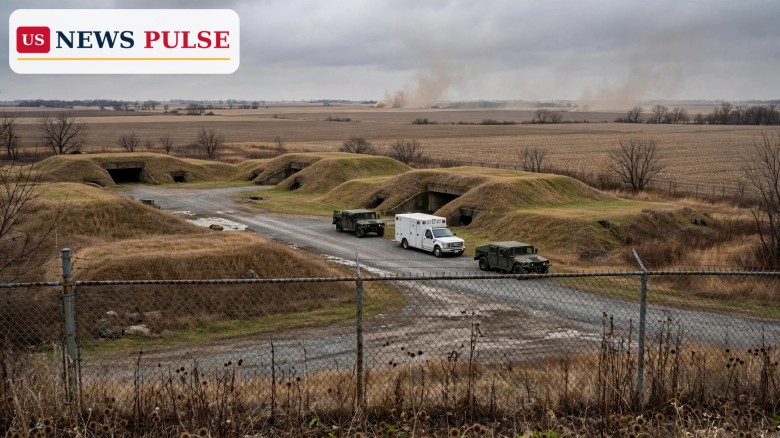
The report describes a plan for a 5,000-square-foot vault at Bigelow Aerospace in North Las Vegas, buried 15 to 20 feet deep, with three-foot-thick concrete walls, floor and ceiling. It was to hold "exotic material or tissue" the contractor hoped to acquire from firms, individuals and groups overseas, including in Brazil. The government says no record exists that the vault was built or that any material was acquired.
The vault plan draws the most attention, but the report also records the programme's field work and witness interviews. What it does not do is answer the central question: it describes material the contractor hoped to obtain, not material it obtained. That is the difference between a disclosure that changes the debate and a historical curiosity.
Reactions
The Pentagon's position on the vault is plain: no record exists that it was built or that any exotic material was acquired. That matches earlier batches: the department releases the documents while stressing none of them proves the objects were extraterrestrial or that recovered material exists in government hands.
UFO researchers welcomed the release but note the key questions remain open. The three CENTCOM videos show real objects, recorded by military sensors, that Pentagon analysts could not identify. For researchers, such cases are why the archive matters. For sceptics, "unidentified" describes the limits of the data, not proof of an extraordinary explanation. The previous batch, published in October, led President Donald Trump to say a UFO had passed an F-22 at three times its speed and to vow a fresh investigation.
Why It Matters
The eighth batch matters for two reasons. First, it confirms, in the government's own records, that a Pentagon contractor drew up detailed plans to store material it described as exotic — a fact that will fuel both serious research and speculation, and that shows how far the AAWSAP programme's ambitions went. Second, it adds three more unresolved military videos to the public record, at a time when the Pentagon itself says it cannot explain what its sensors recorded. The release also tests the limits of transparency: the PURSUE initiative has now published more than 500 records, yet the most eagerly awaited questions — what the objects are, and whether any physical material was ever recovered — remain unanswered.
What Happens Next
Further batches are expected as PURSUE works through the archive, and researchers will now comb the 538-page BAASS report for details beyond the vault plan. Congress is likely to ask whether other AAWSAP reports remain unpublished and whether the government holds any record of recovered material. Outside analysts will examine the CENTCOM videos frame by frame. For now, the files are public, the vault remains a plan on paper, and the objects remain unidentified.
Frequently Asked Questions
What is in the Pentagon's eighth batch of UFO files?
About 40 documents and three videos, headlined by the 538-page BAASS "Ten Month Report" (July 2009) and six CIA documents from 1952.
What was the Skinwalker Ranch vault plan?
A planned 5,000-square-foot vault at Bigelow Aerospace, North Las Vegas, buried 15–20 feet deep in three-foot-thick concrete, to store "exotic material or tissue". The government says it was never built.
What does the warship video show?
A 20-second infrared clip from 2020, DOW-UAP-PR166, of a white-hot object crossing a US warship's bow. It remains unresolved, as do two CENTCOM videos from 2023 and 2026.
What was AAWSAP?
A $22 million Pentagon programme (2008–2010) run by Bigelow Aerospace Advanced Space Studies, investigating unidentified aerial phenomena, including at Skinwalker Ranch.
How many records has the Pentagon released?
More than 500 records, after this eighth batch, in an archive opened in May 2026.
Read more on US News Pulse: Trump Says UFO Passed an F-22 at Three Times Its Speed, Vows to Investigate, Antarctic Ozone Hole Largest in a Decade, NASA Says, But Recovery Stays on Track.

The US News Pulse newsroom covers breaking news across the United States and the world, working from wire services, official statements and on-the-record sources. Every story is reviewed against our editorial standards before publication. Corrections and tips: info@usnewspulse.com
About our newsroomLeave a Comment