


 | Today's Date:





International Students Turn Away From US and UK as Visa Rules Push Them to Asia and Europe
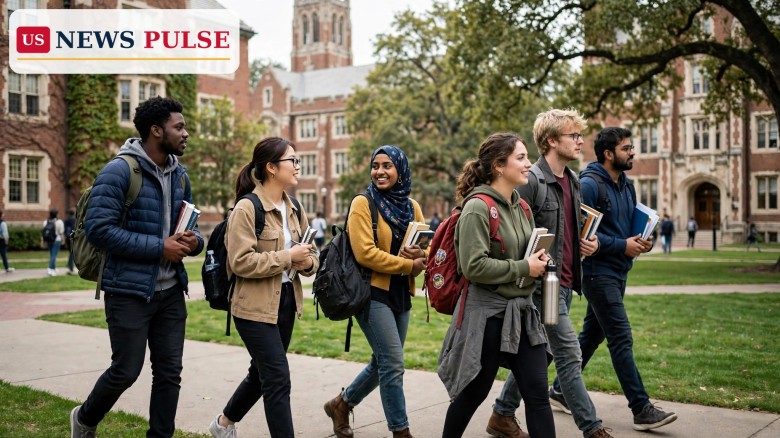
International students are turning away from the United States and Britain and choosing universities in Asia and continental Europe instead, a major global survey published on Thursday showed, as tougher visa rules redraw the map of higher education. The shift strikes at one of the biggest sources of income for American and British universities, which rely on the higher fees international students pay to help fund teaching and research.
Britain and the United States recorded the steepest falls in international undergraduate numbers, down 19% and 13% respectively in the October-to-August period compared with a year earlier, according to the survey of 437 universities in 63 countries conducted by Studyportals, NAFSA and Oxford Test of English. Visa restrictions and government policies were named as the biggest barriers to recruitment, with processing delays, tougher screening and changes to post-study work rules prompting students to defer or abandon their plans to enrol.
Key Points
- International undergraduate numbers fell 19% in Britain and 13% in the United States in the October-to-August period, the steepest drops in a survey of 437 universities in 63 countries.
- Visa restrictions and government policies were named the biggest barriers to recruitment, ahead of cost and competition from other destinations.
- More than a third of US institutions expect international enrolments to fall further in the coming years, the most pessimistic outlook in the survey.
- Universities in Asia and continental Europe reported stronger international enrolment growth as students looked elsewhere.
- The survey was conducted before the November 3 midterm elections, in which Democrats won both chambers of Congress, although the president retains executive authority over visa rules.
What Happened
The survey, published on Thursday, November 12, 2026, found that demand for places in the United States and Britain is falling at a pace not seen in other major study destinations. Canada and Australia also saw weaker demand, the survey found, while universities in Asia and Europe reported stronger international enrolment growth.
The falls were sharpest at undergraduate level. In Britain, international undergraduate numbers were down 19% in the October-to-August period compared with the same period a year earlier. In the United States, the fall was 13% over the same period. The survey pointed to visa restrictions and government policies as the main cause, with processing delays, tougher screening and changes to post-study work rules making students think twice before applying.
Background and Context
The decline in interest in American universities follows a tightening of the rules under President Donald Trump, who has expanded social media checks on international students, revoked thousands of visas and brought in tougher rules on how long students can stay in the country. The changes have made the process of getting to, and remaining in, the United States less certain for students planning years of study abroad.
Britain has tightened its own student visa rules as successive governments have sought to reduce immigration, restricting most international students from bringing dependants and planning to shorten the period graduates can remain in the country to work or seek employment. Both countries have long depended on international students, who typically pay far higher fees than domestic students and are a major source of revenue, helping to offset the cost of teaching and research.
Why International Students Are Choosing Asia and Europe
As the United States and Britain have made entry harder, universities in Asia and continental Europe have reported stronger international enrolment growth. For students weighing where to spend several years and tens of thousands of dollars, the certainty of a visa and the chance to work after graduation can matter as much as the reputation of the university.
The survey suggests that national policy now shapes student choices as directly as tuition fees or league tables. Processing delays and tougher screening create risk: a student who cannot be sure of a visa, or of being allowed to stay and work after graduating, may simply choose a country where the path is clearer. Asian and European universities have moved to fill that gap, offering English-taught programmes and clearer routes into work.
Reactions and Quotes
Dr Fanta Aw, the executive director and CEO of NAFSA, said the findings confirmed what the sector had already been seeing on the ground. "These survey results affirm what we've observed before: national policies matter to international students making major decisions about where to study, conduct research, or start a career," she said.
Why It Matters
International students are worth far more to the United States and Britain than their tuition fees alone. They support research, fill places in science and engineering programmes, and bring money into the towns and cities where they live, from housing to food to transport. A sustained fall in numbers would hit university budgets and the wider local economies around campuses.
There is also a longer-term cost. Students who study in the United States or Britain often stay to work, start companies or build research careers, and those who return home carry ties back to the country where they studied. Losing that pipeline to rival destinations in Asia and Europe would weaken both countries' influence in global research and business. The trend sits alongside a broader tightening of immigration enforcement in the United States, where ICE deported a record 483,200 people in fiscal 2026, and a White House policy machine that a CNN investigation found was quietly reshaped by outside groups, as reported in America First Legal quietly reshaped Trump policy.
What Happens Next
The survey was conducted before the November 3 midterm elections, in which Democrats won control of both chambers of Congress. That result could change the political debate around immigration, but the president retains executive authority over visa rules, so the policies that students blame for the fall are unlikely to change quickly on their own.
The next test will be the 2027 intake. If the United States and Britain ease visa processing, restore confidence in post-study work routes or signal a warmer welcome, numbers could stabilise. If not, universities in Asia and Europe are likely to keep gaining ground, and the next edition of the survey may show the gap widening further.
Frequently Asked Questions
How much did international student numbers fall in the United States?
International undergraduate numbers in the United States fell 13% in the October-to-August period compared with the same period a year earlier, according to the survey of 437 universities in 63 countries.
Which countries recorded the steepest falls?
Britain recorded the steepest fall, down 19%, followed by the United States, down 13%. Canada and Australia also saw weaker demand for international places.
Which destinations are gaining international students?
Universities in Asia and continental Europe reported stronger international enrolment growth as students looked beyond the United States and Britain.
Why are students turning away from the US and Britain?
The survey found that visa restrictions and government policies were the biggest barriers, with processing delays, tougher screening and changes to post-study work rules prompting students to defer or abandon their plans.
Who conducted the survey?
The survey was conducted by Studyportals, NAFSA and Oxford Test of English, covering 437 universities in 63 countries. It was carried out before the November 3 midterm elections.
Leave a Comment