


 | Today's Date:


Iran Hangs Two Men Over Killing of Four Police Officers in Isfahan Protests
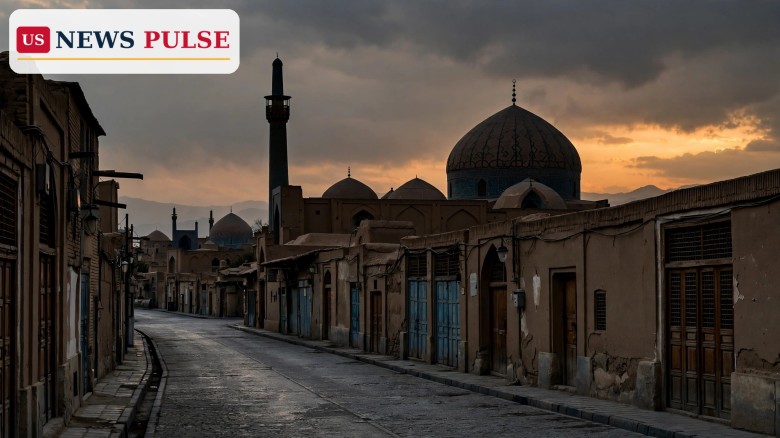
Iran hangs two men over the killing of four police officers during protests in Isfahan in January 2026, the country's judiciary has announced, in the latest executions linked to one of the deadliest episodes of this year's nationwide unrest. Amirhossein Maleki and Amirhossein Ebrahimi were hanged on Tuesday, November 3, 2026, after Iran's Supreme Court upheld their death sentences. The judiciary said the two men were armed participants in the January 8 attack in Isfahan in which four police officers were killed, convicted of moharebeh, or waging war against God, and corruption on earth. The executions come as Iran remains at war with the United States and Israel, a conflict that began on February 28, 2026.
Key Points
- Amirhossein Maleki and Amirhossein Ebrahimi were hanged on Tuesday, November 3, 2026, in Isfahan, Iran's judiciary said.
- Both men were convicted over the killing of four police officers in Isfahan on January 8, 2026, during nationwide protests.
- They were sentenced to death for moharebeh (waging war against God) and corruption on earth, and the Supreme Court upheld the sentences.
- Two other men, Alireza Sepahi and Alireza Raissi, were executed in early October 2026 over the same Isfahan case.
- More than 3,000 people, including police and security personnel, were killed in the January protests, according to official Iranian figures.
What Happened
Iranian authorities carried out the executions on Tuesday morning, according to the judiciary's Mizan Online news agency and the semi-official Fars news agency. Mizan described Maleki and Ebrahimi as armed perpetrators of the January 8 crime in Isfahan, and said their cases had undergone legal review before the Supreme Court confirmed the sentences. In early October 2026, authorities executed Alireza Sepahi and Alireza Raissi over the same case, meaning at least four men have now been put to death over the deaths of the four officers. The judiciary has presented the case as a prosecution of an armed attack on officers. Human rights groups, by contrast, have long questioned the fairness of trials in protest cases in Iran, including the use of confessions and the speed with which death sentences are confirmed.
Background: The January 2026 Protests
The protests began in December 2025, after a sharp surge in foreign currency rates deepened an already severe economic crisis. Demonstrations over prices and living standards escalated into broader anti-government protests, peaking on January 8 and 9, 2026. In Isfahan, as in other cities, clashes between protesters and security forces turned deadly. Official figures say more than 3,000 people, including police and security personnel, were killed, making it one of the bloodiest periods of internal turmoil in Iran in decades; rights groups based outside Iran have cited higher figures. Tehran has accused the United States and Israel of fomenting the protests, a charge both deny. The unrest came weeks before the United States and Israel launched their war against Iran on February 28, 2026. Thousands were arrested, and courts have since handed down a series of sentences, including death sentences, in cases linked to killings of security personnel.
Iran Hangs Two Men: The Isfahan Legal Case
At the centre of the case is the killing of four police officers on January 8, 2026. Prosecutors said Maleki and Ebrahimi were armed and present at the scene and had committed multiple criminal acts. They were charged with moharebeh, waging war against God, used in cases involving armed action against the state, and with corruption on earth, covering acts said to spread disorder and threaten public security. Both charges carry the death penalty. The judiciary said the sentences were upheld by the Supreme Court after appeal, following a thorough legal review. Two other defendants were executed in early October, bringing the total in this case to at least four. Iran carries out more executions than any country except China, according to Amnesty International, and protest-related executions have drawn repeated condemnation from the United Nations and Western governments, which argue many trials fall short of international fair-trial standards.
Reactions and Quotes
Mizan Online called Maleki and Ebrahimi "two armed perpetrators of the January 2026 crime in Isfahan whose brutal and atrocious actions led to the martyrdom of four police officers". It said the pair "were among the main perpetrators of the crime" and "were armed and present at the scene and had committed multiple criminal acts", and that they "were sentenced to death on charges of moharebeh (waging war against God) and corruption on earth, through actions against national security". Human rights organisations take a different view of protest-related death sentences, warning that defendants often face closed proceedings, limited access to lawyers of their choice, and reliance on confessions. As of Tuesday, no government outside Iran had issued a specific public response to these two executions, but the timing, during an active war and continuing diplomacy, is likely to sharpen scrutiny of Tehran's domestic crackdown.
Why It Matters
The executions matter for three reasons. First, they show Iran's judiciary is still imposing the harshest punishments for the January protests, even while the country fights a war and engages in delicate diplomacy. Second, they underline the scale of the January unrest: with more than 3,000 deaths officially acknowledged, the protests were a national crisis whose legal consequences are still unfolding ten months later. Third, they sit at the intersection of domestic politics and foreign relations. Western governments and human rights bodies treat protest executions as a measure of Tehran's respect for basic rights, and each new execution complicates any claim that the country is moving toward restraint. For families of those arrested in January, the message is stark: cases involving deaths of security personnel are being pursued to their conclusion, regardless of international pressure.
What Happens Next
Attention now turns to other defendants in the Isfahan case and in protest cases elsewhere in Iran. Human rights groups are expected to publish updated counts of protest-related executions and name further defendants whose sentences have been confirmed. Diplomats watching the US-Iran war will note whether the executions affect negotiations, which have intensified in recent days. Inside Iran, the judiciary has given no indication it plans to slow protest-related prosecutions, and further executions could follow in the coming weeks.
Frequently Asked Questions
Who was executed in Iran on November 3, 2026? Amirhossein Maleki and Amirhossein Ebrahimi, convicted over the killing of four police officers in Isfahan during the January 2026 protests.
What were they convicted of? They were sentenced to death for moharebeh, meaning waging war against God, and corruption on earth, after the Supreme Court upheld their sentences.
When did the Isfahan killings happen? The four police officers were killed on January 8, 2026, at the peak of nationwide protests that began in December 2025 over a currency crisis.
How many people died in the January protests? Official figures say more than 3,000, including police and security personnel; rights groups outside Iran cite higher numbers.
Have others been executed in the same case? Yes. Alireza Sepahi and Alireza Raissi were executed in early October 2026 over the same Isfahan case.
For wider context on the war and diplomacy surrounding Iran, see our reports on US-Iran talks, Iran's warning to Washington, and the US-approved draft deal under the Qatar plan.
Leave a Comment