

 | Today's Date:



Iran Truck Drivers Strike Nationwide as Fuel Prices Soar and Blockade Bites
TEHRAN, Iran — Iran's truck drivers have gone on strike across the country, halting shipments of critical goods in protest at soaring fuel prices, diesel shortages and an economy buckling under war and a United States naval blockade.
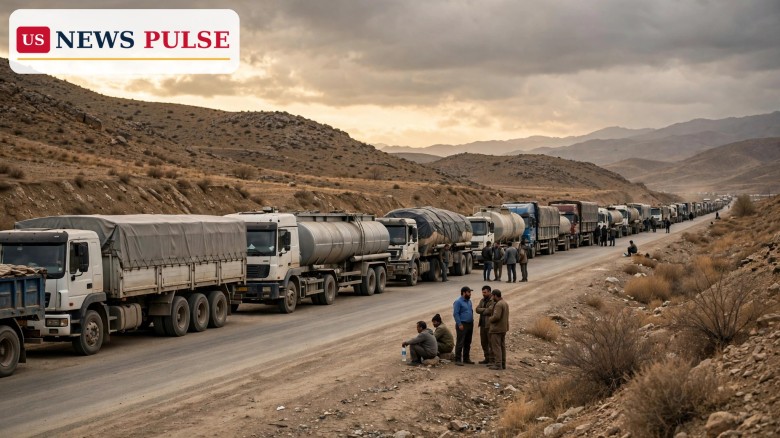
The Union of Truck Drivers and Trucking Associations Across Iran called the general strike, which began on Sunday, November 22, 2026, and has no announced end date. By the first day, shipments had stopped in several cities, trucks stood parked in rows and drivers decorated their vehicles with anti-regime slogans, in the most visible labour action of the war so far.
Key Points
- Iran's national truck drivers' union called a general strike beginning Sunday, November 22, 2026, to halt critical-goods shipments, with no announced end date.
- Shipments stopped on Sunday in Shiraz, Chabahar and Dezful, and a wildcat strike spread across Khuzestan and Sistan-Baluchestan, hitting ports and refinery routes.
- Drivers are protesting dramatic fuel-price increases, diesel shortages, doubled road tolls and stagnant freight rates while running costs have soared.
- Iran's producer-price inflation reached 120.9% year on year in summer 1405, with manufacturing producer inflation at 147.3%.
- Retiree protests also erupted on Sunday in Tehran, Rasht, Ahvaz and Shush, as a family's monthly subsistence basket passed 70 million tomans, about $263.
What Happened
The strike began on Sunday, November 22, 2026, when the Union of Truck Drivers and Trucking Associations Across Iran called on drivers across the country to stop moving critical goods. Iran International reported the call, cited by multiple outlets on Monday, November 23.
By Sunday, the stoppage was already visible. Shipments had stopped in Shiraz, Chabahar and Dezful, with drivers parking their vehicles and decorating trucks with anti-regime slogans. A wildcat strike was also reported across Khuzestan and Sistan-Baluchestan provinces, affecting ports and refinery transit routes. In its call, the union described the action as “a cry of protest from drivers who have spent years struggling under the weight of rising prices, injustice and neglect and can no longer endure these unbearable conditions”.
Background: An Economy Squeezed by War, Blockade and Inflation
Iran's economy has been under extraordinary strain since the war with the United States began in late February 2026. A US naval blockade of Iranian ports remains in place, cutting into the trade in fuel, food and manufactured goods, and squeezing the supply chains drivers operate every day.
The figures behind the drivers' anger are stark. Iran's producer-price inflation reached 120.9% year on year in summer 1405, with manufacturing producer inflation at 147.3%, per Iranian economic press. For drivers, that means the cost of keeping a truck running has soared, while the freight rates they are paid have barely moved. A Tehran labour representative put a family's monthly subsistence basket above 70 million tomans, about $263.
Iran Truck Drivers Strike Spreads Across Provinces
The geography of the strike is what makes it hard for the authorities to ignore. The stoppage was reported in Shiraz, in the south, in Chabahar, the deep-water port on the Gulf of Oman, and in Dezful, in the south-west. The wildcat action in Khuzestan and Sistan-Baluchestan, two provinces central to Iran's oil and transit trade, hit ports and refinery routes directly.
Truck drivers occupy a particular place in Iran's economy. Almost everything that moves inside the country — fuel, food, medicine, building materials — moves by road, and the drivers who move it are mostly self-employed owner-operators, exposed directly to every rise in diesel prices and every fall in freight rates. When they stop, shelves empty quickly, and the effect is felt in cities far from the highways where the trucks are parked.
Reactions: Drivers Hold the Line as Protests Spread
The union's statement framed the strike as a last resort after years of rising prices and neglect, and the drivers' actions on Sunday matched that tone: parked trucks, slogans on the cabs, and no stated deadline for a return to work. The open-ended strike is itself a message: drivers want conditions they can live with, not a one-day gesture.
Retirees joined the protests on the same day, taking to the streets in Tehran, Rasht, Ahvaz and Shush, according to the National Council of Resistance of Iran. Their presence points to a broader wave of discontent, driven by the same inflation. There has been no public response yet from the Iranian government to the strike call, and no announcement of concessions on fuel prices, tolls or freight rates.
Why It Matters
It matters because Iran's supply lines run on trucks, and the people who drive them have now stopped. If the strike holds, the flow of fuel, food and medicine across the country will slow within days, and the shortages that already plague Iranian households will deepen. The strike hits ports and refinery routes, the very points where the US blockade already bites hardest.
It matters, too, because it is a test of how much economic pain Iranian society can absorb. Producer inflation above 120%, manufacturing inflation near 150% and a subsistence basket beyond ordinary wages describe an economy in which work no longer pays for life. And it matters for the war: the blockade was designed to squeeze Iran's economy, and a nationwide truckers' strike suggests the squeeze is reaching deep into society — landing on ordinary Iranians first.
What Happens Next
The first question is whether the strike holds. A stoppage with no end date depends on drivers staying off the road day after day, losing income with every day they park. The union's call was answered quickly on Sunday; whether it survives the week depends on how far the authorities go to break it, and whether other trades join in.
The second question is supply. If shipments of critical goods stay halted, the government will face shortages in the cities within days, and pressure to act — either by conceding on fuel prices and tolls, or by forcing drivers back to work. The ports and refinery routes in Khuzestan and Sistan-Baluchestan are the places to watch.
Frequently Asked Questions
Why are Iran's truck drivers on strike?
Drivers are protesting dramatic fuel-price increases, diesel shortages, doubled road tolls and stagnant freight rates, while running costs have soared under inflation and the US blockade.
When did the strike begin?
The Union of Truck Drivers and Trucking Associations Across Iran called the general strike beginning Sunday, November 22, 2026, to halt shipments of critical goods.
Where has the strike been felt?
Shipments stopped on Sunday in Shiraz, Chabahar and Dezful, and a wildcat strike spread across Khuzestan and Sistan-Baluchestan, hitting ports and refinery routes.
How bad is inflation in Iran?
Producer-price inflation reached 120.9% year on year in summer 1405, with manufacturing inflation at 147.3%, and a family's monthly subsistence basket passed 70 million tomans, about $263.
When will the strike end?
The strike has no announced end date. The union has given no indication of what would bring drivers back to the road, and the government has not yet responded publicly.
Read our report on Bessent and Iran's economy, US strikes on Qeshm Island and Vance on the US-Iran talks.

The US News Pulse newsroom covers breaking news across the United States and the world, working from wire services, official statements and on-the-record sources. Every story is reviewed against our editorial standards before publication. Corrections and tips: info@usnewspulse.com
About our newsroomLeave a Comment