


 | Today's Date:





Myanmar Rare Earths Lobby Pushes US to Invest and Challenge China's Grip
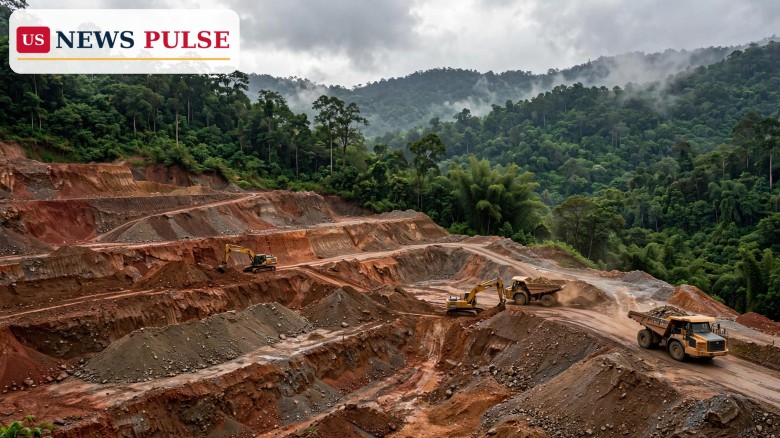
Myanmar's military-led government is lobbying the United States to invest in its rare-earth mines, pitching the country as a new front in Washington's bid to break China's near-total grip on the minerals powering electric vehicles, wind turbines and weapons.
Reuters reported on Tuesday, November 10, 2026, that Myanmar is urging Washington to boost re-engagement and increase investment in its rare-earth sector, after months of secretive talks and a State Department plan last week to expand US influence and gain access to its deposits.
Key Points
- Myanmar's military government is urging the US to invest in its rare-earth mines, Reuters reported on Tuesday, November 10, 2026.
- The State Department outlined a plan last week to expand US influence in Myanmar.
- DCI Group, writing on Monday for Myanmar's information ministry, said the US should treat Myanmar as "a critical minerals priority, not simply a diplomatic challenge".
- Washington aims to secure "at least three major commercial or investment deals valued above $5 million each" for US companies; Myanmar called that modest.
- Myanmar is a main source of heavy rare earths, but its Kachin mines are rebel-held, and nearly all ore is trucked to China.
What Happened
The push became public on Monday, when DCI Group published a newsletter for Myanmar's information ministry saying the US should treat Myanmar as "a critical minerals priority, not simply a diplomatic challenge" and that "minerals are the natural place for this deepening relationship to grow".
It landed days after the State Department outlined its plan to expand influence in Myanmar and secure access to its deposits. Washington aims to secure at least three deals above $5 million each for US companies. Myanmar called that goal modest, a signal it wants a bigger American footprint, not a token one.
Background: Myanmar, China and the Rare Earths Trade
Myanmar is a main source of heavy rare earths, the scarcer and more valuable end of the family. Heavy rare earths such as dysprosium and terbium are essential for magnets in electric vehicles, wind turbines, smartphones and guided weapons. Almost all of Myanmar's ore goes to China for processing into magnets, giving Beijing control of a supply chain from Myanmar's hills to factories worldwide.
The main mines are in northern Kachin state, held by the Kachin Independence Army, a rebel group fighting the military government. Ore is trucked from rebel-held hills to China, and no outsider can simply walk in and start digging.
After the 2021 coup, the US froze Myanmar's assets at the Federal Reserve Bank of New York and imposed sanctions to cut the military off from global finance. Direct talks, begun in September, reverse that approach, driven by the strategic value of the minerals under Kachin soil.
Myanmar Rare Earths and the Race to Break China's Grip
The pitch fits a wider US scramble for rare earths. Under the Trump-Xi deal sealed in Busan in October, China agreed to pause rare-earth export controls for a year. But the pause is temporary, and Washington has hunted for alternatives ever since, from Ukraine to Greenland to Central Asia.
Myanmar offers something those places do not: deposits already mined at scale. The ore comes out of the ground today, just not for the United States. For US companies, the attraction is a working supply chain that could be redirected. For the generals, it is legitimacy, investment and a patron willing to overlook the coup.
Yet the obstacles are formidable. Any US investment must navigate sanctions law, rebel control of the mines, and Beijing's determination to keep ore flowing to its processors. China spent decades building the refineries that turn ore into magnets, with no quick Western substitute. The $5 million threshold shows how early this effort is: three such deals would be a rounding error in the global minerals trade.
Reactions and Quotes
The clearest statement of Myanmar's case came from the DCI Group newsletter, published on Monday for the information ministry. It said the US should treat Myanmar as "a critical minerals priority, not simply a diplomatic challenge" and that "minerals are the natural place for this deepening relationship to grow".
Myanmar's government also called the goal of three deals above $5 million each modest. The message was plain: if the US wants in, it should think bigger.
Neither the State Department nor the White House has publicly responded to the lobbying, the reports said. China has not commented either, but Beijing has repeatedly restricted rare-earth exports when trade tensions rise.
Why It Matters
For the United States, Myanmar tests how far it will go to secure critical minerals. Doing business with a junta Washington sanctioned after a coup would break with recent policy and draw criticism from rights advocates and lawmakers who backed the sanctions. The administration's calculation appears to be that the minerals matter more.
For the generals, US investment would be a prize beyond money: legitimacy, a counterweight to dependence on China, and softer isolation. For China, losing even part of Myanmar's heavy rare-earth supply would weaken one of its most powerful levers.
It also matters for Kachin's people. Mining in northern Myanmar has been linked to poisoned rivers and scarred hillsides, and profits flow largely to armed groups and traders, not local communities. Any expansion raises the same questions about who benefits and who pays. See also our coverage of the World Court ruling on the Rohingya genocide case against Myanmar and the Trump-Xi trade deal that paused China's rare-earth export controls.
What Happens Next
The immediate question is whether the talks produce concrete deals. The plan sets a modest bar, three agreements above $5 million each, but even that requires untangling sanctions rules, finding companies willing to work in a conflict zone, and dealing with those who control the mines.
Watch for a formal announcement from Washington, Congress's reaction, and China's response. Beijing can defend its supply chain by offering Myanmar's miners better prices or tightening its grip on processing. If US engagement deepens, it could become another front in the wider US-China contest over the minerals powering the modern economy.
Frequently Asked Questions
Why is Myanmar lobbying the United States over rare earths?
Myanmar's military government wants Washington to invest in its rare-earth mines, pitching the country as a critical minerals partner for the US.
What are rare earths and why do they matter?
Rare earths are 17 elements used in magnets for electric vehicles, wind turbines, phones and weapons. Heavy rare earths, which Myanmar produces, are especially scarce. China makes about 90 percent of the world's rare-earth magnets.
Who controls Myanmar's rare-earth mines?
The main mines are in northern Kachin state, controlled by the Kachin Independence Army, a rebel group fighting the government. Nearly all the ore is trucked to China.
What is the US plan for Myanmar's rare earths?
The State Department outlined a plan last week to expand US influence and gain access to Myanmar's deposits, aiming for at least three deals above $5 million each for US companies.
Why did the US sanction Myanmar?
Washington froze Myanmar's assets at the Federal Reserve Bank of New York and imposed sanctions after the 2021 coup. Direct talks began in September 2026, driven by the strategic value of the country's minerals.
Leave a Comment