The United States says it has cleared the Strait of Hormuz's primary shipping routes of Iranian sea mines, a claim delivered on Friday, October 30, 2026, by the commander of US Central Command just as Oman rescued 25 sailors from a merchant ship set ablaze in the same contested waterway. The twin developments capture the two faces of the Strait of Hormuz today: a US military assertion that commercial traffic is moving freely again, and a string of fires, halts and disputed claims that show how dangerous the passage remains.
Admiral Brad Cooper, the commander of US Central Command (CENTCOM), announced the mine-clearance claim in a video message released on Friday, October 30, following a review of military operations across the Middle East. "Earlier this week, I visited some of the more than 50,000 service members supporting operations across the Middle East, including our mission in the Strait of Hormuz," Cooper said. "When I flew over the strait, I saw dozens of commercial vessels transiting — all types: cargo, crude oil, liquid natural gas, or LNG. And I also saw our US assets in the air and on the water, including a squadron of advanced sea drones that were on patrol, supporting a defensive layer."
Cooper added that US forces "remain present to ensure that all primary transit routes in the Strait of Hormuz remain free and clear". He met the teams who carried out the mine-clearance mission, he said, and who continue to provide coordinated protection for commercial shipping while the United States enforces what he called an "ironclad blockade" on Iranian ports.
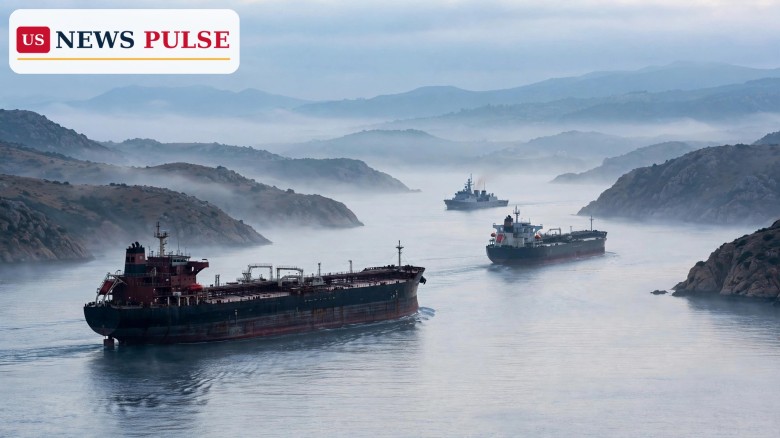
On the same day, Oman's Maritime Security Centre said the country's navy "carried out an evacuation operation for 25 crew members of the merchant ship RITI, flying the Panamanian flag, after it was targeted, which led to a fire breaking out on board". The crew members were given medical care, the Omani statement said, without giving further details. The ship-tracking website Marine Traffic described the RITI as a crude oil tanker.
Separately, the British maritime security agency UKMTO said a ship 40 nautical miles (74 kilometres) south of Lavan island in Iran was struck on October 30 by an unknown projectile, causing a fire on board. "The crew of the vessel have been reported as safe and there is no reported environmental impact at this time," UKMTO said on X.
The Strait of Hormuz, the narrow passage between Iran and Oman at the mouth of the Gulf, normally carries about a fifth of the world's oil. It has become one of the focal points of the Middle East war that erupted on February 28, 2026, with US-Israeli strikes on Iran. Since then, Tehran has restricted maritime traffic through the strait, ships have regularly come under Iranian fire, and the United States has answered with a counterblockade of Iranian ports.
The mine dispute is the latest chapter in that confrontation. On Thursday, October 29, Iran's Revolutionary Guards said three oil tankers had exploded and caught fire after hitting sea mines on an unauthorised southern route over the previous 24 hours, with radar and navigation systems switched off and warnings ignored. A day later, the Guards said three more tankers were halted after encountering unspecified "incidents" or hitting mines. "Two offending oil tankers, one in the eastern part and the other in the western part of the Strait of Hormuz, which were attempting to pass through the unauthorised route, encountered incidents and were brought to a halt in the waters south of the strait," the Guards said in a statement.
In a later statement, the Guards said a supertanker carrying two million barrels of oil had stopped following an explosion "after striking a naval mine while navigating an unauthorised route through the Strait of Hormuz". "This is the third oil tanker to have exploded and caught fire today as a result of attempting to pass through an unauthorised route," it added. Iran has demanded that vessels use a designated route through the strait and coordinate passage with its armed forces, labelling a southern corridor closer to Oman's shores as unauthorised. The tankers, Tehran said, had "switched off all their navigation and positioning systems and, with the support of the terrorist US military, were attempting to exit through the unauthorised route" after receiving several radio warnings.
None of Iran's tanker claims has been independently verified, and the Guards gave no flags, casualty figures or exact times for the vessels involved. Gulf News reported that more than 3,000 commercial vessels had transited the strait with US support over six months, a figure that sits alongside Cooper's claim of 1.5 billion barrels of Gulf crude exported with US help since the summer.
Cooper's most striking line was about what he did not see. "Here's what I didn't see: I didn't see the IRGC out there at all," he said of the Islamic Revolutionary Guard Corps. "They patrolled the Strait of Hormuz and surrounding waters for decades, harassing and threatening and seizing commercial vessels at will. But they were not out there because Iran's navy is all at the bottom of the sea."
Iran rejected the American account. On Thursday, the IRGC dismissed CENTCOM's minesweeping claims and demanded concrete proof rather than media statements, according to the state news agency IRNA. Brigadier General Hossein Mohebbi, the IRGC's deputy head of public relations, told US military leaders: "Prove the claim of minesweeping the Strait of Hormuz with independent evidence, not with statements!" He added: "The reality of the Strait of Hormuz is forged in the sky, on land, and at sea; not in cyberspace and US media war rooms."
The dispute follows a separate clash over an American sea drone. On Friday, CENTCOM denied an Iranian navy claim that it had destroyed a US unmanned surface vessel east of the strait, saying all US unmanned surface vessels in the Middle East were accounted for, including a squadron of advanced sea drones on patrol in the strait. The competing claims could not be independently verified.
Cooper framed the mission as a milestone for the crews involved. "This week, we reached a significant milestone, having now assisted Gulf partners in exporting more than 1.5 billion barrels of crude oil since summer," he said. "US forces have been laser-focused in this effort, in coordination with regional partners, other US government teammates, and the shipping industry. Meanwhile, we've prevented Iran from exporting any oil because of the ironclad blockade on Iranian ports."
"I strongly believe that every success begins and ends with our people, and our incredible men and women in uniform represent the very best," Cooper added. "During my trip, I met with teams who executed the mine clearance mission in the Strait of Hormuz, and who continue to provide coordinated protection for commercial shipping as we strictly enforce the ongoing blockade."
Oman's statement was brief and factual: its navy evacuated the RITI's 25 crew members and provided medical care after the ship was targeted and caught fire. UKMTO, meanwhile, limited itself to the safety of the crew of the vessel struck south of Lavan island and the absence of reported environmental damage.
The Strait of Hormuz is the world's most important oil chokepoint, and anything that happens there reaches petrol prices, shipping insurance and global markets within hours. A credible clearance of the primary routes would ease the risk premium that has shadowed Gulf crude since February, and it would strengthen Washington's argument that its blockade-and-escort strategy is working. But the events of October 30 cut the other way too: a burning tanker rescued by Oman, a projectile strike reported by UKMTO, and three tankers halted on Iran's telling all show that mines, missiles and disputed "authorised" routes still shape every transit.
The credibility contest matters as much as the clearance itself. Iran is demanding independent evidence of minesweeping; the United States is pointing to dozens of vessels transiting unimpeded and to 1.5 billion barrels moved since the summer. Until independent verification emerges — from insurers, ship trackers or the crews themselves — shippers will have to price both claims at once, and the strait will stay a place where a single incident can move the oil market.
Watch for three things. First, whether independent shipping data confirms a sustained rise in unimpeded transits through the primary routes in the days after Cooper's announcement. Second, whether Iran produces evidence for its tanker-mine claims or takes further action against vessels using the southern corridor it calls unauthorised. Third, whether the diplomatic track — including a reported draft framework under which Iran's highly enriched uranium would move to a third country or be reduced, with the strait reopened within seven days of an initial understanding — gains enough traction to turn a military standoff into a negotiated opening. Until then, US forces say they will stay in place to keep the primary routes "free and clear".
CENTCOM chief Admiral Brad Cooper said in a video released October 30, 2026, that US forces had "successfully cleared the strait's internationally recognised primary transit routes of Iranian sea mines" and that commercial vessels were transiting freely.
Oman said on October 30 that its navy rescued 25 crew members from the Panamanian-flagged merchant ship RITI after it was targeted and caught fire. The crew received medical care. Marine Traffic described the RITI as a crude oil tanker.
Iran's Revolutionary Guards said three oil tankers were halted after hitting mines or unspecified "incidents" on an unauthorised southern route, including a supertanker carrying two million barrels of oil that stopped after an explosion. Iran demands vessels use its designated route and coordinate with its armed forces.
No. Iran has demanded independent evidence, and the competing US and Iranian claims about mines, drone destruction and tanker incidents could not be independently verified in the reporting available on October 31.
The strait normally carries about a fifth of global oil, linking Gulf producers to world markets. Disruption there raises shipping insurance, threatens energy supplies and can move oil prices worldwide.
Related coverage: CENTCOM denies Iran sea-drone claim near Strait of Hormuz, Hormuz tankers on fire after mine strikes, Iran Guards say, Iran Khamenei warning: no geographic limits if US strikes resume.
Leave a Comment



 | Today's Date: