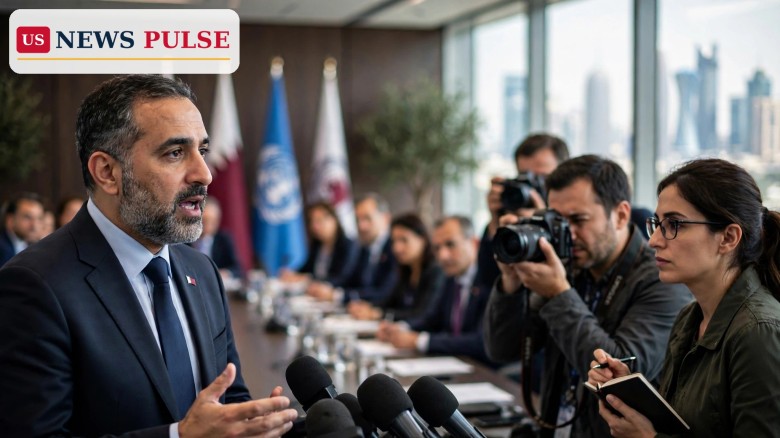
Iran's foreign minister has described a United States effort to open dialogue with Tehran as a positive step, while insisting that Iran sees no need to meet American officials yet and that its conditions for reopening the Strait of Hormuz must be met first. The Iran US talks update, given by Abbas Araghchi to Al Jazeera on Saturday, October 31, 2026, is the clearest public statement yet of Tehran's terms in a mediation effort led by Qatar and Pakistan, and it comes as an Iranian delegation travels to Doha and Iran's military warns again of an unrestricted response to any new attack.
Araghchi spoke to Al Jazeera on Saturday after Iran studied a letter sent by US Vice President JD Vance in high-level meetings in Tehran. He said the American attempt to open a door to dialogue and understanding more broadly was a positive step, but he immediately qualified that assessment. "If Washington's goal in sending this letter is to stir up discord, it would be yet another mistake to add to its previous ones," he said.
He played down reports of an imminent meeting. "What is being circulated in this regard is merely media speculation," Araghchi said. "We see no need to meet with the Americans at this stage. Our conditions are clear, and mediators are continuing their consultations regarding them." Whether Iran would hold direct or indirect talks with the United States, he added, depended on those conditions being met.
At the same time, the mediation track is visibly moving. Araghchi said an Iranian delegation has travelled to Doha, a day after Qatari mediators were in Tehran in an apparent bid to negotiate a revival of the US-Iran ceasefire, and that one of his aides is in Qatar to continue consultations. "Mediators have presented proposals concerning the nuclear dossier, which we are currently reviewing as part of the second phase," he said. "Qatari and Pakistani mediators are continuing consultations regarding our conditions."
Separately, and in parallel with the diplomacy, Iran's military messaging hardened again on Saturday. Armed forces chief of staff Major-General Ali Abdollahi said Iran would respond to any attack with "immense force", with no geographical limits, and that it would decide when any new war ends. "We have a new stockpile of enemy targets and assets, and they are on our agenda," he said. "America and Israel will face an unimaginable response, and we are the ones who will determine the end of any new war." Abdollahi said Iran was acting on Supreme Leader Mojtaba Khamenei's orders, following Khamenei's meeting with senior commanders on Saturday, which was reported earlier in the day.
The war between the United States, Israel and Iran began on February 28, 2026, with US-Israeli strikes on Iran, and it has now lasted eight months. Almost two months have passed since the last American strike in Iran, according to reporting on Friday, and President Donald Trump had previously pledged that he would not renew strikes before the US midterm elections on November 3, 2026.
That pledge is now being tested by two competing pressures. On Friday, MS NOW reported, citing three senior Gulf Arab officials, that the Trump administration had briefed Gulf allies to prepare for a short, intense round of strikes on Iran as soon as November 4, the day after the midterms, while Gulf allies lobbied Washington to de-escalate. On the same day, Trump said Iran was interested in holding talks with Washington and that the war "is going to be over very soon", adding: "We're going to have a non-nuclear Iran. Iran cannot have a nuclear weapon, and they won't have a nuclear weapon, and that's going to end very soon."
The diplomatic thread runs through Doha and Tehran. Qatari mediators visited Tehran on Friday, after Iran reportedly received the Vance letter, and a US delegation was reported by the Qatari outlet Al-Araby Al-Jadeed to be expected for direct talks in Doha, with preliminary agreements reported on Iran's nuclear programme, the Strait of Hormuz and economic incentives, with China and Russia as guarantors. Those reported agreements have not been publicly confirmed by Washington or Tehran, and Araghchi's Saturday remarks notably did not confirm a meeting. The Wall Street Journal had also reported that US Central Command chief Brad Cooper briefed Trump on military options for Iran on Thursday, and that Vance had contacted an Iranian official on Wednesday in an attempt to restart negotiations.
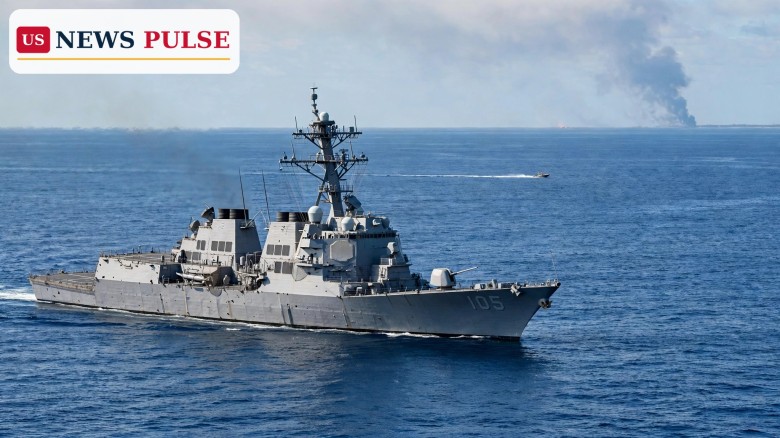
The Strait of Hormuz, through which a large share of the world's seaborne oil passes, remains the practical centre of the dispute. The United States maintains a blockade on Iranian ports, and Iran continues to threaten commercial shipping in the strait. Iran's state television claimed late on Friday that at least six tankers, including a very large crude carrier bearing two million barrels of oil, were damaged by explosions after allegedly hitting mines while transiting unauthorised routes in the strait. Local authorities reported on Saturday afternoon that two fishing boats were bombed by a US drone south of Qeshm island in southern Iran, wounding several fishermen. Those claims have not been independently verified, and they sit alongside the United Kingdom Maritime Trade Operations report on Friday of a new type of attack in the area the day before.
The Iran US talks conditions set out by Araghchi on Saturday are specific, and they explain why he says no meeting is needed yet. On the Strait of Hormuz, he said talks with Qatari mediators had shortened the time needed to implement Iran's proposal to reopen the strait. "The Qatari side proposed shortening the implementation period of the Iranian proposal to five days. We have reached a proposal at this stage that reduces the implementation period to two days," he said.
That two-day timetable, however, is conditional. "Our conditions include lifting the sanctions imposed following the Islamabad memorandum and reducing US forces in the region," Araghchi said. "We demand the restoration of oil waivers and the release of all our frozen funds, including those held in Qatar." Iran is also demanding recognition of shipping routes through the strait that it had discussed with Oman, and the closure of other routes, he added.
Al Jazeera's correspondent in Tehran, Resul Serdar Atas, reported that there was "no remarkable flexibility in Iran's position", with Tehran insisting on the same demands while negotiations continue. Under a memorandum of understanding signed between the US and Iran in June, Washington guaranteed the oil waivers and said there would be no further restrictions on Iranian oil exports, Atas reported, but when that memorandum collapsed months later, the US cancelled all the waivers. Tehran is also still insisting on the release of its frozen assets, including $6 billion held in Qatar, and on the lifting of sanctions, not only those on its energy and nuclear file but also those imposed since the memorandum collapsed, which are putting huge pressure on Iran's economy, he added.
On the nuclear file, Araghchi was less detailed, saying only that mediators had presented proposals which Iran is reviewing as part of a second phase. The US, for its part, wants Iran to reopen the strait, and both sides want their demands met on the ground, not only on paper, Atas reported. That gap between paper and ground is the reason, in Tehran's telling, that sequencing matters so much.
Araghchi's own words frame the interview. "The American side's attempt to open the door to dialogue and understanding more broadly is a positive step," he told Al Jazeera. On meetings, he was blunt: "We see no need to meet with the Americans at this stage. Our conditions are clear, and mediators are continuing their consultations regarding them."
On readiness for war, he said: "We are prepared for all scenarios. We have upgraded our weaponry, addressed our vulnerabilities, and tested new arms. Our forces are at the highest level of readiness." He added that Iran does not rule out the possibility of an attack against Iran.
Abdollahi's Saturday statement echoed Khamenei's earlier order, reported on Saturday, that any level or type of threat must be met with an immediate, impactful and geographically unrestricted response, and that Iran's target list should be updated to include all types of tangible and intangible assets belonging to what Tehran calls the American-Zionist enemy. "We have a new stockpile of enemy targets and assets, and they are on our agenda," Abdollahi said.
Analysts quoted by Al Jazeera urged caution about reading too much into the movement. Rouzbeh Parsi, an Iran analyst and affiliated researcher at Lund University's Department of History and Human Rights Studies, said any progress in Friday's talks in Tehran was most likely on "the sequencing of the first steps needed to establish the barest of trust - without which further bolder steps are not possible". Abbas Khamayar, a former Iranian diplomat, said he expected the current situation to hold until next week's US midterm elections. Egypt's Foreign Minister Badr Abdelatty said on Saturday he was concerned about escalation, according to Haaretz's reporting of the day's developments.
This interview matters because it separates, in Tehran's own words, a diplomatic opening from a diplomatic breakthrough. A letter has been studied, mediators are consulting, a delegation is in Doha, and a Hormuz timetable has been shortened to two days - but no meeting has been agreed, no conditions have been dropped, and the military warnings have, if anything, grown sharper. That combination is the story: talks are alive, but they are not yet negotiations, and war remains a stated possibility on both sides of the same day's news.
For the United States, the timing is inseparable from the midterms. Trump has said the war will end very soon and that Iran cannot have a nuclear weapon, while his administration is reported to have warned Gulf allies to prepare for strikes as soon as November 4. For Gulf states, the stakes are immediate: they are lobbying to de-escalate, fearing Iranian retaliation, and some may resist US strikes launched from their bases, according to the MS NOW reporting. For global energy markets, the Strait of Hormuz is the pressure point - a two-day reopening proposal is only meaningful if sanctions relief, oil waivers and frozen funds move with it, and Tehran is insisting that they do.
For Iran, the interview also serves a domestic purpose. By publishing its conditions in detail, Tehran signals to its own public and to its armed forces that it is not conceding under threat, even as it keeps the mediator channel open. The warning that Iran, not its enemies, will determine when any new war ends is a direct answer to the November 4 strike reports, and it was repeated, in near-identical language, by both Khamenei and his armed forces chief on the same day.
The next steps are, by Araghchi's account, in the mediators' hands. Qatari and Pakistani mediators will continue consultations on Iran's conditions, and Iran will continue reviewing the nuclear proposals presented as part of a second phase. Whether that leads to a direct or indirect meeting with US officials depends, Araghchi said, on whether Tehran's conditions are met.
The calendar gives those consultations a hard deadline. The US midterm elections are on Tuesday, November 3, 2026, and the reported window for a possible resumption of strikes opens on November 4. If mediators can turn the two-day Hormuz proposal and the reported draft framework into something both sides will confirm in public, the post-election window could close without a new round of strikes. If they cannot, the warnings issued on Saturday - from Tehran's foreign minister, its armed forces chief and its supreme leader - suggest the next phase, if it comes, will be wider and harder to contain than the last.
Watch for three signals in the coming days: any public confirmation from Washington or Tehran of a Doha meeting, any movement on oil waivers or frozen funds, and any change in shipping or military activity in and around the Strait of Hormuz. Until one of those moves, the position on Saturday stands as Araghchi stated it: a positive step, no meeting yet, and conditions unchanged.
What did Iran's foreign minister say on October 31, 2026? Abbas Araghchi told Al Jazeera that a US effort to open dialogue is "a positive step", but that Iran sees no need to meet US officials at this stage and that its conditions must be met first.
What are Iran's conditions for reopening the Strait of Hormuz? Lifting sanctions imposed after the Islamabad memorandum collapsed, reducing US forces in the region, restoring oil waivers, releasing frozen funds including $6 billion held in Qatar, and recognising shipping routes discussed with Oman.
Has a US-Iran meeting in Doha been confirmed? No. Araghchi said reports of a meeting are "merely media speculation", even though an Iranian delegation has travelled to Doha and his aide is in Qatar for consultations with mediators.
What did Iran's military say on Saturday? Armed forces chief Ali Abdollahi said Iran would respond to any attack with "immense force", with no geographical limits, and that it holds a new stockpile of enemy targets, acting on Supreme Leader Mojtaba Khamenei's orders.
What happens after the US midterms? The reported window for possible renewed US strikes opens on November 4, the day after the November 3 midterms, which is why mediators are racing to turn the Hormuz and nuclear proposals into a confirmed understanding before then.
Read more on US News Pulse: Iran Khamenei warning: no geographic limits if US strikes resume, US-Iran draft deal: uranium transfer and Hormuz reopening within 7 days, and Iran strikes November 4: US warns Gulf allies as Doha talks race to avert war.
Leave a Comment



 | Today's Date: