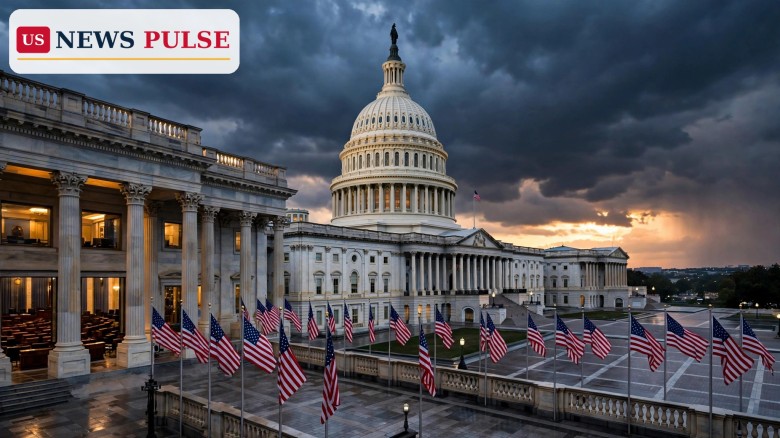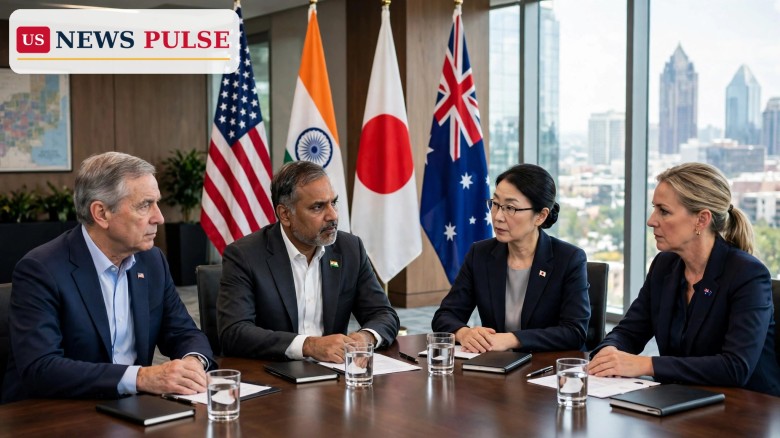
The Quad foreign ministers met in Atlanta on Saturday, October 31, 2026, turning a day of G20 diplomacy into a focused push on the Indo-Pacific, as the United States, India, Japan and Australia reviewed supply chains, critical minerals, maritime cooperation and next-generation technology ahead of a leaders summit planned for next month. The Quad meeting in Atlanta was hosted by US Secretary of State Marco Rubio on the sidelines of the G20 Foreign Ministers' Meeting, bringing together India's External Affairs Minister S. Jaishankar, Japan's Foreign Minister Toshimitsu Motegi and Australia's Foreign Minister Penny Wong for the group's third ministerial meeting of the year.
The meeting began at 9 a.m. local time on Saturday, according to the schedule reported before the talks, and took place while the G20 foreign ministers were also meeting in Atlanta. Rubio then took part in the G20's third session, on supply chains, delivered closing remarks at 10 a.m. and held a press availability on the ministerial at 12:30 p.m., a timetable that underlined how tightly the Quad session was woven into the wider G20 programme.
After the meeting, Rubio posted on X: “I was pleased to meet with my Quad counterparts in Atlanta and discuss the real progress we have made in turning our shared priorities into real benefits for the Indo-Pacific.” He added: “As our nations continue building reliable and open supply chains, supporting next-generation technologies, increasing maritime cooperation, and securing critical minerals, the United States, Australia, India, and Japan are delivering results for our people and the nations in the region.”
Wong struck a similar note before the talks, saying: “Together, we will advance practical cooperation on regional security, maritime security and economic resilience in support of a peaceful, stable and prosperous Indo-Pacific.” India's foreign ministry had announced Jaishankar's participation on Wednesday, with spokesperson Randhir Jaiswal saying he would also hold several bilateral engagements with counterparts on the margins of the G20.
The Quad — the Quadrilateral Security Dialogue of the United States, India, Japan and Australia — has met at ministerial level three times in six months, a pace US Ambassador to India Sergio Gor highlighted after the Atlanta session. “A successful G20 Ministerial Summit in Atlanta, which included the 3rd QUAD meeting of the year,” Gor wrote on X, adding: “The third QUAD ministerial meeting in 6 months! Lots of ongoing work on joint initiatives.”
Gor said earlier in the day: “The Quad is very important to the United States. It is crucial that we communicate on a regular basis with our partners: with India, of course, and with Japan and Australia. This is the third meeting that we are having at this level, the ministerial level. We had our first meeting in Delhi, a second meeting in Manila, and now this third meeting here in Atlanta.”
The May meeting in New Delhi produced two headline initiatives that framed Saturday's discussion. The ministers announced the Quad Critical Minerals Initiative Framework, to guide partners in using economic policy tools and coordinating investment to strengthen critical-minerals supply chains, including mining, processing and recycling. They also announced the Quad Initiative on Indo-Pacific Energy Security, to help strengthen regional energy resilience, and the Quad launched the first-ever Indo-Pacific Maritime Surveillance Collaboration.
The Atlanta talks also sat against a wider week of US diplomacy in the city. On Friday evening, Rubio, Motegi and South Korea's Cho Hyun signed a memorandum creating a Trilateral Arctic Pacific Partnership, Rubio said. On Friday, Jaishankar met the foreign ministers of Argentina, Canada, Mexico, Brazil and Germany on the G20 sidelines, and on Saturday he was due to meet Germany's Foreign Minister Johann Wadephul, among others. After Atlanta, Jaishankar planned to travel to Antigua and Barbuda for the Commonwealth Heads of Government Meeting from November 1 to 4.
The timing of the Atlanta meeting matters for two reasons. First, it comes just three days before the US midterm elections on November 3, when the administration's foreign-policy record will be judged alongside domestic issues, and a visible show of allied coordination is a useful closing argument. Second, it comes as the group tries to convert ministerial talk into a leaders-level outcome: Gor said “the hope is that this leads to the finalisation and announcement of a leaders' summit at some point among all four leaders,” adding that the Quad has “regular touchpoints almost weekly, so it is very important that there is engagement at the highest levels as well.”
Moves are under way to convene that leaders summit, hosted by US President Donald Trump, on the sidelines of the ASEAN-East Asian Summits in mid-November, with the Philippines named as the host in reporting on the Atlanta meeting. Experts quoted before the talks said the ministerial would help lay the groundwork for a long-stalled leaders summit and test the group's cohesion amid strains in India-US ties — strains that have been sharpened this year by trade friction, even as the two countries have kept their security dialogue going.
The agenda itself points to where the Quad now puts its weight. Supply chains and critical minerals are about reducing dependence on single suppliers, above all China, for the materials that go into batteries, electronics and defence systems. Maritime cooperation is about surveillance and information-sharing across the Indo-Pacific's sea lanes. Next-generation technology covers the standards and partnerships that will shape artificial intelligence, telecoms and other strategic sectors. None of those items produces a headline as quickly as a joint statement on a crisis, but together they are the Quad's working programme.
Rubio's post-meeting message was deliberately practical: “turning our shared priorities into real benefits for the Indo-Pacific” and “delivering results for our people and the nations in the region.” That language — results, benefits, reliable and open supply chains — is the administration's preferred framing for alliances: less about declarations, more about things that can be measured in ports, mines and factories.
Wong's pre-meeting line — “practical cooperation on regional security, maritime security and economic resilience in support of a peaceful, stable and prosperous Indo-Pacific” — echoed the same emphasis, while Gor's repeated point that the Quad is “very important to the United States” was aimed at any doubt that Washington's attention has drifted. “There is so much that happens within the Quad,” Gor said. “We have regular touchpoints almost weekly.”
No joint communique with new commitments was reported from the Atlanta session itself, and no formal bilateral meeting between Rubio and Jaishankar was scheduled, with a pull-aside considered most likely, according to a source familiar with the developments. That restraint is itself informative: the Atlanta meeting was presented as a working session to prepare the leaders summit, not as a venue for new announcements.
The Quad matters because it is the one Indo-Pacific grouping that brings together the region's largest democracy, its largest economy by some measures, and two of America's closest treaty allies, without being a formal military alliance. Its members can coordinate on supply chains, maritime surveillance and technology standards in ways that are harder inside larger bodies such as the G20, where Saturday's wider meeting ended without consensus on several critical global security issues.
For the United States, the Atlanta session is also a signal to partners and rivals alike that the Indo-Pacific remains a priority even in the final days of a midterm campaign dominated by domestic politics. For India, it is a chance to show that strains over trade have not broken the security relationship. For Japan and Australia, it is a regular check-in with the two countries whose choices will shape the region's balance for the next decade.
The critical-minerals thread deserves particular attention. The framework announced in May is designed to coordinate investment across mining, processing and recycling — the full chain, not just extraction. If the leaders summit in November can attach money and projects to that framework, the Quad will have something concrete to show for a year of ministerial meetings. If it cannot, critics will ask whether the group is better at meeting than at delivering.
The next step is the leaders summit itself. Moves are under way to hold it in the Philippines on the sidelines of the ASEAN-East Asian Summits in mid-November, hosted by President Trump, and Gor said the hope is that the Atlanta ministerial leads to its “finalisation and announcement.” Watch for a formal announcement in the coming days, and for whether all four leaders attend in person.
Jaishankar's own diary gives a clue to the pace of diplomacy that follows: he travels from Atlanta to Antigua and Barbuda for the Commonwealth Heads of Government Meeting from November 1 to 4. Back in Washington, the administration will also have to manage the aftermath of the midterms, which could change the political context in which any leaders-level commitments are sold at home.
In the meantime, the Quad's working groups continue on their weekly rhythm — on supply chains, maritime surveillance, critical minerals and technology. The Atlanta meeting did not settle any of those questions, but it kept the group's timetable intact: three ministerials in six months, a leaders summit in view, and a set of practical projects that will be judged, in the end, by whether they are built, not just discussed.
What is the Quad? The Quadrilateral Security Dialogue, a partnership of the United States, India, Japan and Australia focused on a free and open Indo-Pacific, including maritime security, supply chains, critical minerals and technology.
Who met in Atlanta? US Secretary of State Marco Rubio hosted India's S. Jaishankar, Japan's Toshimitsu Motegi and Australia's Penny Wong on Saturday, October 31, 2026.
Why did they meet in Atlanta? The Quad session was held on the sidelines of the G20 Foreign Ministers' Meeting, which Rubio was hosting in the city.
What did they discuss? Supply chains, critical minerals, maritime cooperation and next-generation technology, according to Rubio's post-meeting statement.
What happens next? Preparations continue for a Quad leaders summit, with moves under way to hold it in the Philippines on the sidelines of ASEAN meetings in mid-November.
Read more: G20 foreign ministers end Atlanta meeting without consensus on global security
Leave a Comment



 | Today's Date: