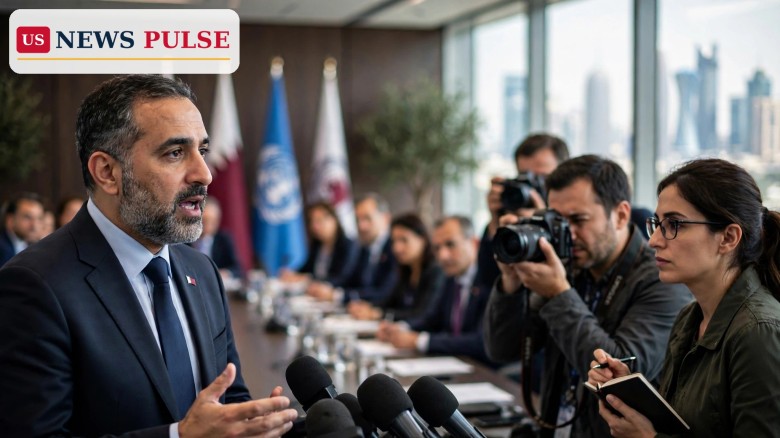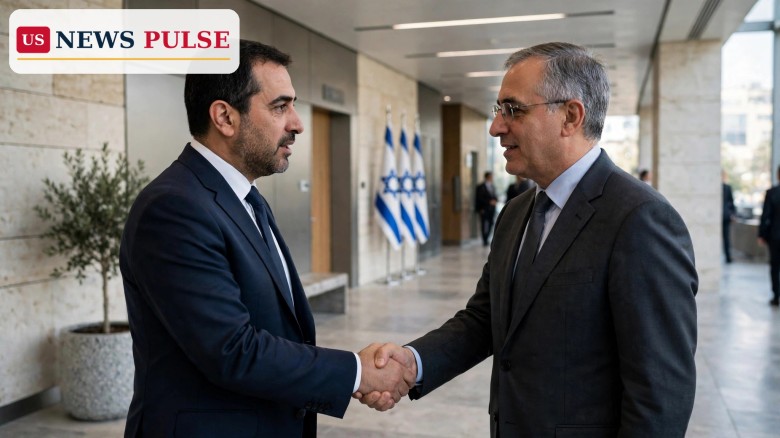
Israel Coalition Talks began in earnest on Thursday, October 29, 2026, when opposition leader Gadi Eisenkot sat down with former Prime Minister Naftali Bennett to discuss forming a new government "as quickly as possible", just days after Israel's October 27 election produced a parliament in which no bloc holds a majority. The meeting, reported by Israel's Ynet News, was the first visible step in what is expected to be weeks of bargaining over who will govern Israel, and whether the country's next government will be led by Benjamin Netanyahu, by Eisenkot, or by a unity arrangement between them.
The talks follow a final vote count released early on Friday, October 30, that confirmed the deadlock: Netanyahu's bloc won 53 of the 120 Knesset seats, eight short of the 61 needed to govern; the opposition bloc led by Eisenkot won 48; and Arab-led parties won a record combined 19 seats, leaving them as the decisive force in any majority. Netanyahu remains in office as caretaker prime minister while the process unfolds, and President Isaac Herzog will formally receive the results on Wednesday, November 4, before consulting party leaders and choosing who gets the first chance to form a government.
With more than 99 percent of Tuesday's ballots tallied, Israeli media reported that neither major camp had secured a majority, and opposition politicians began meeting on Thursday to explore their options. Eisenkot, who leads the Yashar party, the second-largest party with 21 seats, met Bennett, whose Together faction holds 12 seats, to discuss ways to form a new government quickly, according to a statement reported by Ynet News.
Eisenkot also met Yair Golan, chairman of The Democrats, the only member of the opposition alliance to support forming a coalition with parties led by Palestinian citizens of Israel, while all other opposition groups have rejected any such union. Golan met separately with Mansour Abbas, who leads the United Arab List, or Ra'am, which is projected to win eight of the 19 Arab-party seats. The Joint List holds the other 11.
The meetings matter because the arithmetic leaves Eisenkot's camp short on its own. Combining his 48-seat bloc with Ra'am's eight seats would reach 56; adding the Joint List's 11 would reach 67, a majority, but only if Eisenkot reverses his campaign pledge not to ally himself or enter a partnership with the Arab-led parties, and only if his own allies accept that arrangement. Avigdor Lieberman's Israel Our Home party has publicly rejected joining any government led by Netanyahu and has criticised talk of a minority government backed by Arab parties during the campaign. Bennett, who previously led a government that included Ra'am in 2021, faces pressure over whether to accept a junior role under Eisenkot.
Meanwhile, protesters gathered outside Eisenkot's home in Herzliya on October 29, calling on him to form a coalition with the Arab-led parties rather than allow Netanyahu to serve another term. Centrist politician Yair Lapid indicated that intense political maneuvering is taking place behind the scenes as parties seek partnerships, a sign that the public meetings are only the visible part of a much larger negotiation.
Israel's October 27 election was the country's first since the Hamas attack of October 7, 2023, and it was fought against the backdrop of a long war, a hostage crisis, and deep divisions over the judiciary, the military draft for ultra-Orthodox students, and the cost of living. Turnout reached 77.9 percent, with more than 5.7 million ballots cast, the highest participation in decades, and especially strong participation among Arab citizens, whose parties surged to their record combined total.
Netanyahu's Likud party emerged as the largest single party with 27 seats, ahead of Eisenkot's Yashar with 21 and Bennett's Together faction with 12. But Likud's overall bloc fell from its previous 64 seats to 53, a loss that cost Netanyahu his governing majority. The opposition bloc, at 48 seats, also fell short, which is why the 19 Arab-led seats now carry decisive weight: no government can be formed without either the Arab parties' support or a cross-bloc deal that brings together parties that spent the campaign opposing each other.
Israel's system makes that bargaining formal and time-limited. After the Central Elections Committee submits the formal results to President Herzog on November 4, Herzog consults representatives of every party and then tasks the lawmaker he deems most likely to succeed with forming a government. That lawmaker gets 28 days, with a possible 14-day extension. If that candidate fails, another can try, and if no one succeeds within a process of around 100 days, another election is held. Herzog said on Wednesday that everything must be done to avoid another election and urged parties to come to the consultations with an open mind.
Analysts sketch three broad paths to a majority, and each one requires someone to break a promise or cross a red line. The first is a unity government: Netanyahu's Likud, Eisenkot's Yashar, Lieberman's Israel Our Home, and Bennett's Together faction would together hold 66 seats, a comfortable majority. That grouping would represent the broad centre and right of Israeli politics, but it appears remote at this point, because it would mean Netanyahu abandoning his natural allies, the far-right and ultra-Orthodox parties, and Eisenkot, Lieberman, and Bennett agreeing to serve under a prime minister they campaigned against.
The second path is an Eisenkot-led minority government, propped up by the Arab parties without them joining the cabinet. Eisenkot's 48 seats plus Ra'am's eight would reach 56, and adding the Joint List's 11 would reach 67, but the plan faces two obstacles: Eisenkot's own pledge not to partner with the Arab-led parties, and the hardening of attitudes toward Israel's Arab minority since the October 7 attack, which makes such an arrangement a hard sell to many voters in his own camp. Both Arab parties have signalled they are prepared to cooperate with Eisenkot's camp, but only The Democrats, among the opposition, has publicly called for their inclusion.
The third path is a Netanyahu-led right-wing government, which would require him to find eight more seats beyond his 53, a task that looks difficult given that his bloc has already lost its majority and that the opposition and Arab parties together hold 67 seats. If none of the three paths works, the fallback is another election, an outcome Herzog has explicitly urged parties to avoid, and one that would extend a period of political instability that has already seen repeated elections in recent years.
Herzog's message to the parties has been consistent: come with an open mind, and avoid another election. "Everything must be done to avoid another election," he said on Wednesday, urging party leaders to approach the consultations in that spirit. The statement carries weight because the president, not the prime minister, decides who gets the first mandate, and his consultations will test whether any candidate can credibly claim a path to 61.
Within the opposition, the debate is already public. Eisenkot has pledged "not to ally himself or get into a partnership with the Palestinian Israeli parties", a position that constrains his options and that his critics, including protesters outside his home, are now pressing him to reconsider. Golan, by contrast, has argued openly for including the Arab-led parties, making him the exception inside the opposition alliance and a bridge to Abbas and the Ra'am leadership.
Commentary in Israel has gone further. An opinion piece in The Jerusalem Post on October 31 argued that Netanyahu and Eisenkot must reach a deal to end the deadlock, proposing a national-unity arrangement in which Netanyahu serves as prime minister for two years and then retires from politics, with Eisenkot succeeding him for the remainder of the term. The piece is an argument by a commentator, not a proposal from either camp, but it captures a growing sentiment in parts of the Israeli press: that the deadlock can only be broken if the two largest leaders put the country's future ahead of their personal rivalry.
Who governs Israel matters far beyond its borders, because the next government will decide the country's approach to the war's aftermath, to Gaza's reconstruction, to relations with the United States, and to the Iranian threat that has dominated the region's security debate. A caretaker government, however capable, cannot make the long-term decisions those questions require, and a prolonged deadlock would leave Israel's most consequential choices in limbo at a moment when its allies, including Washington, are pressing for clarity.
The deadlock also matters for Israel's Arab citizens, who make up about a fifth of the population and whose parties have never held this much parliamentary leverage. Whether their votes translate into influence, through a coalition, through support for a minority government, or through control of the parliamentary agenda, will shape how included they feel in the country's politics for years. The new Knesset will be sworn in on November 10, and Eisenkot's bloc could join forces with the Arab parties to elect a new Speaker, giving them control over the parliamentary agenda and the ability to pass legislation even before a government is formed.
For the United States, the outcome will affect a relationship that has already been tested by war, by disagreements over strategy, and by domestic politics on both sides. President Donald Trump has publicly backed Netanyahu and has said his endorsement made a difference in the election, but Washington has not decided whether to help broker a unity government. Whoever forms the next Israeli government will inherit that relationship, and the expectations that come with it.
The formal calendar is now set. The Central Elections Committee is expected to submit the formal results to President Herzog on Wednesday, November 4. Herzog will then consult party representatives and decide whom to task with forming a government. The mandate holder will have 28 days, with a possible 14-day extension, to negotiate a coalition. If that attempt fails, another candidate can try, and the process can run for around 100 days before another election becomes the default.
Before that, the new Knesset will be sworn in on November 10, and the election of a Speaker could become an early test of whether Eisenkot's bloc and the Arab parties can work together. Further meetings between party leaders are expected in the coming days, and any announcement of a coalition agreement, a rotation deal, or a decision by Herzog on the mandate will be the next genuine development in the story. Until then, the talks that began on Thursday are the story: a parliament with no majority, two rival leaders, and a set of Arab parties whose support may decide who governs.
What are the Israel Coalition Talks? They are the negotiations that began on Thursday, October 29, 2026, after Israel's October 27 election left no bloc with a majority, starting with opposition leader Gadi Eisenkot's meeting with former Prime Minister Naftali Bennett.
What were the final election results? Netanyahu's bloc won 53 of 120 Knesset seats, Eisenkot's opposition bloc won 48, and Arab-led parties won 19. A government needs 61 seats.
Who decides who tries to form a government? President Isaac Herzog, who receives the formal results on November 4, consults party leaders, and tasks the lawmaker he deems most likely to succeed. That lawmaker gets 28 days, with a possible 14-day extension.
Can Eisenkot form a government without the Arab parties? Not on the current numbers: his bloc has 48 seats, and only a deal with Likud or with the Arab parties, or both, can reach 61.
What happens if no government is formed? After a process of around 100 days, Israel faces another election, an outcome President Herzog has urged parties to avoid.
Related coverage: Israel Election Final Results: Netanyahu Bloc Wins 53 Seats, Short of Majority and Israel Election 2026: Netanyahu Fights for Survival as Israel Votes Today.
Leave a Comment



 | Today's Date: