The United Nations mission in Western Sahara lost its legal mandate as November 1, 2026 began, after the UN Security Council failed to renew it — leaving a 35-year-old peacekeeping presence without authorisation for the first time since it was created in 1991. The Western Sahara MINURSO mandate expired at the close of October 31, when the previous extension, granted under Security Council Resolution 2797 (2025), ran out with no replacement text adopted.
The lapse followed a dramatic day of rival votes in New York on Friday, October 30. Russia vetoed a United States-backed draft that would have renewed and reshaped the mission, even though it won 11 of the 15 Council votes. A rival Russian draft, which would have extended the existing mission unchanged, then fell well short of the nine votes needed for adoption. By the morning of November 1, a check of the UN's published Security Council resolutions register showed no new MINURSO text — and the mission's own staff had been told to stay home until further notice.
The Security Council met on Friday, October 30, to decide the fate of the United Nations Mission for the Referendum in Western Sahara, known as MINURSO. The mission's mandate, last extended by Resolution 2797 (2025), was due to expire on Saturday, October 31, so the Council had one day to agree a renewal — and it failed.
The United States draft received 11 votes in favour, one against and three abstentions. Under Council rules, a single veto from a permanent member is enough to block a resolution, and Russia cast that veto. France and the United Kingdom, the other two Western permanent members, backed the US text, along with eight non-permanent members.
Russia then put forward its own draft, proposing a straightforward one-year extension of MINURSO as it stands, without the changes Washington wanted. That text also failed: it won only a handful of votes in favour, with the United States voting against it and most members abstaining, well short of the nine affirmative votes required. Reports differed slightly on the exact tally for the Russian draft, but no account disputed the outcome — it was not adopted.
With neither text adopted, there was no last-minute compromise before the deadline. As October 31 became November 1, the mandate lapsed. A check of the UN's published resolutions register on the morning of November 1 showed no new MINURSO resolution after the October 19 adoption of an unrelated text, leaving Resolution 2797 (2025) as the last listed mandate. No formal UN operational-closure notice or withdrawal timetable had been located by that point — but the legal basis for the mission's continued operation had gone.
Western Sahara is a former Spanish colony in north-west Africa. Morocco considers the territory its own, while the Algeria-backed Polisario Front seeks to establish an independent state, the Sahrawi Republic. Most of the territory is controlled by Morocco, while tens of thousands of Sahrawis live in Polisario-run refugee camps in Algeria.
The UN established MINURSO in 1991, under a UN-brokered ceasefire, to monitor that ceasefire and to prepare a referendum on the territory's future. The referendum has never taken place, because the parties have never agreed on who would be eligible to vote. That disagreement has kept the mission's original purpose unfulfilled for 35 years, even as the Council renewed its mandate year after year.
The mission is small by peacekeeping standards: it has 155 military personnel and was set to cost $62 million in the fiscal year that began in June, according to a report by the UN secretary-general cited by Al Jazeera. But its monitoring and de-escalation role has been treated as a stabilising presence in a territory where low-level fighting has continued since the Polisario Front said in 2020 that it was resuming armed struggle.
The Council had already shifted its language last year, making Morocco's autonomy proposal a basis for negotiations and asking Secretary-General Antonio Guterres to submit a review of the peacekeeping mission. The US draft tabled on October 30 would have gone much further.
The American draft would have extended the mission for another year, to October 31, 2027, but on new terms. It would have removed the reference to a referendum from the mission's name, renaming it the United Nations Mission in Western Sahara, or MINUSO — dropping the letter R that stood for referendum. It would have made Morocco's autonomy proposal the only basis for further talks, under which the territory would manage its internal affairs but remain under Moroccan sovereignty. It also called for a census of refugees.
US Ambassador Mike Waltz told the Council in New York on Friday that the referendum had been stalled for decades, and that the time had come to move beyond it. The argument, as presented by Washington and its supporters, was that genuine autonomy under Moroccan sovereignty represents the most viable path to a settlement after decades of deadlock.
Russia's UN ambassador, Vassily Nebenzia, said at the same meeting that Moscow opposed the draft because it favoured one side. "We stress the fact that the Security Council cannot automatically predetermine matters relating to sovereignty," he said. Russia instead proposed renewing the existing mission without those changes — preserving its name, its referendum mandate and its existing responsibilities.
The two drafts therefore did not disagree about whether the mission should continue for another year. Both proposed a one-year extension. They disagreed about the words that would continue it — and in the Security Council, those words were decisive.
Morocco's Royal Cabinet welcomed the failure to renew MINURSO, saying on Friday that UN personnel and equipment should leave the territory in the coming days, and that the Western Sahara issue should now be withdrawn from the Security Council's consideration. It declared that a 35-year chapter had closed. Morocco said it remained committed to the ceasefire.
Sidi Omar, the Polisario Front's representative at the UN, told reporters on Friday that he welcomed Russia's veto, because the US proposal would undermine Sahrawi self-determination. From the Polisario's perspective, removing the referendum from the mission's name and making autonomy the sole basis for talks would close off the independence option that the 1991 settlement had promised to put to a vote.
Algeria expressed regret on Saturday over the failure to renew MINURSO's mandate. Its foreign ministry criticised what it described as the US draft's excessive bias towards Morocco. Algeria hosts the Sahrawi refugee camps and backs the Polisario Front, so its position tracks closely with the Polisario's own.
The aid group Oxfam warned that losing MINURSO's "monitoring and de-escalation functions risks undermining security and stability" — a warning that carries weight in a territory where the ceasefire has already frayed since 2020, and where tens of thousands of people in the camps depend on humanitarian assistance.
Inside the mission itself, the practical consequences arrived before the legal ones. According to an internal email reported by Hespress, MINURSO instructed its personnel to park all official vehicles, stay away from their workplaces and remain at home until further notice, hours before the mandate expired at midnight on Saturday. The directive does not by itself establish that personnel have begun withdrawing, but it shows a mission standing down its daily operations while it waits for instructions.
The lapse matters for three reasons. First, it removes the UN's eyes and ears from a disputed territory at a moment of heightened regional tension. MINURSO's observers monitor the ceasefire line, investigate incidents and provide a neutral account of what happens on the ground. Without a mandate, that monitoring function has no legal footing, and the risk of miscalculation — a clash that neither side intended — rises.
Second, it marks a significant diplomatic shift. For 35 years, the Council renewed MINURSO routinely, even when it could not agree on a political settlement. The double failure on October 30 — a vetoed US draft and a defeated Russian draft — shows a Council that can no longer agree even on the routine renewal, because the underlying political question, autonomy versus referendum, has now been written into the renewal text itself. That is a precedent other missions will watch closely.
Third, it changes the negotiating landscape for the United States. Washington had sought to use the renewal to cement Morocco's autonomy plan as the sole basis for talks, building on last year's Council language. The veto means that goal was not achieved in Council text — but Morocco is now citing the 11-to-1 Council arithmetic in favour of the US draft as political support for autonomy, even without a resolution. The file may now migrate from the Council's agenda towards other UN bodies and bilateral diplomacy, as analysts noted before the vote.
Three paths are open, none of them agreed. The Council could negotiate a shorter extension, such as six months, as a compromise; it could return with a revised draft that both Washington and Moscow can accept; or it could allow the mandate to lapse while the broader UN-led political process continues. No new voting timetable has been announced.
In the meantime, the practical questions are immediate: whether MINURSO personnel stay in place, draw down in an orderly way, or leave on Morocco's timetable; whether the ceasefire holds without UN monitors; and whether the Council returns to the issue before an incident forces its hand. Washington has pledged an orderly withdrawal, according to reports of the US position, but no UN withdrawal schedule has been published.
For the Sahrawis in the refugee camps in Algeria, and for the people living in Moroccan-controlled Western Sahara, the most important question is simpler: whether the ceasefire that has held, imperfectly, since 1991 survives the loss of the mission that was created to watch over it.
What is MINURSO? The United Nations Mission for the Referendum in Western Sahara, created in 1991 to monitor a ceasefire between Morocco and the Polisario Front and to prepare a referendum on the territory's future. The referendum has never been held.
Why did its mandate expire? The Security Council failed to adopt a renewal on October 30, 2026. Russia vetoed a US-backed draft, and a rival Russian draft failed to win the nine votes needed. The previous mandate, under Resolution 2797 (2025), expired at the close of October 31.
What did the US draft propose? A one-year extension that would have renamed the mission MINUSO, dropping "referendum" from its name, and made Morocco's autonomy plan the sole basis for further talks, plus a refugee census.
Has MINURSO left Western Sahara? Not on any published timetable. Its staff were told to stay home until further notice before the mandate expired, but no formal UN withdrawal schedule had been located as of the morning of November 1.
What happens now? The Council could agree a short compromise extension, return with a revised draft, or let the mandate lapse while political talks continue elsewhere. No new vote has been scheduled.
Related coverage: G20 Atlanta ends without consensus as Ukraine and Iran divide ministers, Iran Khamenei warning: no geographic limits if US strikes resume, and Yemen Hodeidah airstrikes hit oil facility, wounding at least three civilians.
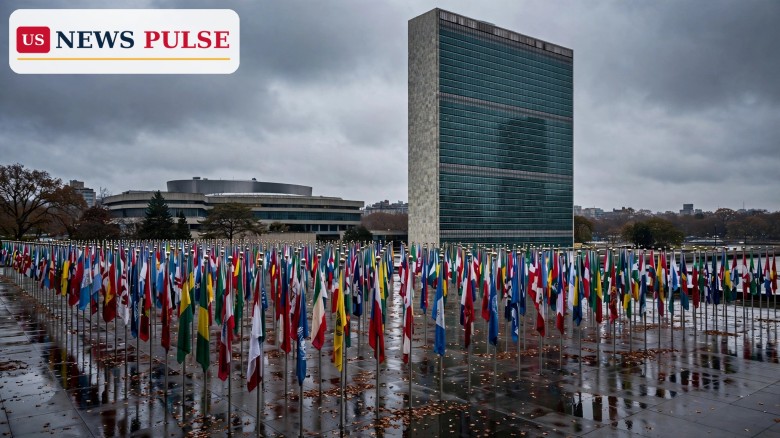
Sources: Al Jazeera, October 31, 2026; Reuters via The Standard and The Economic Times, October 31, 2026; Hespress, October 31, 2026; UN Security Council voting record as reported. Where sources differed on the exact tally for the Russian draft, this article reports only the agreed outcome — that it failed to reach nine votes. The featured image is an illustrative photograph of UN headquarters in New York.
Leave a Comment



 | Today's Date: