


 | Today's Date:


Election Day Polls Open Under Close Watch as Floods Threaten Arizona Votes
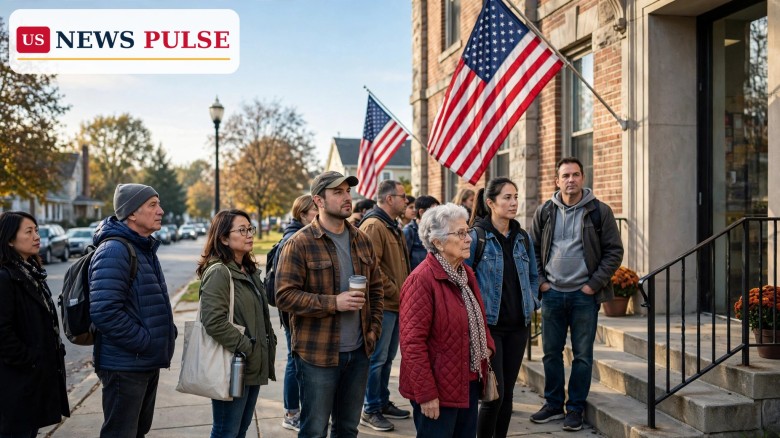
Election Day polls opened across the United States on Tuesday, November 3, 2026, with voters deciding control of Congress after a campaign season marked by an unusually heavy federal presence in state-run elections and extraordinary scrutiny at polling places. The first sites opened at 6 a.m. in Connecticut, Indiana, Kentucky, Louisiana, Maine, Missouri, New Jersey, New York and Virginia.
Key Points
- Election Day polls opened Tuesday, November 3, 2026, with all 435 House seats, 35 Senate seats and 36 governorships on the ballot.
- The Justice Department planned its largest-ever Election Day polling-place monitoring effort, matched by an even larger effort from Democrats and allied groups.
- The Trump administration has said no armed federal officials would guard polling places on Election Day.
- Weekend flooding in the Southwest threatened access to some polling places in Colorado, Arizona and New Mexico.
- Maricopa County, Arizona, declared a local emergency late on November 2 after flooding damaged roads in the Rio Verde Foothills.
What Happened
The final day of voting arrived after millions of Americans had already cast ballots early, with early turnout on pace to pass the total from the last midterm elections two years ago. More than 57 million early ballots had been cast before Election Day, according to the University of Florida Election Lab, and voting so far had unfolded with relatively few problems, according to the Associated Press.
That calm backdrop did not remove tension around the polls. The Justice Department was planning its largest-ever monitoring effort, while Democrats and allied groups mounted an even greater effort. Officials had prepared for possibilities that once seemed far-fetched: immigration agents at voting sites, or federal officers seizing voting machines. The administration has insisted that no armed federal officials would guard the polls.
The most significant disruptions before Election Day, the Associated Press reported, were in courtrooms: a flurry of filings over alleged noncitizen voters, federal monitors and intimidation of election officials, in cases that could extend into counting and certification.
Background: A Year of Federal Pressure on State-Run Elections
The Constitution gives states, and sometimes Congress, the authority to set election rules. The past year broke with that pattern: President Donald Trump spent months trying to influence how states run their elections, and repeatedly sowed doubts about the outcome should Republicans lose.
His Justice and Homeland Security departments pursued a large hunt for noncitizen voters, including a predawn California operation that led to more than two dozen arrests, and sued to block certification of Alaska's results if the Senate race favoured Democrats. In the run-up to Tuesday, none of the steps Democrats most feared had come to pass, and courts had largely blocked the administration's manoeuvres. On Monday night, the Supreme Court rejected its push to force California to set aside thousands of ballots. Even the administration's own record, the Associated Press noted, shows what research has long shown: noncitizen voting is extremely rare.
Election Day Polls Open as Arizona Flooding Tests Access to the Vote
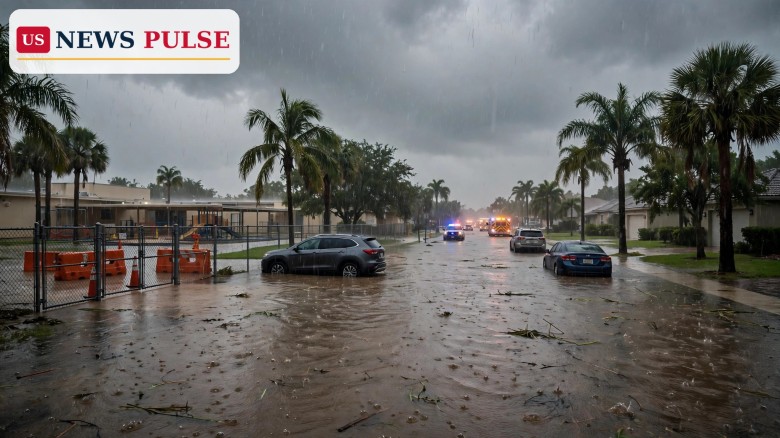
While lawyers argued over monitors and ballots, weather threatened whether some voters could physically reach a polling place. Heavy rain and flash flooding across the Southwest over the weekend were expected to make it harder for voters in parts of Colorado, Arizona and New Mexico, although most polling places had not changed.
The sharpest case was in Maricopa County, Arizona, home to Phoenix. Two Republican state representatives, Alex Kolodin and Cody Reim, wrote on November 2 to Maricopa County Board of Supervisors chair Kate Brophy McGee requesting an emergency declaration to restore road access in the Rio Verde Foothills, hit hard by flooding. Kolodin, on the November 3 ballot against incumbent Democratic Secretary of State Adrian Fontes, wrote on X that a washout must never be the reason an Arizonan's voice goes unheard on Election Day.
Late on November 2, the county declared a local emergency in unincorporated areas. It was unclear whether the declaration answered Kolodin and Reim's letter, or would guarantee that every resident could reach a polling place. Assistant county manager Zach Schira said roads were being cleared and would be passable by the end of the day. Supervisor Steve Gallardo wrote on X that Rio Verde Foothills residents continued to have access to voting. Resident Caitlin Lewis, 35, said the flooding was the worst in her five years there, that she could not work for two days, and that passable roads were hit or miss as she hoped to reach the Rio Verde Community Association polling place.
Rainfall ranged from one to four inches across the lower desert, including greater Phoenix, and up to eight inches in northern and eastern Maricopa County foothills, according to the county. Governor Katie Hobbs declared a state of emergency on November 2 over what she called catastrophic rains and flash flooding; her spokesperson, Liliana Soto, said the state was coordinating with election officials so flooding would not keep anyone from the polls.
Reactions and Quotes
The administration's position is that federal scrutiny is needed to protect the integrity of the vote. Its critics argue that the scrutiny itself is the threat, creating a climate in which voters may fear encountering federal agents at the polls. Election administrators had also advised voters casting late absentee ballots to use drop boxes or deliver them in person rather than mailing them, after concerns that Postal Service changes could cause postmarking delays. President Trump, asked a week before Election Day whether he would accept the results, offered a qualified answer: "I will if they are honest."
Why It Matters
Democrats need a net gain of three House seats and four Senate seats for majorities; final polls favour them in the House while leaving the Senate uncertain. But Tuesday is also about the machinery of democracy: if voters vote freely and monitors do not intimidate, the result will be easier to accept. Arizona, where statewide contests are decided by narrow margins, shows why even few voters cut off by a washout matter.
What Happens Next
Polls close at different times, with first results expected on Tuesday evening and close races potentially taking longer to call. Counting and certification will follow, and court battles could extend well beyond Election Day. In Maricopa County, the immediate test is whether Rio Verde Foothills roads stay passable through the evening.
Frequently Asked Questions
When did polls open? First sites opened at 6 a.m. on Tuesday, November 3, 2026, in nine states.
What is on the ballot? All 435 House seats, 35 Senate seats and 36 governorships, plus state and local offices.
Who is monitoring the polls? The Justice Department planned its largest-ever effort, while Democrats and allies mounted an even larger one. No armed federal officials would guard polling places, the administration says.
Did flooding affect Arizona voting? Weekend flooding damaged Rio Verde Foothills roads in Maricopa County, which declared a local emergency late on November 2; Governor Katie Hobbs declared a statewide emergency.
What did the Supreme Court decide? It rejected the push to force California to set aside thousands of ballots.
Read more on US News Pulse: Supreme Court rejects Trump bid to set aside California ballots and Abortion ballot measures put four states to the test.
Leave a Comment