


 | Today's Date:


Holscher Claims Victory in Kansas Governor Race as Audit Looms Over Narrow Lead
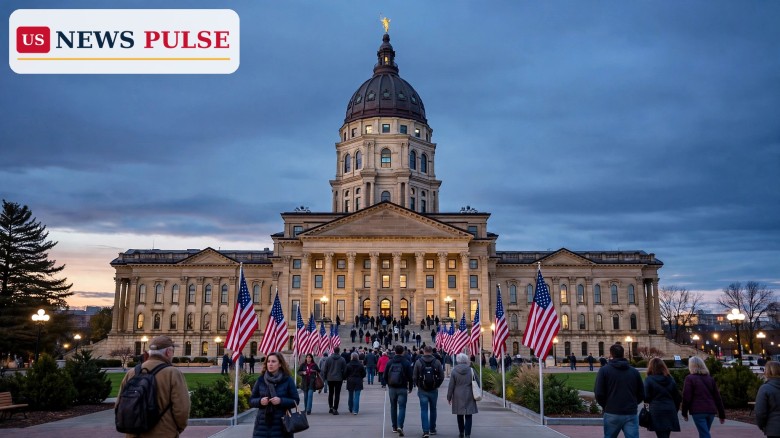
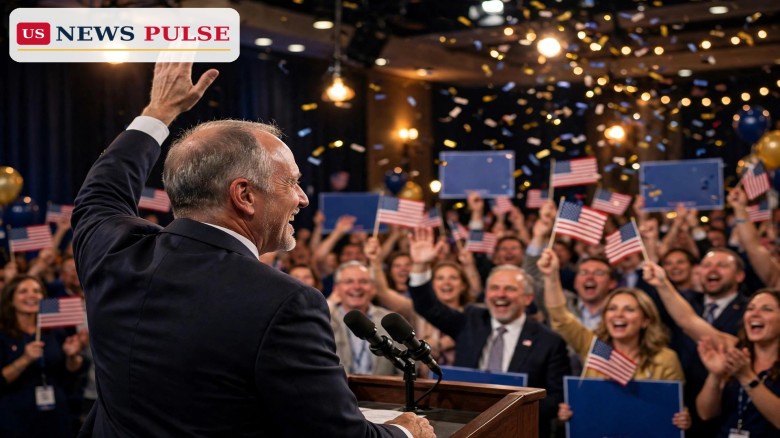
Democrat Cindy Holscher declared victory on Wednesday morning, November 4, 2026, in the Kansas governor race, holding a lead of roughly 5,500 votes over Republican Ty Masterson out of more than 1.08 million ballots cast. The margin, about 50.3 percent to 49.7 percent, is narrow enough to trigger a close-race audit under Kansas law, and The Associated Press had not called the race as of Wednesday morning, leaving the outcome officially unsettled even as Holscher claimed the win.
The contest decides who succeeds term-limited Democratic Governor Laura Kelly, so a Holscher victory would keep the Kansas governor's office in Democratic hands. Masterson, the Kansas Senate president, has not conceded, and officials stressed that mail-in ballots postmarked by Election Day and still arriving, along with provisional ballots, remain to be counted before any final result is certified.
Key Points
- Cindy Holscher declared victory Wednesday morning, November 4, 2026, leading Ty Masterson by about 5,557 to 5,578 votes out of more than 1.08 million ballots.
- The margin is about 50.3 percent to 49.7 percent, under one percent, which triggers a close-race audit under Kansas law.
- The Associated Press had not called the race as of Wednesday morning, and no official winner has been named.
- Mail-in ballots postmarked by Election Day are eligible if received by Friday, and provisional ballots are still to be counted.
- The winner succeeds term-limited Democratic Governor Laura Kelly, so a Holscher win keeps Democrats in the Kansas governor's office.
What Happened
Holscher announced her victory claim on Wednesday morning after overnight counting put her ahead by a little more than 5,500 votes. With more than 1.08 million ballots cast, the gap of roughly half a percentage point is small in absolute terms but consistent across reported totals, which put the lead at 5,557 to 5,578 votes depending on the latest county updates. That closeness is why the race remains uncalled.
Kansas Secretary of State Scott Schwab announced a close-race audit because the margin is under one percent. Each county will also run a random voting audit and complete its canvass, the formal process by which local officials verify and certify their totals. Until those steps are finished and the remaining eligible ballots are processed, the result remains unofficial, whatever either campaign says.
Background and Context
The Kansas governor's office was one of the most closely watched statehouse contests of the 2026 midterms. Kelly, a Democrat, could not seek another term, leaving an open seat in a state where Republicans dominate the legislature but where Democrats have repeatedly won the governor's mansion. That split has defined Kansas politics for years.
Masterson entered the race as one of the most powerful Republicans in the state, the president of the Kansas Senate, with deep ties to the legislature's conservative majority. Holscher campaigned as a successor to Kelly's approach, arguing that Kansas voters wanted steady management rather than a sharp change of direction. Pre-election polling had suggested a close contest. For broader midterm context, see Trump's closing rally in Salina, Kansas and the final Times/Siena polls before Election Day.
Kansas Governor Race: Why a Margin Under One Percent Changes Everything
A margin under one percent does more than delay a call. Under Kansas law it triggers a close-race audit, in which officials re-examine ballots and procedures to confirm that the machines and the count performed as they should. Counties add their own random audits, sampling ballots to check the reported totals, and then canvass their results.
The outstanding ballots matter too. Mail-in ballots postmarked by Election Day remain eligible if they arrive by Friday, and provisional ballots, cast by voters whose eligibility needed checking at the polls, are still being adjudicated. In a race decided by about 5,500 votes, those categories could narrow or widen the gap, though overturning a lead of that size would require the remaining ballots to break heavily in one direction. Her lead is real, but not yet mathematically final.
Reactions and Quotes
Masterson has not conceded. Responding to the early results, he acknowledged the direction of the count while pointing to the process still to come, saying: "the first count does not seem to be going our way, but the margin is narrow enough that Kansas law calls for another look." The remark captures his campaign's position: not a claim of victory, but a refusal to concede while the audit and the remaining ballots could still move the numbers.
Holscher's declaration reflects a campaign confident its lead will survive the audit. Election officials have stayed out of the political argument, emphasising only that the audit and canvass must run their course before a winner is certified.
Why It Matters
Whoever wins will govern a state at a crossroads on taxes, schools, health care and economic development, alongside a Republican-controlled legislature. If Holscher wins, Kansas will have a Democratic governor negotiating with that legislature, much as Kelly did, with veto power as a central tool. If Masterson closes the gap, Republicans would hold unified control of state government, removing that check and opening the way for a more conservative legislative programme.
The race also matters as a read on the 2026 electorate. Kansas voters backed Democratic candidates in several high-profile contests this cycle even as the state remains Republican at the presidential level, and the governor's race was the biggest test of whether that pattern would hold for the state's top office. A Holscher win would confirm it; a Masterson comeback would show its limits.
What Happens Next
The next steps are procedural but decisive. Counties will complete their random audits and canvasses, the Secretary of State's close-race audit will run, and officials will process the remaining mail-in ballots arriving by Friday along with provisional ballots. Only then will the result be certified and an official winner declared.
Until certification, Holscher's victory claim stands as a political statement rather than a legal fact, and Masterson's refusal to concede stands as a statement of the same kind. The audit will determine which of those statements the official record supports.
Frequently Asked Questions
Has the Kansas governor's race been officially called?
No. Holscher has declared victory, but the AP had not called the race as of Wednesday morning, and no official winner has been named.
How big is Holscher's lead?
About 5,557 to 5,578 votes, roughly 50.3 percent to 49.7 percent, out of more than 1.08 million ballots cast.
Why is there an audit?
Because the margin is under one percent, Secretary of State Scott Schwab announced a close-race audit. Each county will also run a random voting audit and canvass its results to verify the count.
Could the remaining ballots change the result?
Mail-in ballots postmarked by Election Day are eligible if received by Friday, and provisional ballots are still to be counted. They could narrow or widen the margin, but overturning a lead of about 5,500 votes would require them to break heavily for Masterson.
Who does the winner replace?
Term-limited Democratic Governor Laura Kelly. A Holscher win keeps the office in Democratic hands; a Masterson win would give Republicans unified control of Kansas state government.
Leave a Comment