


 | Today's Date:



Trump Signs Order Making Oval Office and Cabinet Room National Landmarks
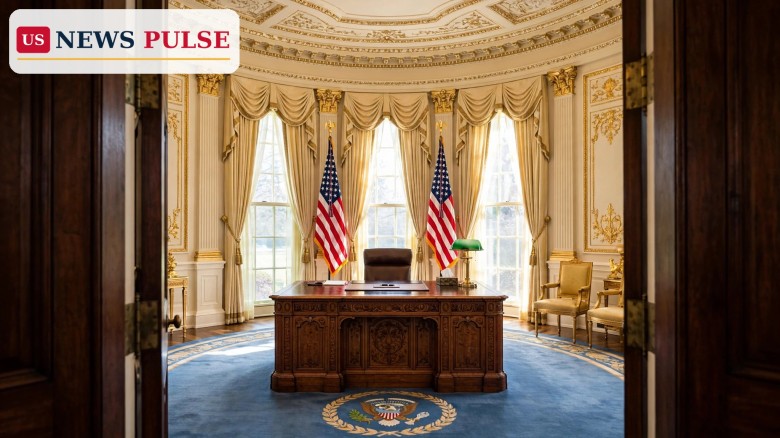
President Donald Trump signed a document on Thursday, November 5, 2026, designating the White House's Oval Office and the Roosevelt Cabinet Room as national landmarks, a move he said would protect the two most famous rooms in the West Wing from future changes. The Oval Office national landmark designation means no major modification to either room can go ahead without the approval of Congress, Trump said, adding that the administration would send the document to Congress to have it ratified.
Trump called the two rooms "landmarks for the ages" as he signed the document, in the third straight day of events tied to his sweeping renovation projects across the capital. The announcement came two days after Republicans lost control of both chambers of Congress in the midterm elections
Key Points
- President Donald Trump signed a document on Thursday, November 5, 2026, designating the Oval Office and the Roosevelt Cabinet Room as national landmarks.
- Trump said "no major modification without the approval of Congress" and said the administration would send the document to Congress for ratification.
- The order blocks structural changes to the two West Wing rooms, but the next president can still redecorate and remove the gold trim and paintings.
- It was the third straight day of events tied to Trump's capital renovation projects, after the Reflecting Pool reopening on Tuesday and a tour of the new $400 million ballroom on Wednesday.
- Since returning to office in early 2025, Trump has extensively gilded the Oval Office with gold accents, statuettes and portraits.
What Happened
Trump signed the document on Thursday, November 5, 2026, in a ceremony that capped three days of high-profile events centred on his remaking of Washington's most symbolic spaces. Speaking as he put pen to paper, the president said the designation would make the Oval Office and the Cabinet Room "landmarks for the ages" and protect them from future changes.
"No major modification without the approval of Congress," Trump said, explaining that the administration would send the document to Congress to have it ratified. He illustrated the point in his own style: "If they want to say 'let's not have Oval anymore, let's make it square', what happens is they have to go back to Congress."
The signing was the third consecutive day of events tied to Trump's capital renovation programme. On Tuesday he reopened the Lincoln Memorial Reflecting Pool, and on Wednesday he led a tour of the new $400 million White House ballroom.
Background and Context
The Oval Office has been the president's working office since it was built in 1909 under President William Howard Taft, and every president since has left a mark on it, from the Resolute Desk to the choice of artwork, carpet and curtains. Its oval shape and its three tall windows overlooking the Rose Garden have made it one of the most famous rooms in the world.
Since returning to office in early 2025, Trump has transformed the look of the Oval Office more dramatically than any recent president. He has added gold accents and gilded trim, gold statuettes, portraits of famous Americans pulled from storage and a copy of the Declaration of Independence on the wall.
The building projects have also become a political issue. The new ballroom, the Reflecting Pool work and the Oval Office redecoration have all been largely unpopular with voters, according to polling.
Oval Office National Landmark: What the Designation Means
The practical effect of the designation is to put a lock on the structure of the two rooms. Under the order Trump signed, no major modification to the Oval Office or the Cabinet Room can be made without the approval of Congress, which means a future president could not knock through walls, change the shape of the room or carry out a structural overhaul on their own authority.
What the order does not do is freeze the rooms exactly as they look today. The next president can still redecorate, and can remove the gold trim, the statuettes and the paintings that Trump has added. Furniture, artwork and decoration remain the choice of the sitting president, as they always have been. The designation protects the architecture, not the interior design.
Reactions and Quotes
Trump framed the move as preservation rather than politics, describing the two rooms as "landmarks for the ages" and presenting the order as a way of protecting them for future generations. His insistence that any major change must go back to Congress was the centrepiece of the announcement, and he returned to it repeatedly as he signed the document.
"No major modification without the approval of Congress," the president said, adding that the administration would send the document to Congress to have it ratified. On the limits of what a future president could do, he said: "If they want to say 'let's not have Oval anymore, let's make it square', what happens is they have to go back to Congress."
Why It Matters
The Oval Office is more than a workplace. It is the visual symbol of the American presidency, recognised around the world, and changes to it are read as statements about the president who makes them. By designating it a national landmark, Trump is attempting to fix his own vision of the room in place.
The move also matters because it tests the limits of presidential power over the White House itself. The building belongs to the American people and is maintained with public money, but each president has traditionally had wide latitude over its interiors. Requiring congressional approval for major changes would shift some of that authority from the presidency to Congress.
What Happens Next
The next step is Congress. Trump said the administration would send the document to Congress to have it ratified, and lawmakers will now have to decide whether to endorse the designation, amend it or let it stand as a presidential act alone. With Democrats having won both chambers in the midterms, the new Congress that convenes in January 2027 will have the final say.
Meanwhile, the renovation programme continues. The new $400 million ballroom is moving toward completion, and the Oval Office will remain the centre of that story, its gold trim and portraits intact for now.
Read more: Trump marks White House ballroom final beam day after midterm rout and Trump Reflecting Pool closing speech opens with pool talk on midterm eve.
Frequently Asked Questions
What did Trump sign on November 5, 2026?
He signed a document designating the Oval Office and the Roosevelt Cabinet Room as national landmarks, saying no major modification to either room can be made without the approval of Congress.
Can the next president change the Oval Office?
Yes, in part. The next president can still redecorate and remove the gold trim, statuettes and paintings. The order blocks structural changes, not decoration.
Does Congress need to approve the designation?
Trump said the administration would send the document to Congress to have it ratified, which would give the landmark status a firmer legal footing.
What else has Trump changed in the White House?
Since early 2025 he has gilded the Oval Office, reopened the Lincoln Memorial Reflecting Pool and built a new $400 million ballroom.
Leave a Comment