


 | Today's Date:




US Disables Cargo Ship M/V Huda in Gulf of Oman After It Defies Iran Blockade
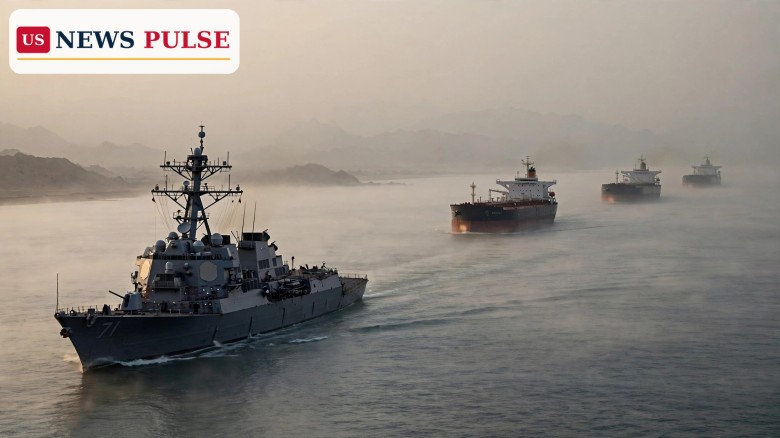
United States forces disabled a commercial cargo ship in the Gulf of Oman on Saturday after its crew repeatedly ignored warnings and tried to break through the American naval blockade against Iran, US Central Command said. A US military aircraft fired precision munitions at the stern of the St. Kitts-flagged M/V Huda, CENTCOM said, after forces told the crew to move away from the spaces to be hit. The vessel had been trying to leave regional waters after visiting an Iranian port. Maritime trackers reported that all crew members were safe.
Key Points
- CENTCOM said its forces disabled the M/V Huda on Saturday, November 7, 2026, after the crew ignored repeated warnings and tried to breach the blockade against Iran several times.
- A US military aircraft fired precision munitions at the vessel's stern after the crew was told to abandon the targeted spaces. No injuries were reported.
- The Huda is the fifth merchant ship disabled since the blockade began in July. Another 147 vessels that complied with warnings were redirected.
- Vesseltracker reported the ship was hit at an anchorage off Khor Fakkan, UAE, with all crew members safe.
- The strike came the same day Iran's Revolutionary Guard said two ships hit mines in the Strait of Hormuz and explosions were heard on Qeshm Island and at Jask port.
What Happened
CENTCOM announced the operation on Saturday, November 7, 2026. The M/V Huda, a cargo vessel flying the flag of St. Kitts and Nevis, was trying to leave regional waters after a visit to an Iranian port when US forces challenged it. CENTCOM said the civilian crew ignored the warnings and then tried to violate the naval blockade several times.
US forces then moved to disable the vessel. A military aircraft fired precision munitions at the ship's stern in a strike designed to stop the ship rather than sink it. Before firing, American forces directed the crew to abandon the targeted spaces.
Vesseltracker reported that the Huda was hit at an anchorage off Khor Fakkan in the United Arab Emirates, and that all crew members were reported safe. CENTCOM did not immediately say how badly the vessel was damaged, whether it remained at anchor, or whether it would be towed.
Background: A Blockade Enforced Ship by Ship
The United States has enforced a naval blockade against Iran since July 2026, as part of a war that began on February 28, 2026 and is now in its ninth month. The blockade aims to cut off Iranian oil exports, and CENTCOM has said it has prevented Iran from exporting more than $25 billion in crude oil in recent months.
Enforcement follows a consistent pattern: vessels that obey US warnings are turned away and redirected; vessels that refuse are stopped by force. Before the Huda, US forces had redirected 147 vessels that complied and disabled four that refused. The Huda is the fifth ship disabled.
The same week brought a sharp escalation at sea. On Tuesday, November 4, CENTCOM said the Revolutionary Guard twice tried to target a US warship with ballistic missiles, and the United States destroyed five Iranian oil tankers in response. On Saturday, the same day as the Huda operation, CENTCOM announced a new Task Force Iron Gate to choke off Iran's overland weapons trade.
M/V Huda and How the Blockade Is Enforced
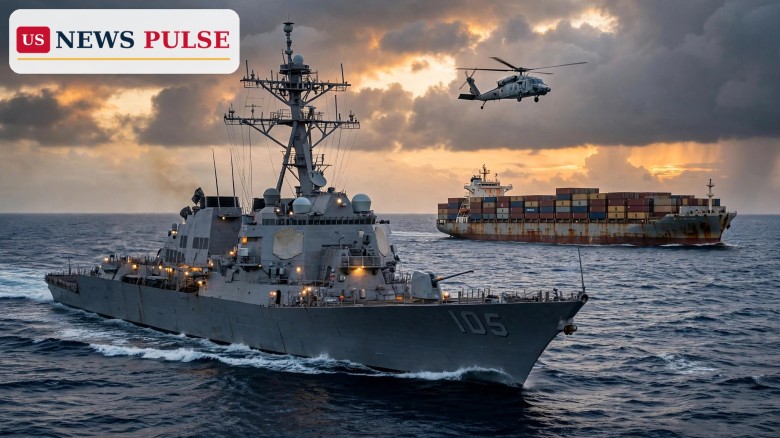
The Huda case shows how the blockade works in practice. US warships and aircraft patrol the Gulf of Oman and the approaches to the Strait of Hormuz, challenging vessels that have called at Iranian ports. A ship that turns away faces no further action. A ship that presses on after repeated warnings is disabled, with the strike aimed at the stern so the vessel can no longer move under its own power.
Reactions and Claims on a Volatile Day
CENTCOM said it "continues to strictly enforce the naval blockade against Iran," a line that has become the command's standard description of the operation.
Iran's Revolutionary Guard navy added a competing claim on the same day, saying two commercial ships had hit mines in the Strait of Hormuz. Explosions were also heard on Qeshm Island and at Jask port. Neither claim was independently confirmed, and it was not clear whether the mine reports were connected to the Huda operation.
The incident came as diplomacy continued in parallel. Qatar's prime minister has said mediation between Washington and Tehran continues, with "significant progress" made, and US-brokered talks are due to resume in Abu Dhabi on November 10-11. The Huda strike shows how narrow the margin is between negotiation and a new clash at sea.
Why It Matters
The Gulf of Oman and the Strait of Hormuz carry about a fifth of the world's seaborne oil, so every confrontation there moves energy markets and shipping insurance. The blockade is also one of Washington's main levers, pressuring Tehran's finances while talks continue.
The Huda operation shows that the United States is willing to use force against civilian-crewed shipping that defies the blockade, and to do so openly, through an announced CENTCOM operation. That sends a message to every other operator weighing a call at an Iranian port: comply and be turned away, or refuse and risk being disabled. It also shows the risk: a strike on a civilian-crewed vessel, even a carefully aimed one, can go wrong, and a miscalculation could close the strait or kill mariners.
What Happens Next
The immediate question is the fate of the Huda itself: whether the disabled vessel remains at anchor off Khor Fakkan, is towed to port, or is left where it was hit. CENTCOM has not said what will happen to the ship or its crew.
The wider question is whether the blockade tightens further. With Task Force Iron Gate now extending enforcement to Iran's land borders, and with talks due in Abu Dhabi on November 10-11, the coming days will show whether the Huda strike was routine enforcement or the start of a harder phase. Until the talks produce a deal, CENTCOM has said the blockade will be strictly enforced.
Frequently Asked Questions
What is the M/V Huda?
The M/V Huda is a St. Kitts-flagged commercial cargo vessel. It was trying to leave regional waters after visiting an Iranian port when US forces disabled it on November 7, 2026.
Why did the United States disable the ship?
CENTCOM said the crew ignored repeated warnings and tried to breach the US naval blockade against Iran several times. A US military aircraft then fired precision munitions at the vessel's stern.
Was anyone hurt?
No injuries were reported. The crew was directed to abandon the targeted spaces before the strike, and Vesseltracker reported all crew members safe.
How many ships has the US disabled under the blockade?
Five, including the Huda. Another 147 vessels that complied with warnings were redirected.
What happens to the Huda now?
That has not been announced.
Related coverage: US destroys five Iranian oil tankers after warship missile attacks, CENTCOM says and Iran lifts 2,000km missile range limit, vowing to show longer reach in practice.
Leave a Comment