


 | Today's Date:



Antarctic Ozone Hole Largest in a Decade, NASA Says, But Recovery Stays on Track
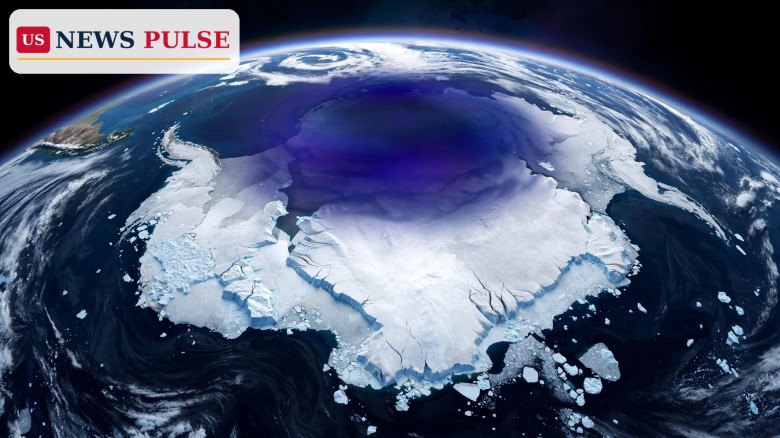
The Antarctic ozone hole grew to its largest size in a decade in 2026, NASA and the National Oceanic and Atmospheric Administration (NOAA) reported on November 4 — yet scientists say the ozone layer is not failing. The hole reached 10.5 million square miles on September 18, nearly three times the area of the United States, close to the September 2000 record. The cause was weather, not a return of the chemicals that once tore the ozone layer apart: an unusually powerful polar vortex kept the cold, ozone-destroying conditions going longer than usual.
Key Points
- NASA and NOAA reported on November 4, 2026, that the 2026 Antarctic ozone hole was the largest in a decade.
- The hole peaked at 10.5 million square miles (27.1 million square kilometres) on September 18 — about 90 percent of the September 2000 record.
- Averaged from September 7 to October 13, it covered about 9.6 million square miles, the seventh-largest average in 48 years.
- The hole was wide but not deep: ozone over the South Pole fell to 105 Dobson units on October 17, well above the record low of 92 in October 2006.
- Without the Montreal Protocol, the hole could have been 1 to 2 million square miles larger; full recovery is still expected around the 2070s.
What Happened
NASA and NOAA released their annual assessment on November 4, 2026, drawing on satellite and balloon data. On September 18, the hole covered 10.5 million square miles, the largest single-day extent in a decade. Across the peak depletion season, from September 7 to October 13, it averaged about 9.6 million square miles — the seventh-largest average in 48 years of monitoring. The data came from NASA's Aura satellite, the NOAA-20 and NOAA-21 satellites, and the Suomi National Polar-orbiting Partnership satellite, plus balloon data from the South Pole.
For all its size, this year's hole was not especially deep. Ozone directly over the South Pole reached its lowest value for the year — 105 Dobson units — on October 17, against the lowest ever recorded, 92 in October 2006.
Background: The Ozone Layer and the Montreal Protocol
The ozone layer sits high in the stratosphere and acts as the Earth's sunscreen against harmful solar radiation. Each southern spring, a hole opens over Antarctica as cold conditions allow chlorine and bromine from human-made compounds to destroy stratospheric ozone. Scientists have tracked it by satellite since 1979.
The chemicals responsible — chlorofluorocarbons and other ozone-depleting compounds — were once widely used in refrigerators, air conditioners and building insulation. In 1987, countries signed the Montreal Protocol to replace them with less-harmful alternatives. NASA and NOAA said monitoring shows its controls continue to drive long-term recovery. Chlorine levels in the Antarctic stratosphere have fallen by about a third from their peak, said Stephen Montzka, senior scientist of the NOAA Global Monitoring Laboratory. The old compounds linger for many decades, which is why full recovery will take until around the 2070s.
Antarctic Ozone Hole: Why the Polar Vortex Made 2026 So Big
The 2026 hole grew so large because of the Antarctic polar vortex, a swirling mass of cold air over the South Pole each winter. It creates the cold conditions that let chlorine and bromine deplete stratospheric ozone, and this year it was unusually strong and persistent.
"The polar vortex was unusually large this year in part because planetary-scale weather systems that typically propagate up from the lower atmosphere and break up the vortex were especially weak in August and September," said Amy Butler, a research scientist at the NOAA Chemical Sciences Laboratory. "That weak wave action kept the strongest polar vortex winds further from the pole by several degrees of latitude, creating a larger area for conditions ideal for ozone depletion to occur."
Reactions
"The annual ozone hole has been forming later in the season in recent years, which tells us the ozone layer is healing," said Paul Newman, longtime leader of NASA's ozone research team. "But an unusually powerful polar vortex has extended ozone depletion in the Antarctic this season, allowing the hole to grow to proportions we haven't seen in a decade."
Newman also stressed how much worse it would look without the Montreal Protocol. "The 2026 ozone hole is large but could have been 1 to 2 million square miles (3.5 million square kilometers) larger if ozone-depleting substances were as prevalent in the atmosphere today as they were at their peak in 2000," he said. For NASA and NOAA, the message is twofold: the ozone layer remains on track for recovery despite this year's larger hole — even as the agency pushes ahead with new exploration, including NASA's $10 billion Moon base contracts and nuclear PROMISE rover plan for 2028.
Why It Matters
The ozone hole matters because the ozone layer is the planet's natural shield against ultraviolet radiation. When the layer thins, more harmful UV reaches the surface, raising risks of skin cancer, cataracts and damage to crops and marine ecosystems. A hole this large is a reminder of what is at stake — and how close the world came to a far worse outcome before the Montreal Protocol.
It also matters as a test of whether international agreements can solve a planetary problem. The Montreal Protocol is the rare treaty that did what it promised: countries phased out the offending chemicals, atmospheric chlorine fell by about a third from its peak, and scientists can now measure the recovery taking shape. The 2026 hole shows recovery will not be a smooth line — weather can still produce a big hole in any given year — but the trend underneath is moving in the right direction. Separating a one-year swing from a long-term trend matters across science, including in AI research, where researchers recently overturned a 27-year-old hypothesis about time.
What Happens Next
Monitoring will continue through the southern summer as the hole closes for the season. NASA's Ozone Watch and NOAA's South Pole Ozone website publish the latest status, drawing on the same satellite fleet — Aura, NOAA-20, NOAA-21 and Suomi NPP — that produced this year's report. Scientists expect the hole to keep varying with the polar vortex, with full recovery still estimated for around the 2070s.
Frequently Asked Questions
What is the Antarctic ozone hole?
A seasonal thinning of the ozone layer over Antarctica each southern spring, when cold conditions in the polar vortex let chlorine and bromine from human-made compounds destroy stratospheric ozone.
How big was the ozone hole in 2026?
It peaked at 10.5 million square miles on September 18, 2026 — the largest in a decade and about 90 percent of the September 2000 record.
Why was the 2026 ozone hole so large?
An unusually powerful polar vortex, kept intact by weak weather systems in August and September, created a larger area of cold conditions ideal for ozone depletion.
Is the ozone layer recovering?
Yes. Chlorine levels have fallen by about a third from their peak, and the hole has been forming later in the season — both signs of healing under the Montreal Protocol.
When will the ozone hole fully heal?
Scientists estimate full recovery around the 2070s, as the remaining ozone-depleting compounds slowly break down.
Leave a Comment