


 | Today's Date:




Iran Lifts 2,000km Missile Range Limit, Vowing to Show Longer Reach in Practice
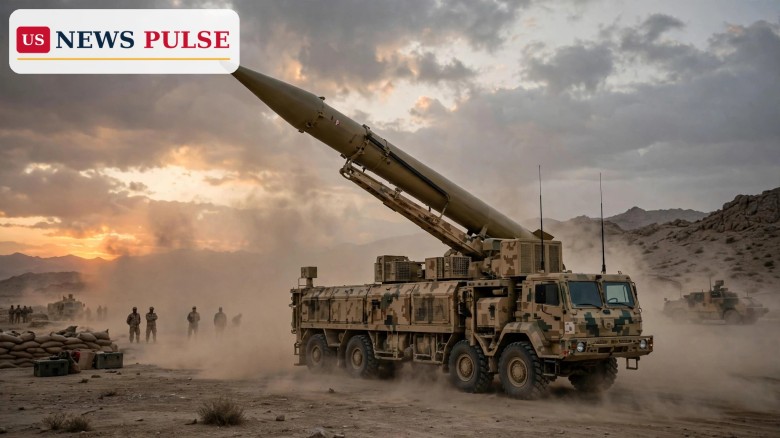
Iran's Islamic Revolutionary Guard Corps announced on Saturday that it has lifted the self-imposed 2,000-kilometre limit on the range of its ballistic missiles, removing one of the few publicly stated restraints on Tehran's arsenal as the country's war with the United States enters its ninth month. IRGC spokesman Brig. Gen. Hossein Mohebbi told a press conference in Tehran that "that restriction has been lifted for us" and that Iran would "demonstrate these capabilities in practice". Mohebbi did not confirm whether Iran already has missiles able to fly beyond 2,000 kilometres.
Key Points
- Iran's Revolutionary Guard announced on Saturday, November 7, that it has lifted its self-imposed 2,000-kilometre (1,200-mile) limit on ballistic missile range.
- IRGC spokesman Brig. Gen. Hossein Mohebbi said Iran would "demonstrate these capabilities in practice" rather than make statements.
- Mohebbi did not confirm whether Iran currently has missiles able to fly beyond 2,000 kilometres.
- The 2,000km range already puts parts of Greece and the Balkans, the entire Arabian Peninsula, the Levant and most of Egypt within reach.
- The announcement follows Khamenei's warning of a response "without geographic limits" and comes amid backchannel talks and fresh US strikes on Qeshm Island.
What Happened
The announcement came at a Tehran press conference on Saturday, November 7. The 2,000-kilometre cap had been a self-imposed policy since 2017, under former Supreme Leader Ali Khamenei — a deliberate restraint, far enough to reach Israel and American bases across the Gulf, but short of the range that would put much of Europe within reach.
Mohebbi framed the decision as a response to the war, which began on February 28, 2026. On Friday, November 6, the United States carried out fresh limited strikes on an Iranian air-defence system on Qeshm Island in the Strait of Hormuz. Vice President JD Vance is meanwhile running a backchannel negotiation with Tehran through Qatar. Mohebbi also said missile and drone production has moved underground.
Background: The 2,000km Cap and the War So Far
The 2,000-kilometre limit was set in 2017, when Iran decided its ballistic missiles would reach regional targets — Israel, the Gulf states and US forces in Iraq and Syria — but not beyond, signalling to Europe that they were a regional weapon.
That restraint held through years of tension, but the war that began in February 2026 has changed the calculation. The United States has struck Iranian nuclear and military sites and imposed a naval blockade on Iranian oil exports that Washington says has blocked more than $25 billion in crude. Iran has answered with missile and drone attacks on American bases and on Israel. Its reach may already exceed the old cap: in March 2026, Tehran reportedly tried and failed to hit the joint US-UK base at Diego Garcia, about 4,000 kilometres away — double the declared limit.
Iran Missile Range Limit: What 2,000 Kilometres Covered — and What Lies Beyond
Even under the old limit, Iran's missiles could reach a great deal. A 2,000-kilometre range covers the whole Arabian Peninsula, the Levant, most of Egypt and the eastern edges of Europe, including US bases at Al Udeid in Qatar and Al Dhafra in the United Arab Emirates.
Lifting the cap changes the map. At 3,000 kilometres, Iran's missiles could reach deep into Europe, including Rome, Berlin and Vienna. At 4,000 kilometres, they could reach Diego Garcia and much of central Europe. At intercontinental range, the question becomes whether Iran is moving towards a weapon that could reach the United States itself — a step American officials have long warned about but Tehran has never confirmed pursuing. For now, no new missile has been displayed, no test has been announced, and Mohebbi offered no timeline.
Reactions and Quotes
The most important words on Saturday were Mohebbi's own. Asked about the limit on missile ranges, he said: "That restriction has been lifted for us." On how Iran would show its new reach, he added that Tehran would "demonstrate these capabilities in practice" rather than make statements — a phrase that suggests a test launch or a display may follow.
It also gave new weight to Supreme Leader Mojtaba Khamenei's warning days earlier that "any kind and level of threat" from the United States or Israel would face a response without geographic limits. There was no immediate public response from the White House or the Pentagon. Vice President JD Vance said on Monday that the United States has made "progress" in talks with Iran and that Washington has set no deadline for a deal before strikes resume.
Why It Matters
The decision matters first for the war itself. A longer-range Iranian missile force would put more American bases, more allied capitals and more civilians at risk, and it would complicate the missile defences the United States and its partners have built around the Gulf.
It matters second for the negotiations: lifting the cap is both a warning and a bargaining chip, strengthening Tehran's hand in the backchannel talks while giving Washington's hawks a fresh argument that diplomacy is failing. It matters third for Europe: for nearly a decade, European governments could tell themselves Iran's missiles were a Middle Eastern problem, since the cap kept the continent's major capitals out of range. If that cap is gone, Paris, Berlin, Rome and London must ask whether their cities are now within reach of a weapon Tehran has used repeatedly in war.
What Happens Next
The most immediate question is whether Iran will demonstrate the new capability. Mohebbi's promise to show it "in practice" suggests a test launch or a public display could come soon, watched closely by American and Israeli intelligence. A successful test beyond 2,000 kilometres would confirm the announcement as a real capability shift. The diplomatic calendar is also moving fast: talks involving the US, Russia and Ukraine are due to resume in Abu Dhabi on November 10-11, and the Iran backchannel is expected to continue alongside them, with Qatar mediating. For now, the 2,000-kilometre limit is history — and the war's next phase may be fought over a much wider map.
Frequently Asked Questions
What did Iran announce about its missile range?
On Saturday, November 7, the Revolutionary Guard said it has lifted its self-imposed 2,000-kilometre limit on ballistic missile range.
What could Iran's missiles reach at 2,000 kilometres?
The entire Arabian Peninsula, the Levant, most of Egypt, and parts of Greece and the Balkans, plus US bases across the Gulf.
Does Iran already have missiles that fly beyond 2,000 kilometres?
Mohebbi did not confirm that. Iran reportedly tried and failed in March 2026 to hit Diego Garcia, about 4,000 kilometres away.
Why did Iran lift the limit now?
It comes in the ninth month of the US-Iran war, days after Supreme Leader Mojtaba Khamenei warned of a response "without geographic limits".
What happens next?
Watch for a possible Iranian missile test, for Washington's response, and for the backchannel talks. US-Russia-Ukraine talks resume in Abu Dhabi on November 10-11.
Read more: Vance Leads Secret Iran Backchannel Talks as Qatar Says a Deal Is Still Possible | Two Missiles Strike Iran's Qeshm Island in New Saturday Attack, Iran Says | Iran Rebuilding Missile Bases as Satellite Images Show Underground Work
Leave a Comment