


 | Today's Date:





NASA Opens Astronaut Applications for 25th Class to Build Moon Base, Reach Mars
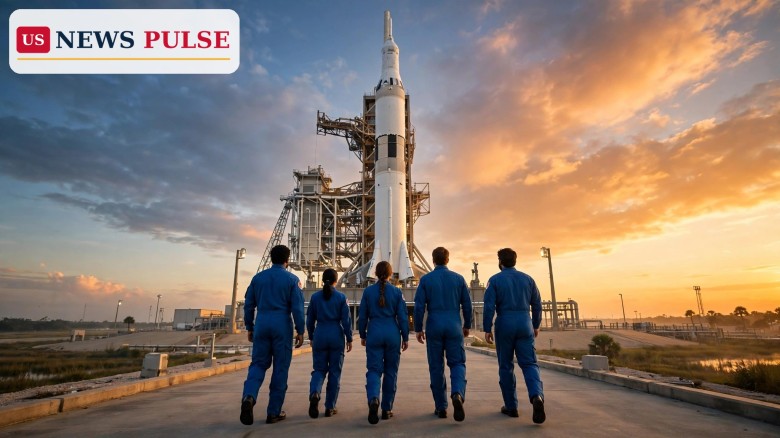
NASA has opened applications for its next class of astronaut candidates, the 25th since the original Mercury Seven, calling on Americans to join the crews that will build a permanent base on the Moon and prepare the first crewed missions to Mars. The agency announced the drive on Saturday, November 7, 2026, during an air show at Kennedy Space Center in Florida, and gave US citizens until 11:59 p.m. EST on Thursday, December 3, 2026, to apply.
The new class will support the Artemis programme, NASA's campaign to return astronauts to the lunar surface and establish a lasting human presence there. With only 32 active astronauts, the agency says it needs more people than it has, a point made by Artemis III commander Randy Bresnik, who told the Associated Press the current workload far exceeds the available crew.
Key Points
- NASA opened applications on Saturday, November 7, 2026, for its 25th class of astronaut candidates, the first new class since the 2024 recruitment round.
- US citizens have until 11:59 p.m. EST on Thursday, December 3, 2026, to apply for the class, which will support Artemis, a permanent Moon base and the first crewed Mars missions.
- Applicants need a STEM master's degree and at least three years of related experience; neither military service nor flying experience is required.
- NASA has only 32 active astronauts, and Artemis III commander Randy Bresnik told the Associated Press the current workload far exceeds the available crew.
- Final selections are expected in late 2027, with the new candidates beginning training in early 2028.
What Happened
NASA chose a public stage for the announcement, unveiling the recruitment drive during an air show at Kennedy Space Center, the Florida spaceport from which its crewed missions depart. The centre was hosting crowds for a weekend of flying displays, and the agency used the moment to pitch the astronaut corps directly to the public.
The class will be the 25th since the Mercury Seven were selected in 1959, a line stretching from the first American spaceflights through Apollo, the shuttle era and the International Space Station. NASA Administrator Jared Isaacman said the new candidates will pioneer the systems and operations that will carry humans to Mars, framing the class as the first recruited specifically for a programme that looks beyond the Moon.
Background and Context
NASA recruits a new class only every few years, and each round draws thousands of hopefuls. The last drive, in 2024, attracted more than 8,000 applications, from which just 10 candidates were selected in September 2025, roughly one in 800, making the astronaut corps one of the most selective workforces in the federal government.
The small corps is now a practical problem. Artemis II flew four astronauts around the Moon in April 2026, Artemis III is planned as a docking test in 2027, and Artemis IV is set to land two astronauts near the lunar south pole in 2028. Each mission needs a prime crew and a backup, and long lunar stays will tie up astronauts for months at a time.
NASA Astronaut Applications: Who Can Apply and What NASA Wants
The bar is high but narrower than many people assume. Candidates must be US citizens, hold a master's degree in a science, technology, engineering or mathematics field from an accredited institution, and have at least three years of related professional experience after that degree. NASA says it wants people who can solve problems under pressure as part of a small team.
Two common assumptions are wrong, the agency says. Military service is not required, and neither is flying experience. NASA has long selected civilians alongside pilots, including scientists, doctors and engineers. What matters is technical depth, physical fitness and the temperament to live and work in confined, high-risk environments for weeks or months.
Reactions and Statements
NASA Administrator Jared Isaacman framed the recruitment as a turning point, saying the new class will pioneer the systems and operations that will carry humans to Mars. His message was aimed at a generation that grew up watching commercial spaceflight become routine and may see a Moon base as a realistic career destination. Artemis III commander Randy Bresnik gave the practical reason, telling the Associated Press the current workload far exceeds the available crew: NASA has more missions on its books than astronauts to fly them, and the gap will only widen as lunar landings and long surface stays begin.
Why It Matters
This is the first class selected explicitly for the era of a permanent Moon base and a crewed Mars programme. Earlier classes were recruited to staff the International Space Station and fly test missions. This one is being asked to build the infrastructure of deep-space exploration, live on another world for months, and test the systems that will one day take humans to Mars.
It also matters for the United States' position in the new space race. China aims to land its own astronauts on the Moon by 2030, and its space station is now hosting foreign astronauts for the first time. A strong American astronaut corps is the most visible measure of the country's commitment to leading in space.
What Happens Next
Applications close at 11:59 p.m. EST on Thursday, December 3, 2026. NASA will then screen candidates, with interviews and medical evaluations to follow through 2027. Final selections are expected in late 2027, and the new candidates will begin training in early 2028, entering service as Artemis moves from test flights to sustained lunar operations, with the first landing already behind them and the work of building a permanent base under way.
Read more on US News Pulse: First Pakistani Astronaut to Fly on China's Shenzhou-24 to Tiangong Station, NASA Mars Simulation Crew Emerges After 378 Days Inside Houston Habitat and NASA Artemis Moon Landing 2028: SpaceX and Blue Origin Race to Return Astronauts.
Frequently Asked Questions
When is the deadline to apply to become a NASA astronaut?
US citizens have until 11:59 p.m. EST on Thursday, December 3, 2026, to submit applications for NASA's 25th astronaut class.
What qualifications do you need to apply?
Applicants must be US citizens with a master's degree in a science, technology, engineering or mathematics field and at least three years of related professional experience.
Do you need military or flying experience?
No. NASA says neither military service nor flying experience is required; the agency has long selected civilians, including scientists, doctors and engineers.
How many astronauts does NASA have now?
NASA has only 32 active astronauts. Artemis III commander Randy Bresnik told the Associated Press the current workload far exceeds the available crew.
When will the new class be selected?
NASA expects to announce the final selections in late 2027, with the new candidates beginning training in early 2028.
Leave a Comment