


 | Today's Date:



White House Seeks $30.1 Billion for Aviation Reform and Air Traffic Control
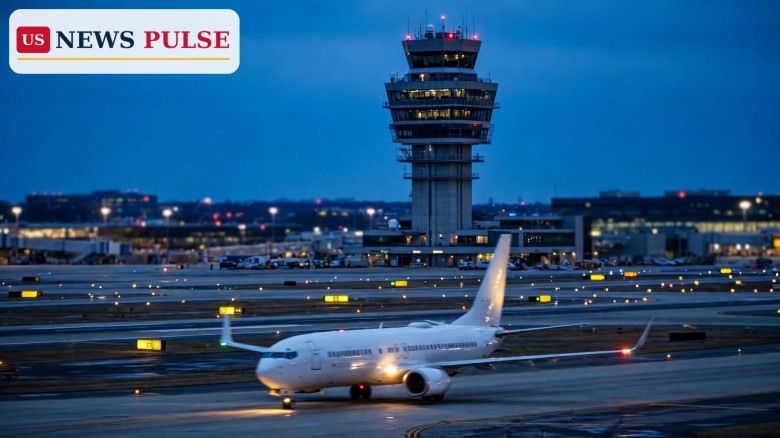
The White House on Friday asked Congress to approve a further $30.1 billion to rebuild the United States' ageing airports and air traffic control system, the largest step yet in a push to replace technology that in some places still dates back decades. The request, sent by White House budget director Russell Vought and Transportation Secretary Sean Duffy, would put $10.1 billion into modernising air traffic control, $2 billion into replacing and improving control towers, and $18 billion into airport projects, including $10 billion to modernise or replace ageing terminals.
Key Points
- The White House and the Department of Transportation asked Congress on Friday, November 13, 2026, for $30.1 billion more for aviation reform, air traffic control and airports.
- $10.1 billion would modernise air traffic control, including $7.2 billion for a common automation platform and new controller workstations and $2 billion for cloud computing.
- A further $2 billion would replace and improve Federal Aviation Administration air traffic control towers across the country.
- $18 billion would go to airport projects, including $10 billion to modernise or replace ageing terminals.
- Congress already approved $12.5 billion over five years in July 2025, and major airlines including American, Delta, United and Southwest back the new request.
What Happened
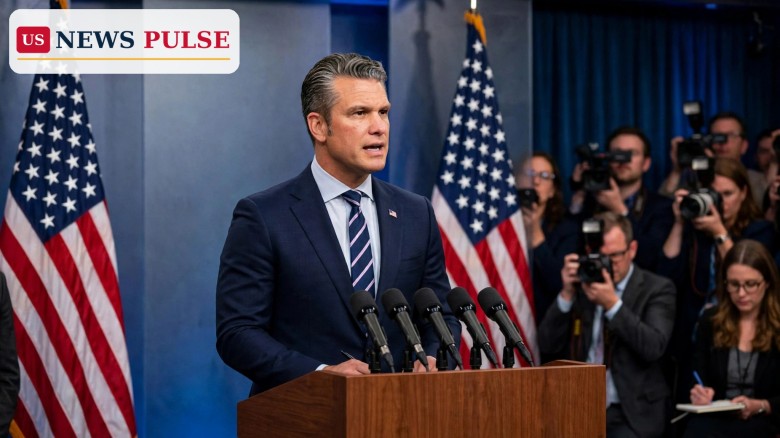
The request was made jointly by the White House Office of Management and Budget and the Department of Transportation. Vought and Duffy urged Congress to approve the money as part of a broader aviation reform package, arguing that the system guiding roughly 45,000 flights a day needs a fundamental rebuild rather than another round of patchwork repairs.
The administration called on the Republican-led Congress to approve the funding in the final weeks of the year, a window that closes when Democrats take control of Congress in January. The timing gives the request urgency: if it is not approved before the handover, it would have to compete with other priorities in a new Congress.
Background: A System Under Strain
In July 2025, Congress approved $12.5 billion over five years to upgrade air traffic control and increase controller hiring, a down payment on modernisation that officials now say needs far more money to finish. The new $30.1 billion request would more than double that commitment.
The push follows a series of disruptive events. In January 2025, a midair collision at Ronald Reagan Washington National Airport killed 67 people, the deadliest American air disaster in years. In September, dual failures at a Philadelphia air traffic facility and a severed fibre-optic cable in New Jersey delayed or cancelled thousands of flights across the Northeast, showing how a single failure can ripple through the whole network.
Aviation Reform: What the $30.1 Billion Would Buy
At the heart of the plan is the $7.2 billion common automation platform. Today, controllers in different parts of the country work on different systems that do not always talk to each other. A single platform would give every controller the same tools and the same picture of the sky, reducing the workarounds that slow traffic and raise the risk of error. The $2 billion for cloud computing would move the system's data off ageing local servers onto modern infrastructure that can be updated and backed up far more easily.
The $2 billion for towers would replace or refurbish the structures from which controllers watch the runways, some in service for half a century. The airport money, $18 billion in all, is the part passengers would notice first: $10 billion for terminals would rebuild concourses, gates and baggage systems that in many American airports date from the 1960s and 1970s, easing the crowding that turns a delayed departure into a miserable wait.
Reactions
The request drew immediate support from the airline industry. Major carriers including American, Delta, United and Southwest expressed support for the funding, a rare show of unity from companies that compete fiercely but share the same frustration when the air traffic system fails. For airlines, the cost of an outdated system is concrete: every delay burns fuel, strands crews and leaves passengers demanding refunds.
The request also lands in a year in which aviation has repeatedly made headlines for the wrong reasons. From the Washington collision to the September failures in the Northeast, the public case for spending on the system has arguably never been stronger, and the administration is betting Congress will find it hard to say no to money framed as a matter of safety.
Why It Matters
For most Americans, the air traffic control system is invisible until it breaks. It is the network of towers, radar, radios and people that keeps tens of thousands of flights a day separated in crowded skies, and when it works, nobody thinks about it. When it fails, the consequences are immediate: flights cancelled, holidays ruined, business trips abandoned and, in the worst cases, lives lost. The $30.1 billion request matters because it treats that system as national infrastructure on the same scale as highways and power grids, rather than as a back-office function that can be patched indefinitely.
Related coverage: FAA Flight Cuts Begin at 40 Airports as Longest Shutdown Reaches Day 38, Flight Cancellations Soar Past 1,530 on Saturday as Shutdown Chaos Deepens, and Greenacres Plane Crash: All 9 Aboard Learjet Killed, Officials Confirm.
What Happens Next
If Congress approves the funding, the Department of Transportation and the FAA would begin awarding contracts for the automation platform, the cloud migration and the tower and terminal work, a process that would take years to complete but would start with the most urgent replacements first. If the money is not approved before January, the request will land in front of a new Democratic-controlled Congress, where the debate over how much America should spend to keep its skies safe will begin again.
Frequently Asked Questions
How much money is the White House asking for?
The White House asked Congress for a further $30.1 billion for aviation reform, covering air traffic control modernisation, control towers and airport projects.
What would the money be spent on?
$10.1 billion for air traffic control modernisation, including $7.2 billion for a common automation platform and controller workstations and $2 billion for cloud computing, plus $2 billion for towers and $18 billion for airport projects, including $10 billion for terminals.
Has Congress already funded air traffic control upgrades?
Yes. Congress approved $12.5 billion over five years in July 2025 to upgrade air traffic control and increase controller hiring. The new request would come on top of that.
Why is the administration pushing for this now?
The push follows a series of disruptive events, including the January 2025 midair collision at Ronald Reagan Washington National Airport that killed 67 people, and September failures at a Philadelphia air traffic facility and a severed fibre-optic cable in New Jersey that delayed or cancelled thousands of Northeast flights.
Leave a Comment