

 | Today's Date:




Trump Hush Money Case Reaches Second Circuit as Judges Weigh Immunity Bid - US News Pulse
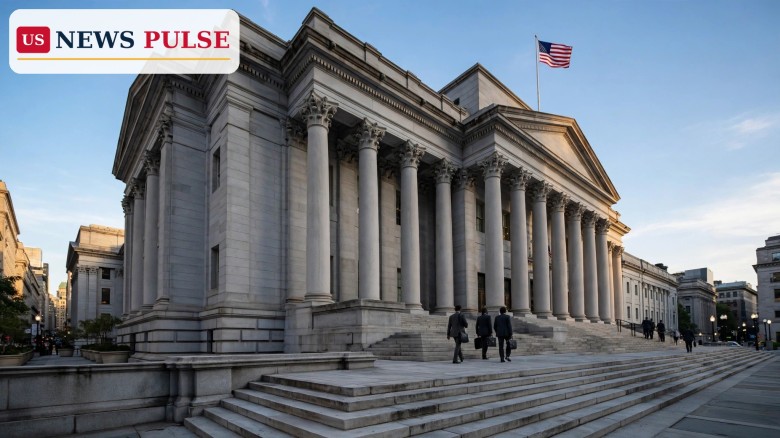
A three-judge panel of the 2nd US Circuit Court of Appeals spent more than an hour on Monday, November 16, 2026, questioning lawyers in Donald Trump's bid to move his hush money case to federal court, where he could seek dismissal on immunity grounds. It was the second hearing on the conviction in 11 days, and it produced no immediate decision. Trump's lawyer urged the judges to act quickly, even before a full ruling, to take control of the case and stop a state appeals court from deciding it first.
Key Points
- A 2nd Circuit panel heard over an hour of arguments on Monday, November 16, 2026, in Donald Trump's bid to move his hush money case to federal court.
- Trump's lawyer, Robert Giuffra Jr., asked the judges to take control quickly, even before a full decision, and halt the state Appellate Division's deliberations.
- Judges John M. Walker Jr. and Chief Judge Raymond J. Lohier Jr. questioned intervening while the state appeal is pending.
- Trump turned to the 2nd Circuit after Judge Alvin K. Hellerstein ruled against him a third time in August 2026; Hellerstein died last month, aged 92.
- The state Appellate Division heard arguments on November 5 and has yet to rule on Trump's separate bid to throw out the conviction.
What Happened
Trump wants the appeals court to order the case transferred from New York state court to the federal system, where his lawyers would seek dismissal on presidential immunity grounds.
Giuffra pressed the panel to move fast, urging an order as soon as possible, even before a full decision, taking control of the case and stopping the Appellate Division's deliberations. The request asked the federal court to interrupt a state court already considering the same conviction.
The judges pushed back. Walker, a George H.W. Bush appointee, and Lohier, the court's chief judge and a Barack Obama appointee, questioned whether the 2nd Circuit should step in while the state appeal is unresolved. The panel gave no indication of when it would rule, and issued no order from the bench.
Background: The Conviction and the Two-Court Fight
The case dates to May 2024, when a Manhattan jury convicted Trump on 34 felony counts of falsifying business records. Prosecutors said the records hid a $130,000 payment to adult film performer Stormy Daniels, made by Trump's then-fixer Michael Cohen weeks before the 2016 election. Trump denies any wrongdoing.
The conviction made Trump the first former president, and now the first sitting president, convicted of a crime. Justice Juan Merchan sentenced him in January to an unconditional discharge, leaving the conviction intact but imposing no punishment. Trump is therefore fighting to erase the conviction, not to avoid prison.
His lawyers are pursuing that goal on two fronts. In the state courts, they argue the prosecution was politically motivated and the legal theory and jury instructions were flawed. In the federal courts, they argue the case belongs in the federal system because it touches on presidential immunity.
Trump Hush Money Appeal: The Immunity Question
The immunity argument is the heart of the federal bid. Trump's lawyers contend the conduct behind the conviction, including payments and record-keeping connected to his presidency, falls within the Supreme Court's protection for official presidential acts. If the case moves to federal court, they would ask for dismissal on that basis.
The state has resisted at every step. Prosecutors argue the payments and falsified records were private conduct, tied to the 2016 campaign rather than to any official presidential act, and that the case belongs in state court. On Monday, a lawyer for the state defended Hellerstein's rulings and urged the panel to leave the case where it is.
Timing may matter as much as the law. Giuffra's request for an early order aimed to freeze the state proceedings before the Appellate Division rules. If the state court rules first and upholds the conviction, the federal question could become harder for Trump to press. The judges' questions showed the panel's caution: federal courts are reluctant to halt state proceedings.
Reactions and Quotes
The sharpest words so far come not from Monday's hearing but from the judge whose rulings are under review. Hellerstein, rejecting the transfer a third time in August, wrote that "paying hush money to an adult film star or engaging in a cover-up of an embarrassment are not subsumed in presidential immunity." The state has relied on that reasoning in the appeal.
Trump has consistently denied wrongdoing and denounced the conviction publicly. His lawyers argue the prosecution was politically motivated, a claim the Manhattan district attorney's office rejects, defending the legal theory and jury instructions as sound. A retired New York judge who reviewed the state appeal called the odds of overturning the conviction "highly unlikely."
Why It Matters
The case matters because it is the only criminal conviction of a sitting president, and its fate will shape how far presidential immunity reaches. If the 2nd Circuit allows the transfer and a federal judge dismisses the case on immunity grounds, it would narrow state prosecutors' ability to bring cases against a president. If the panel refuses to intervene, the conviction is likely to stand.
It also tests the two-court strategy itself. Parallel appeals in state and federal court are unusual, and Monday's hearing showed the friction: two courts considering the same conviction at once, each able to make the other's work pointless. The 2nd Circuit's answer will decide whether it can continue.
What Happens Next
The panel will now deliberate. It could issue a quick order on Giuffra's request, decide the full transfer question, or decline to intervene and let the state appeal proceed. No timetable was given, and either side is likely to appeal further if it loses.
Separately, the state Appellate Division is still considering the arguments it heard on November 5, and its ruling could come at any time. If it upholds the conviction, Trump would be expected to appeal to New York's highest court.
Frequently Asked Questions
What did the Second Circuit hear on Monday?
Over an hour of arguments on Trump's bid to move his hush money case to federal court for dismissal on immunity grounds. No decision was issued.
What is Trump asking the court to do?
His lawyer, Robert Giuffra Jr., asked the judges to take control quickly, even before a full decision, and stop the Appellate Division's deliberations.
What was he convicted of?
In May 2024, a Manhattan jury convicted Trump on 34 felony counts of falsifying business records over a $130,000 payment to Stormy Daniels. He received an unconditional discharge, with no punishment.
Why did the federal judge rule against Trump?
Judge Alvin K. Hellerstein ruled a third time in August 2026 that "paying hush money to an adult film star or engaging in a cover-up of an embarrassment are not subsumed in presidential immunity." He died last month, aged 92.
What happens next?
The 2nd Circuit will decide whether to intervene; the Appellate Division, which heard arguments November 5, is also yet to rule.
Related: Trump Hush Money Conviction Challenged as Lawyers Ask Appeals Court to Toss It; Supreme Court Declines Strickland Judiciary Harassment Case.

The US News Pulse newsroom covers breaking news across the United States and the world, working from wire services, official statements and on-the-record sources. Every story is reviewed against our editorial standards before publication. Corrections and tips: info@usnewspulse.com
About our newsroomLeave a Comment