

 | Today's Date:



Mullin Blames AI for Bank Outage, Disputing Chase Explanation - US News Pulse

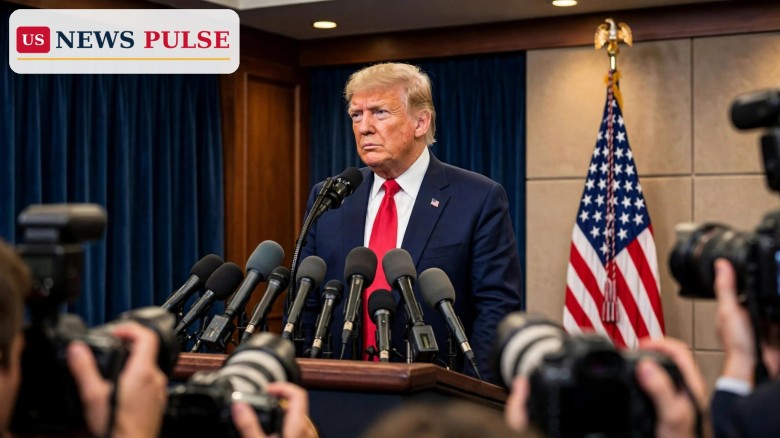
Homeland Security Secretary Markwayne Mullin said on Monday night that he believes artificial intelligence caused the nationwide bank outage that disrupted Chase, Bank of America and Wells Fargo on Monday, directly contradicting Chase's explanation that a software bug was to blame. The Mullin AI bank outage claim turned a technical failure into a political row over the technology running America's banks.
Mullin made the claim to Fox News host Sean Hannity on Monday, November 16, 2026; USA Today timed the exchange at 10 p.m. ET. By then Chase said transactions were "being processed normally now", after a day of faltering online banking.
Key Points
- Homeland Security Secretary Markwayne Mullin told Fox News on Monday night, November 16, that he "thinks the outages were caused by artificial intelligence". He had asked the Cybersecurity and Infrastructure Security Agency (CISA) whether a foreign actor was responsible and was told investigators did not believe so.
- His claim conflicts with Chase, which said the problem was a "temporary issue related to a software bug in on-premise hardware systems" and "is not cyber related".
- Downdetector reports for Chase peaked at about 4,800 around 2 p.m. ET Monday, the second-highest 15-minute total in at least a year.
- The outages hit Chase, Bank of America, Wells Fargo, U.S. Bank and Zelle, after a five-day run of failures including Microsoft 365, the FAA ground stop, Amtrak and United Airlines.
- Mullin insisted the country is safe — "The homeland is secure, our banking system is secure" — while warning backup systems are being overwhelmed by new technology.
What Happened
The trouble began on Monday morning, when customers at Chase, Bank of America, Wells Fargo, U.S. Bank and Truist reported problems with online and mobile banking. Chase drew about a dozen Downdetector reports at 9 a.m. ET, but the count climbed to about 4,800 by 2 p.m. ET. Zelle passed 500 reports of its own and told NBC Chicago that "this is a Chase issue".
Wells Fargo pointed customers to ATMs and branches, while Bank of America declined to comment. By about 7 p.m. ET, Chase said transactions were "being processed normally now". Read our earlier report on the bank outage that locked out Chase, Bank of America and Wells Fargo customers.
Background: A Week of Outages
The bank failure did not happen in isolation. It closed a five-day stretch in which one major American system after another went down: Microsoft 365 on Thursday, the FAA's nationwide ground stop on Friday, an Amtrak booking failure on Friday night, and a United Airlines outage on Monday that delayed 554 flights. That run is part of why one day of banking trouble drew so much attention.
Until Mullin spoke, no bank had stated a broader cause, and no evidence linked the outages. The disruption was a technical issue, not a cyberattack, and deposits remain FDIC-covered up to $250,000 per depositor per ownership category. Read our report on the United Airlines outage that delayed 554 flights days after the FAA ground stop.
Mullin AI Bank Outage Claim: What the DHS Chief Actually Said
Mullin told Hannity his office has found no proof the outages were caused by a cyberattack. He said he asked CISA, his department's digital-defence arm, whether a foreign actor caused the recent outages, and was told investigators did not believe so. Instead, he said, a technology expert had suggested AI built into these systems is causing the existing infrastructure to malfunction.
"The homeland is secure, our banking system is secure," Mullin said. "But we have a lot of technology thrown at us... and the backup systems are overwhelmed by the new systems now." He did not name the expert or say what specific AI system he believed had failed. His department has released no findings or technical report to support the claim, and no other agency has publicly backed it.
Reactions
Chase's own account of the day stands in direct conflict with Mullin's. The bank said the trouble was a "temporary issue related to a software bug in on-premise hardware systems - it is not cyber related", a narrow, technical explanation that points at the bank's own equipment rather than at any new technology layered on top of it. The bank has not publicly responded to Mullin's claim, and gave no detail about the hardware or software involved.
The contrast is the heart of the story: the bank whose systems failed blames a bug in its own hardware, while the cabinet secretary in charge of homeland security blames the artificial intelligence now being built into banking systems. Neither side has produced technical evidence in public.
Why It Matters
The claim matters because it comes from the head of the department responsible for protecting American infrastructure. If Mullin is right, AI is being added to banking systems faster than the older systems underneath can cope, and the backups meant to catch failures are themselves being overwhelmed — a problem far bigger than one bad day at one bank.
If he is wrong, the episode shows how quickly speculation fills the gap when a major system fails with no technical explanation available. A cabinet secretary's theory can travel further and faster than a bank's careful statement, even when it rests on an unnamed expert. Either way, the outage has put the resilience of American banking systems, and the AI being built into them, under new scrutiny.
What Happens Next
The open question is whether Homeland Security or CISA will publish findings to back up Mullin's claim. A formal statement or report would settle whether AI played any role, and whether the outage was a one-off failure or a sign of wider weakness as banks modernise.
Chase, meanwhile, will face questions about what went wrong and what it is doing to stop a repeat. Regulators and lawmakers are likely to ask both sides for detail, and any next outage will be judged against the two explanations offered on Monday.
Frequently Asked Questions
What did Markwayne Mullin say caused the bank outage?
Mullin told Fox News host Sean Hannity on Monday night, November 16, that he "thinks the outages were caused by artificial intelligence", citing a technology expert who suggested AI built into banking systems is causing infrastructure to malfunction.
What does Chase say caused the outage?
Chase said it was a "temporary issue related to a software bug in on-premise hardware systems" and stressed that it "is not cyber related". By about 7 p.m. ET on Monday, the bank said transactions were "being processed normally now".
Which banks were affected by the outage?
Customers at Chase, Bank of America, Wells Fargo, U.S. Bank and Truist reported problems with online and mobile banking, and Zelle was also disrupted, with more than 500 Downdetector reports.
Was the bank outage a cyberattack?
No. Mullin said his office found no proof of a cyberattack, and CISA investigators did not believe a foreign actor was responsible. Chase also said the problem was not cyber related.
Are bank deposits safe after the outage?
Yes. Deposits at insured banks are covered by the FDIC up to $250,000 per depositor per ownership category, and Mullin himself said "our banking system is secure".

The US News Pulse newsroom covers breaking news across the United States and the world, working from wire services, official statements and on-the-record sources. Every story is reviewed against our editorial standards before publication. Corrections and tips: info@usnewspulse.com
About our newsroomLeave a Comment