


 | Today's Date:



Audi Weighs $3 Billion Second Phase for Georgia Plant, Adding 3,000 Jobs
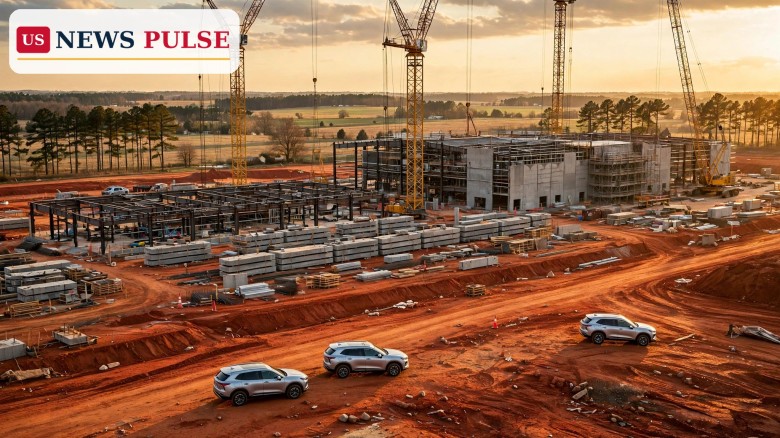
Audi is weighing a second phase for its first American factory that would add another $3 billion of investment and 3,000 jobs in Georgia, according to documents released on Thursday, November 5, 2026. The possible expansion of the Audi Georgia plant near Macon would nearly double the scale of a project that already ranks among the largest foreign manufacturing investments in the state, as the German luxury brand leans on promised tariff relief from the Trump administration.
Key Points
- Audi is considering a second phase costing another $3 billion that would add 3,000 workers by 2033, documents released Thursday by the Mid-Georgia Gateway Development Authority show.
- The first phase is a $4 billion assembly plant near Macon, Georgia, announced on October 25, that will build 200,000 SUVs a year and employ 4,500 workers.
- Georgia is giving Audi the 1,500-acre site, $458 million in tax incentives, more than $120 million in grants and another $430 million for water, roads, utilities and workforce training.
- Audi declined to comment on the possible second phase, which was first reported by Reuters.
- The Trump administration has promised tariff relief to Audi, which paid about €1.2 billion ($1.4 billion) in tariffs last year on vehicles imported from Europe or Mexico.
What Happened
The new details emerged from documents released on Thursday by the Mid-Georgia Gateway Development Authority, which oversees the site where Audi plans to build. The documents, reported by Reuters, show a second phase worth another $3 billion is already on the table, alongside the full scale of Georgia’s incentive package.
Under the plan, the second phase would add 3,000 workers by 2033, taking total employment to 7,500 and total investment to $7 billion — one of the biggest automotive complexes in the American South.
Audi announced on October 25 that it would build its first US assembly plant near Macon, in Peach County, on the Middle Georgia Megasite. Construction starts in 2027 and production in the early 2030s. The plant will build 200,000 SUVs a year and employ 4,500 workers. The announcement came at a rally in Perry, Georgia, where Audi chief executive Gernot Döllner appeared alongside President Donald Trump.
Background: Audi’s First US Plant
Until now, Audi has never built a car in the United States. Every vehicle it sells in the American market is imported from Europe or Mexico, which left it exposed to the Trump administration’s tariffs on imported cars, steel, aluminium and parts. Those tariffs cost Audi around €1.2 billion ($1.4 billion) last year alone.
That bill is the main reason Audi decided to build in America — and why Washington is now offering it relief. Reuters reported last week that the Trump administration has promised tariff relief to help secure the plant’s future, with broad relief planned for carmakers that invest significantly in American production. Audi has pushed Washington to cut the 15% tariff on EU imports to 7.5%, though the Commerce Department was expected to settle on around 10%.
The final decision still rests with Volkswagen’s supervisory board, Audi’s parent company. Audi spent about three years weighing more than 70 possible sites before settling on Georgia.
Audi Georgia Plant Expansion: What the Documents Show
The documents lay out an incentive package worth well over $1 billion. Georgia is giving Audi the 600-hectare (1,500-acre) site, plus $458 million in tax incentives, more than $120 million in grants for infrastructure, rail, environmental remediation and construction, and another $430 million for water, roads, utilities and workforce training.
That is a remarkable sum even by the standards of state bidding wars for car factories. It reflects what is at stake for central Georgia: 7,500 jobs, a new industrial anchor for Peach County, and the suppliers that typically follow a plant of this size.
The second phase is not yet a commitment. Audi declined to comment, and the documents describe it as something the company is considering rather than something it has approved. But the fact that the development authority’s paperwork already prices the expansion — $3 billion, 3,000 workers, by 2033 — shows how seriously both sides are treating it.
Reactions: Audi Stays Silent on Phase Two
Audi declined to comment on the possible second phase when Reuters reported the documents on Thursday, and has said little since the October 25 announcement beyond confirming the first phase.
At the Perry rally, Döllner struck a different tone, praising the welcome Audi had received in Washington and in Georgia. “If the American president invites you, you accept the invitation,” he said, adding: “We have much greater ambitions for Audi in America.”
State officials have not commented publicly on the second phase. But the scale of the incentive package suggests Georgia expects Audi to grow well beyond the first plant. The relief programme rewards carmakers that add American production, and building SUVs in Georgia would spare Audi the tariffs it now pays on every imported car.
Why It Matters
The possible expansion matters for three reasons. First, jobs: 7,500 workers at a single site would transform Peach County and the wider Macon area, bringing suppliers, dealerships and tax revenue. Second, it is a test of the administration’s tariff strategy — using tariff relief as a bargaining chip to pull foreign carmakers into building in America, with Audi, the biggest European luxury brand without a US factory, as the flagship case.
Third, it signals how far the global car industry has shifted. A decade ago, a German luxury brand building its first American plant would have been unthinkable. Tariffs, supply-chain shocks and industrial policy have changed that calculation. For Georgia, it is also a win against rival Southern states.
What Happens Next
Several steps remain. Volkswagen’s supervisory board must give final approval to the first phase. Construction on the first phase is scheduled to begin in 2027, with the plant opening in the early 2030s.
Whether the second phase follows will depend on the first phase’s progress, final tariff relief, and demand for the large SUVs it will build. Audi has set no date for a decision, and the 2033 target suggests a build-out over several years.
Frequently Asked Questions
Where is Audi building its US plant?
Near Macon, Georgia, on the Middle Georgia Megasite in Peach County. The state is giving Audi the 1,500-acre site as part of the incentive package.
How much will the Audi Georgia plant cost?
The first phase costs $4 billion. A possible second phase would cost another $3 billion, taking total investment to $7 billion.
How many jobs will the plant create?
The first phase will employ 4,500 workers. The second phase would add 3,000 more by 2033, for a total of 7,500 jobs.
What incentives is Georgia offering Audi?
The 1,500-acre site, $458 million in tax incentives, $120 million-plus in grants, and $430 million more for water, roads, utilities and workforce training.
When will the plant open?
Construction is set to begin in 2027, with production starting in the early 2030s. The plant will build 200,000 SUVs a year.
Read more: Audi Georgia Plant: US Promises Tariff Relief to Secure $4 Billion SUV Factory • ISM Manufacturing PMI Jumps to 55.5 in October as Factory Orders Rise • FedEx Sues US Government for Full Tariff Refund After Supreme Court Ruling
Leave a Comment