

 | Today's Date:




Crescent Dunes Solar Fraud: Trump DOJ Backs Biden Move to Kill $275M Case
TONOPAH, Nevada. — The Trump administration has made fighting fraud and government waste a top priority, even offering cash rewards to Americans who expose wrongdoing. Yet the president's own Justice Department is fighting to squash a fraud lawsuit over a $275 million federal grant for a failed Nevada solar plant — a case investors say could recover up to $1 billion for taxpayers.
The Crescent Dunes solar fraud case centres on a billion-dollar, government-backed plant near Tonopah meant to showcase clean energy. Instead it became one of the costliest failures in American solar power, hit by breakdowns and two bankruptcies before selling for just $7 million in July 2026.
Key Points
- Investors led by CMB chief Pat Hogan, who put $90 million into the project, sued in 2020 under the False Claims Act, alleging firms tied to Spanish builder ACS misled officials over a $275.6 million grant.
- Biden's Justice Department moved to dismiss the suit in November 2024, two days after Trump's re-election, saying it would burden federal agencies.
- Trump's Justice Department defended that dismissal in an April 2026 filing, citing the same burden argument and broad authority to end the case.
- CMB is appealing to the Ninth Circuit, and Hogan is urging Trump's Justice Department to ask the court to reopen it.
- Under the False Claims Act, liable firms face up to three times proven losses plus penalties, so investors say the case could recover $1 billion.
What Happened
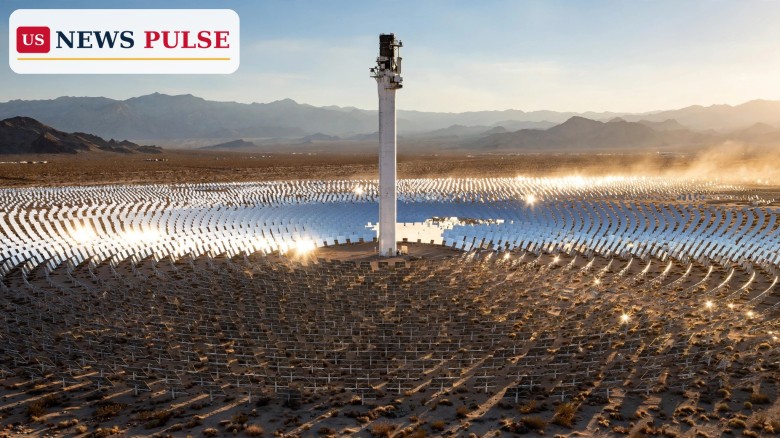
The suit centres on Crescent Dunes, a billion-dollar plant that used thousands of mirrors to focus sunlight onto a central tower, heating molten salt to generate power after sunset. It began operating in 2015, backed by a $737 million Energy Department loan guarantee and $275.6 million in Treasury grants.
But it produced no more than 32 percent of expected output through June 2016, and in October 2016 a failure in its hot molten-salt storage tank shut it down for months. In December, while still shut down, builder Cobra Thermosolar Plants handed it to owner Tonopah Solar Energy under "provisional acceptance" — after changing the contract to allow the handover despite major defects, days before the year-end deadline.
CMB later alleged over 9,000 defects had been found, in about 500 outstanding items including seven major deficiencies, and says the revised deal made the plant look ready.
Background and Context
The grant came from Section 1603, part of a $26 billion programme within the Obama administration's $90 billion green-energy push. It paid developers about 30 percent of qualifying costs once facilities were "placed in service" — ready for their intended use.
Treasury had questioned the plant's readiness months earlier. In September 2016 it challenged Tonopah's claim that Crescent Dunes had been ready since February, citing a July report showing the builder had not yet handed over control. Tonopah replied on September 21 that the plant had passed key tests, while admitting an earlier long shutdown over salt-piping problems.
The Energy Department also approved the revised December handover despite unfinished repairs and waived missed deadlines. On March 7, 2017, Treasury approved a $243.7 million grant payment even though the plant was still shut down; it resumed generating power only in July 2017, and a further $31.9 million followed in February 2018.
Crescent Dunes Solar Fraud: How a $275 Million Grant Was Approved for a Broken Plant
At the heart of the case is whether Crescent Dunes was properly completed and its owner entitled to the grant. It is still unclear whether Treasury officials knew of the October breakdown, the unfinished repairs and the December contract changes when they approved the first payment.
On April 12, 2017, while the plant was still offline, the Energy Department published an article celebrating it as a solar breakthrough, without mentioning the shutdown. Neither department has given Fox News Digital a full accounting. The dispute echoes in today's energy debate, with the administration backing big new projects such as the $50 billion Alaska LNG pipeline, as reported in our report on the Alaska approval, while Congress advances a major permitting bill, as reported in our coverage of the vote.
Reactions and Quotes
Hogan has been blunt. "It makes no sense," he told Fox News Digital, saying he had asked Trump's Justice Department for help but received no commitment.
"The real problem here is, why isn't the government asking for this?" he said. "All in all, I would say this has just been a fleecing of the federal government by a foreign entity. And we have the opportunity to fix it, and they're doing nothing." He added: "This could be a billion dollars."
Tonopah Solar Energy, the former owner and a defendant, has called CMB's claims baseless, and other named firms back the dismissal. The Energy Department said it resolved its financial interests in Crescent Dunes in 2020, calling it "unfortunate that previous administrations irresponsibly managed taxpayer dollars in their support of the Green New Scam."
Attorney Matt Dunn of Covington & Burling called the intervention "unusual, but not extraordinary," noting the Supreme Court gives the government wide discretion to dismiss such cases — "an extraordinarily high bar for a relator to overcome." Hogan says his investors lost $90 million lent to a SolarReserve-linked firm: "That's my job for my investors to leave no stone unturned to try to make sure that, in fact, I get their money back."
Why It Matters
The case tests whether the government will pursue fraud claims against its own contractors when the sums are huge. The False Claims Act exists so whistleblowers can recover public money when the government will not act — yet the same Justice Department defending this dismissal has made fighting fraud a priority, even offering cash rewards to tipsters. It is also a warning for future federally backed projects: Crescent Dunes took a $737 million loan guarantee and $275.6 million in grants, produced a fraction of its promised power, went bankrupt twice and sold for $7 million.
What Happens Next
The Ninth Circuit must decide whether the suit can proceed or the dismissal stands. The Justice Department declined to take over the case in June 2023, moved to dismiss on November 7, 2024, and won dismissal in July 2025 without a ruling on the fraud claims. If revived, the government could recover up to three times its proven damages.
Frequently Asked Questions
What is the Crescent Dunes solar fraud case?
Investors led by CMB sued under the False Claims Act, alleging firms tied to Spanish builder ACS misled officials into approving a $275.6 million grant.
Why is Trump's Justice Department backing the dismissal?
It defended the Biden-era dismissal in April 2026, arguing the case would drain resources and that the law gives it broad authority to end it.
How much could taxpayers recover?
Up to three times proven losses plus penalties — investors say as much as $1 billion.
What went wrong at the plant?
It produced under a third of expected output, suffered a molten-salt tank failure in 2016, went bankrupt twice and sold for $7 million.
What happens next?
The Ninth Circuit decides if the suit proceeds or the dismissal stands; Hogan wants the Justice Department to ask the court to reopen it.

The US News Pulse newsroom covers breaking news across the United States and the world, working from wire services, official statements and on-the-record sources. Every story is reviewed against our editorial standards before publication. Corrections and tips: info@usnewspulse.com
About our newsroomLeave a Comment