

 | Today's Date:




Delta Weight-and-Balance Failure Delays 3,500 Flights Before Thanksgiving
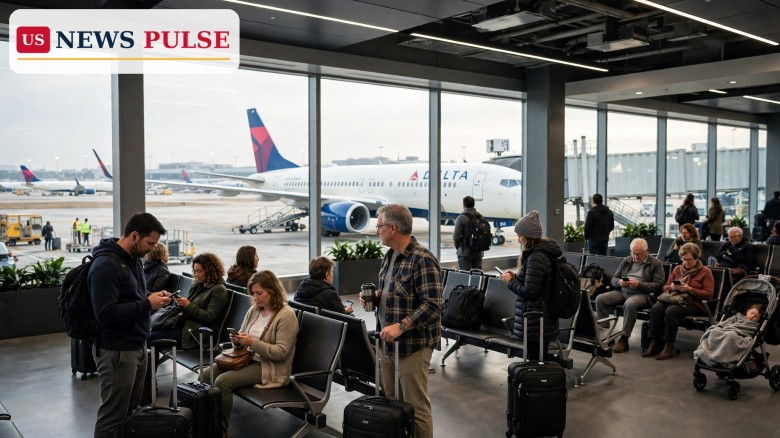
The Delta weight-and-balance failure began on Sunday morning, November 22, 2026, when Delta Air Lines' automated system failed, forcing crews to calculate aircraft weight and balance by hand. The Federal Aviation Administration issued a ground stop at 7:46 a.m. ET for Delta flights bound for Hartsfield-Jackson Atlanta International Airport, replaced at about 8:32 a.m. by a ground delay programme through 12:59 p.m. By the end of the day, at least 3,500 Delta flights had been delayed across the United States, with hundreds more held up at Atlanta alone as Thanksgiving travel began.
Key Points
- Delta's Automated Load Instruction System (ALIS) failed on Sunday morning, November 22, 2026, and crews calculated weight and balance manually.
- The FAA issued a ground stop at 7:46 a.m. ET for Atlanta-bound Delta flights, replaced at about 8:32 a.m. by a ground delay programme through 12:59 p.m.
- At least 3,500 Delta flights were delayed nationwide; about 700, roughly 20 percent of the schedule, by Sunday morning, and over 400 at Atlanta by Sunday afternoon.
- Delta gave no time for full restoration and did not disclose the cause, with no suggestion of a cyberattack.
- The FAA confirmed the delays were not related to any FAA air traffic systems, unlike the nationwide ground stop on November 13.
What Happened
The trouble began early on Sunday, when Delta's Automated Load Instruction System stopped working. ALIS works out an aircraft's weight and balance, figures that decide fuel, loading and safe takeoff. Dispatchers and crews fell back on manual calculations, working out the numbers by hand for each aircraft before it could leave the gate.
The FAA stepped in at 7:46 a.m. ET with a ground stop for Delta flights bound for Atlanta, holding aircraft at their departure airports. At about 8:32 a.m., it was replaced by a ground delay programme, spacing departures out with average delays of 57 minutes and a maximum of 111 minutes, running through 12:59 p.m.
By Sunday morning, about 700 Delta flights, roughly 20 percent of the schedule, were already delayed, according to WABC. Fox News reported at least 3,500 Delta flights delayed across the country during the day, and FlightAware counted more than 400 delayed at Atlanta alone by Sunday afternoon. Delays were also reported at Newark, LaGuardia, Reagan National, Dulles, Boston, Baltimore, Miami, Minneapolis, Nashville, San Antonio and Birmingham.
Background: Why Weight and Balance Matters
Weight and balance is a basic safety calculation in aviation. Before every flight, the airline must know the total weight of the aircraft, including passengers, bags, cargo and fuel, and where that weight is distributed. Too much weight, or weight in the wrong place, changes how the aircraft handles, and no commercial flight can legally depart without those numbers.
For a large airline, the calculations are done by software. Delta's ALIS takes data from check-in, baggage and fuel systems and produces the load sheet the crew uses before departure. When it fails, the only option is to do the sums by hand, which is safe but far slower. That is why one software failure held up flights across the country: every Delta departure needed the same manual treatment. Atlanta is the centre of Delta's operation, and Hartsfield-Jackson is the world's busiest airport, so a hub problem quickly became a nationwide one.
Delta Weight-and-Balance Failure: What Went Wrong
Delta has not said what caused the ALIS failure. The airline confirmed its teams were using manual workarounds to get flights departed safely while work continued to restore automation, but it did not disclose the cause and gave no time for full restoration.
One failure in a single internal system delayed thousands of flights, raising questions about the resilience of airline software and its backups. The manual workaround kept aircraft moving, and Delta stressed safety was not compromised, but manual calculation could not match the automated system's speed. It follows a month of technology failures: on November 16 a United outage delayed 554 flights, and on November 13 an outdated copper wire triggered a nationwide FAA ground stop.
Reactions and Quotes
Delta acknowledged the problem on Sunday morning. "Using manual workarounds this morning to safely get flights departed while work continues to restore automation," the airline said, confirming both the cause of the delays and that safety procedures remained in place. It did not say when the system would be fully restored.
The FAA confirmed Sunday's delays were not related to any FAA air traffic systems, unlike the November 13 ground stop caused by an outdated copper wire. This time the failure was Delta's own system, and the FAA's role was limited to managing traffic into Atlanta. Travellers waited for revised departure times, rebooked connections and, in some cases, looked for other ways home.
Why It Matters
First, the outage disrupted the start of the busiest travel week of the year, when millions of Americans were flying to be with family for Thanksgiving. A Sunday delay can cascade into missed connections, and for travellers with tight schedules it can mean missing the holiday.
Second, it shows how dependent modern airlines have become on a small number of software systems. One failure in a load-planning system, with no backup automation ready to take over, delayed 3,500 flights and held up an entire hub.
What Happens Next
Delta's immediate task is to restore the Automated Load Instruction System and clear the backlog of delayed flights. Passengers booked on Delta in the coming days should check their flight status before leaving for the airport and allow extra time for connections, particularly through Atlanta. The FAA will keep monitoring traffic into Atlanta, and further ground delay programmes are possible if departure rates do not recover, with the Wednesday before Thanksgiving and the Sunday after it traditionally among the heaviest travel days of the year.
Longer term, regulators will ask how the system failed and what safeguards exist. For now, the focus is on getting travellers moving again as Thanksgiving approaches. Further reading: United Airlines outage delays 554 flights, FBI, DHS and TSA warn US airlines before Thanksgiving, and Subtropical Storm Kyle could snarl Thanksgiving travel.
Frequently Asked Questions
What caused the Delta flight delays on Sunday, November 22?
Delta's automated weight-and-balance system, the Automated Load Instruction System (ALIS), failed on Sunday morning. Crews had to calculate weight and balance by hand before takeoff, slowing departures across the network.
How many Delta flights were delayed?
At least 3,500 Delta flights were delayed across the United States, according to Fox News. About 700, roughly 20 percent of the schedule, were delayed by Sunday morning, and over 400 at Atlanta alone by Sunday afternoon.
Was there a ground stop at Atlanta airport?
Yes. The FAA issued a ground stop at 7:46 a.m. ET for Delta flights bound for Hartsfield-Jackson. It was replaced at about 8:32 a.m. with a ground delay programme through 12:59 p.m., with average delays of 57 minutes and a maximum of 111 minutes.
What should Delta passengers do now?
Check flight status before travelling to the airport, allow extra time for connections, especially through Atlanta, and watch for Delta updates as the airline restores its automated system ahead of the Thanksgiving peak.

The US News Pulse newsroom covers breaking news across the United States and the world, working from wire services, official statements and on-the-record sources. Every story is reviewed against our editorial standards before publication. Corrections and tips: info@usnewspulse.com
About our newsroomLeave a Comment