


 | Today's Date:



US-China Board of Trade Holds First Meeting on $30 Billion Tariff Cuts
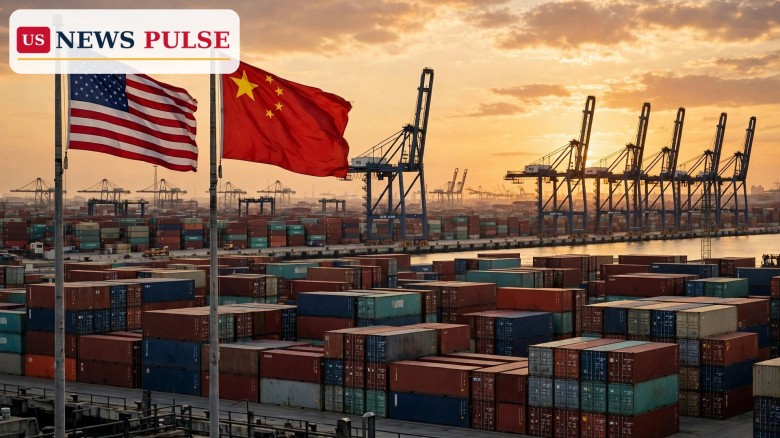
The United States and China have held the first formal meeting of their new Board of Trade, opening talks on reciprocal tariff cuts worth about $30 billion of goods on each side — but the session ended without a deal, days before Presidents Donald Trump and Xi Jinping meet in Shenzhen.
The video-conference meeting on Friday, November 13, 2026, was the first session of the mechanism launched in September. Farm trade led the agenda, with Beijing linking further purchases of American farm goods to the tariff cuts taking effect.
Key Points
- The US and China held the first Board of Trade meeting on Friday, November 13, 2026, by video conference.
- They discussed tariff cuts worth about $30 billion of goods each — about $60 billion combined — but reached no agreement.
- The US list covers non-sensitive consumer goods: microwaves, electric irons, Christmas decorations and toys.
- China's list is weighted to farm produce: corn, sorghum, dairy, beef and vegetables.
- China linked further US farm purchases — about $17 billion of American farm goods in 2024 — to the deal taking effect.
What Happened
Trade officials from both governments met by video link to work through the tariff-cut package agreed in principle at the September meeting between Trump and Xi in Washington. They went through the product lists item by item and talked about farm trade, but the meeting closed without an agreement.
China's Commerce Ministry called the talks "candid, in-depth and constructive," and the US Trade Representative confirmed the meeting in a post on X. The ministry said on Thursday, November 13, that it hoped both sides would bring the arrangement into force soon.
Background and Context
The Board of Trade grew out of the September meeting between Trump and Xi in Washington, where the leaders agreed the tariff-cut framework and set up the board to carry it out. The governments published their product lists on September 28: China's list runs to 1,619 entries, the US list to 77. Under the framework, tariffs on more than 90 percent of the listed goods would fall to most-favoured-nation rates once each side completes its domestic procedures.
The talks sit inside a wider, unfinished bargain. Under the Busan understandings of October 2025, China pledged 25 million metric tons of US soybeans over three years and at least $17 billion of US farm products a year through 2028, and to roll back rare-earth export controls. On November 6, Treasury Secretary Scott Bessent and Trade Representative Jamieson Greer pressed Vice Premier He Lifeng to implement those commitments, and China said it would buy US farm goods if tariff cuts were agreed.
US-China Board of Trade: What the $30 Billion Tariff Lists Cover
The two lists reflect what each side most wants. The American list is built around non-sensitive consumer goods — microwaves, electric irons, Christmas decorations and toys — where lower tariffs feed straight into US shop prices. With the Christmas shopping season under way, cheaper imported goods would show up quickly for American households. The list is short, at 77 entries, because it targets categories where the US sees little risk to its own producers.
China's list is much longer, at 1,619 entries, and weighted to farm produce: corn, sorghum, dairy, beef and vegetables. Those are the goods American farmers grow in volume, and the ones Beijing has used before as a bargaining chip. Together the lists cover about $30 billion of goods on each side — about $60 billion combined — and tariffs on more than 90 percent of them would fall to most-favoured-nation rates if the deal takes effect.
Reactions and Quotes
China's Commerce Ministry was the most forthcoming of the two sides, calling the talks "candid, in-depth and constructive" — diplomatic language for a serious, detailed discussion rather than a ceremonial exchange. The ministry added on Thursday that it hoped both sides would bring the arrangement into force soon.
The US Trade Representative confirmed the meeting in a post on X, but Washington has said less in public about the substance. Neither side gave a date for a second meeting, and neither said what blocked agreement at the first one — leaving open whether the gap is over the lists, the timetable, or the farm-purchase linkage.
Why It Matters
The meeting matters for three groups at once. For American consumers, the US list covers everyday goods — small appliances, toys, Christmas decorations — where tariff cuts translate directly into lower prices while households watch the cost of living. For American farmers, the Chinese list is a route back to a market worth about $17 billion a year, and the linkage Beijing has drawn between farm purchases and tariff cuts means the two issues will rise or fall together.
For the wider US-China relationship, the meeting tests whether the two governments can still do detailed, technical trade work while bigger strategic tensions continue. It also matters for the summit: Trump and Xi meet on Thursday, November 19, in Shenzhen, on the APEC sidelines, alongside the first trilateral meeting with Russia's Vladimir Putin. A tariff-cut deal ready for the leaders to bless would have given that meeting a concrete economic result; without one, the summit must carry the negotiation forward instead of closing it.
What Happens Next
Attention now turns to Shenzhen on November 19, when Trump meets Xi on the APEC sidelines. The Board of Trade's unfinished business — the tariff-cut package and the farm-purchase linkage — is likely to be on the leaders' agenda, and a push from the top is the most obvious way to break the deadlock.
Even if the leaders give the package a green light, each side must still complete its domestic procedures before the cuts take effect. That is a bureaucratic step, but it is also where trade deals can stall — so the timetable after Shenzhen will matter as much as the summit itself.
Frequently Asked Questions
What is the US-China Board of Trade?
It is a bilateral mechanism launched in September 2026 to handle trade issues between the United States and China, including tariff talks. Its first formal session was held by video conference on November 13, 2026.
How large are the tariff cuts under discussion?
About $30 billion of goods each — about $60 billion combined. Tariffs on more than 90 percent of the listed goods would fall to most-favoured-nation rates once each side completes its domestic procedures.
Which goods are covered by the lists?
The US list covers non-sensitive consumer goods: microwaves, electric irons, Christmas decorations and toys. China's list is weighted to farm produce: corn, sorghum, dairy, beef and vegetables.
Why did the first meeting end without a deal?
The two sides discussed the tariff cuts and farm trade but reached no agreement. China has linked further US farm purchases to the deal taking effect, and neither side has said what blocked a deal.
What happens next?
Donald Trump meets Xi Jinping on Thursday, November 19, in Shenzhen, on the APEC sidelines, alongside the first trilateral meeting with Russia's Vladimir Putin. The tariff-cut package is likely to be on the agenda.
Related coverage: China extends suspension of 24% tariff on US imports for two more months.
Leave a Comment