


 | Today's Date:





California's Biggest Waves in a Decade Hit 60 Feet Saturday as Pacifica Floods
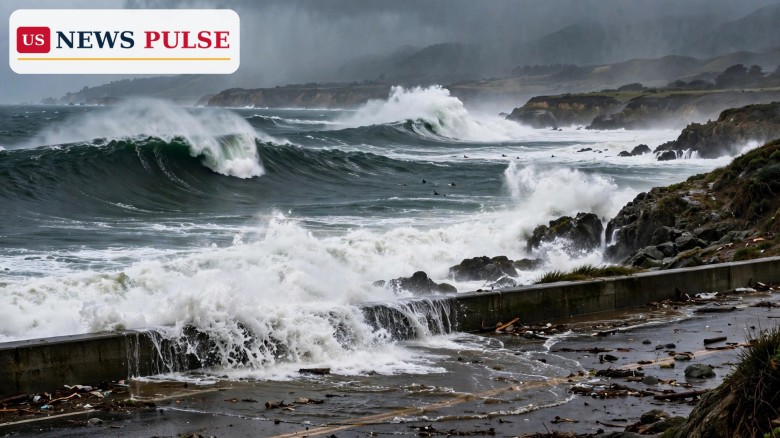
The biggest waves in about a decade battered the California coast on Saturday, November 14, 2026, with giant waves of 50 to 60 feet crashing ashore at Mavericks, flooding parts of Pacifica and putting about 270 Santa Cruz County homes under evacuation warnings. The California giant waves were driven by a powerful storm far out in the northeast Pacific, and they forced beach and pier closures from the Oregon border to Los Angeles County.
National Weather Service Bay Area meteorologist Rachel Kennedy told the Los Angeles Times that waves topped 25 feet along much of the coast. At Mavericks, the legendary break off Pillar Point near Half Moon Bay, about 20 miles south of San Francisco, the sets were far larger. Mark Sponsler of the forecasting service Stormsurf estimated the biggest Mavericks waves rose above 50 feet and possibly close to 60 feet.
Key Points
- Sets of 50 to 60 feet hit Mavericks off Pillar Point near Half Moon Bay on Saturday, November 14, 2026, in the biggest swell in about a decade.
- A buoy off Point Reyes recorded a significant wave height of 31.2 feet, its highest since 2015 and the second-largest in 30 years of records.
- In Pacifica, waves repeatedly broke over the seawall, floodwater nearly a foot deep covered part of Highway 1, and a sneaker wave knocked spectators off their feet.
- About 270 homes in Santa Cruz County were placed under evacuation warnings, and beaches and piers closed from the Oregon border to Los Angeles County.
- Forecasters expect another large swell late Sunday into Monday, with a high surf advisory in Los Angeles County through Tuesday afternoon.
What Happened
The swell arrived on Saturday morning and built through the day. At Mavericks, waves that began as a distant pulse in the Gulf of Alaska arrived as long, clean lines that rose into mountains of water before breaking with a force that shook the cliffs at Pillar Point.
In Pacifica, just south of San Francisco, waves repeatedly broke over the seawall and pushed floodwater nearly a foot deep across part of Highway 1. In a parking lot outside the City Council Chambers, a sneaker wave knocked spectators off their feet, including a mother carrying a toddler. No serious injuries were reported.
In Santa Cruz County, officials placed about 270 homes under evacuation warnings, covering Capitola Village, Las Olas and Beach Drive in Rio Del Mar, Platform Beach, Potbelly Beach and New Brighton State Beach. The City of Santa Cruz closed all of its city beaches and the Santa Cruz Wharf from Friday night, and Manhattan Beach Pier and Pismo Beach Pier were also closed.
Background: Why This Swell Was So Big
The swell was generated by a storm with hurricane-force winds in the northeast Pacific near the Gulf of Alaska. When a storm that strong blows across a huge stretch of open ocean for days, it builds waves with very long periods. Saturday’s swell had a wave period of about 19 seconds. Long-period swells travel farther, lose less energy and arrive at the coast much larger and more powerful than the short, choppy waves produced by local winds.
Giant Waves at Mavericks: 50 to 60 Feet
Mavericks sits about half a mile offshore from Pillar Point, where an underwater reef lifts the incoming swell into waves that can reach heights unmatched anywhere else on the California coast. On Saturday, the sets arrived in clean, dark lines before rising into towering walls that broke with explosions of white spray visible from the cliffs above Half Moon Bay. Sponsler’s estimate of waves above 50 feet, possibly close to 60, places the day among the largest ever recorded at the break.
Reactions and Warnings
Emergency officials across the coast spent the weekend urging people to treat the surf with respect. The National Weather Service has long warned beachgoers about the danger of sneaker waves, advising people to never turn their back on the ocean, and that message was repeated throughout Saturday as the swell peaked. Lifeguards asked spectators to watch from high ground and well back from the waterline, and to keep children and pets away from the surf zone entirely.
Why It Matters
Saturday’s swell was a genuine record-scale event: the Point Reyes buoy reading was the second-largest in 30 years, and the 50- to 60-foot sets at Mavericks put the day among the biggest the break has ever seen. It also showed how quickly a celebrated spectacle can become a public-safety emergency. The same waves that drew crowds to the cliffs flooded a highway, knocked people off their feet in Pacifica and forced hundreds of households in Santa Cruz County to prepare to leave their homes. High surf is one of the most underestimated weather hazards in California, because the ocean can look calm between sets and then arrive as a wall of water. The swell is part of a larger pattern, too: it arrived at the end of a week in which powerful Pacific storms brought heavy snow to the Sierra and rain to the coast, while the ocean off California is running far warmer than normal.
What Happens Next
Forecasters expect the next large swell to arrive late Sunday into Monday, bringing another round of dangerous surf to the California coast. The high surf advisory in Los Angeles County remains in effect through Tuesday afternoon, and officials are expected to keep beach and pier closures in place until the surf drops. Residents in the Santa Cruz County warning areas should stay ready to leave if an evacuation order is issued, and anyone living near the coast should check local alerts before heading to the beach.
Frequently Asked Questions
How big were the waves in California on Saturday?
Sets of 50 to 60 feet were estimated at Mavericks off Pillar Point near Half Moon Bay, and waves topped 25 feet along much of the coast. A buoy off Point Reyes measured a significant wave height of 31.2 feet.
Where did the flooding happen?
In Pacifica, waves broke over the seawall and floodwater nearly a foot deep covered part of Highway 1. About 270 homes in Santa Cruz County were placed under evacuation warnings, including areas in Capitola Village, Rio Del Mar, Platform Beach, Potbelly Beach and New Brighton State Beach.
What caused the giant waves?
The swell was generated by a storm with hurricane-force winds in the northeast Pacific near the Gulf of Alaska. Its long wave period of about 19 seconds gave the waves enormous energy when they reached the California coast.
Is more big surf coming?
Yes. Forecasters expect another large swell late Sunday into Monday, and a high surf advisory is in effect in Los Angeles County through Tuesday afternoon.
Related coverage: forecasters had warned before the weekend that California storm waves could reach 30 feet, with sets of 40 to 50 feet possible. The same storm system was part of back-to-back atmospheric rivers slamming the Pacific Northwest and Northern California. The coast is also experiencing record-warm ocean water, about 10 degrees above normal, as a strong El Niño builds.
Leave a Comment