

 | Today's Date:


India Opioid Network Busted: Six Arrested in DEA-Backed Messaging-App Drug Bust
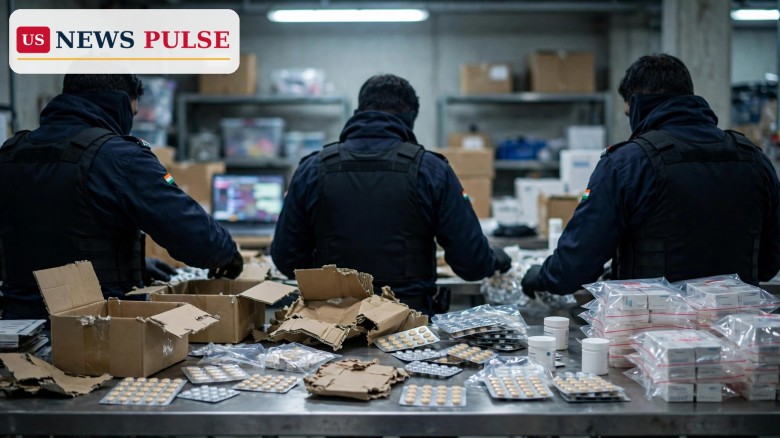
India's Narcotics Control Bureau said on Friday it had arrested six people and broken up a network that took orders for prescription opioids and other drugs over messaging apps and shipped them to buyers across the United States. The network dealt in psychotropic substances and prescription opioids, sending nearly 3,000 parcels with about 500,000 tablets to American customers between June 2022 and November 2026. The arrests followed a joint operation with the US Drug Enforcement Administration that raided addresses across India this month.
Key Points
- India's Narcotics Control Bureau arrested six people and broke up a network shipping prescription opioids and psychotropic drugs to buyers in the United States.
- The network shipped nearly 3,000 parcels containing about 500,000 tablets between June 2022 and November 2026.
- Orders came through Telegram, Skype and WhatsApp; payments went through Venmo, bank accounts in other people's names, UPI transfers and cryptocurrencies.
- Indian agents, working with the US Drug Enforcement Administration under an operation named "Monsoon Thunder", raided addresses across India this month.
- India handed the DEA a database with records of more than 59,000 customers, including transactions, delivery addresses and tracking information.
What Happened
The Narcotics Control Bureau, known as the NCB, announced the bust on Friday, November 20, 2026. The bureau said the network had operated for more than four years, taking orders from American buyers over popular messaging apps and mailing the drugs to US addresses. The drugs were psychotropic substances and prescription opioids, medicines that can only be sold legally with a prescription.
The operation that brought the network down was named "Monsoon Thunder". NCB agents, working with the US Drug Enforcement Administration, raided addresses across India this month. Investigators identified live consignments with more than 1,500 tablets bound for US addresses and shared the intelligence with the DEA. The American agency then seized two shipments, the NCB said, and six people were arrested in the raids.
Background and Context
India is one of the world's largest makers of generic medicines, supplying pharmacies and hospitals worldwide. That same scale has also made it a source of diverted prescription drugs, medicines that leave legitimate supply chains and are sold illegally abroad. Prescription opioids are among the most sought-after, because they are addictive painkillers that command high prices on illicit markets.
The network sold its drugs the way many modern trafficking groups do: not on street corners, but through the apps on a phone. A buyer in the United States could order over Telegram, Skype or WhatsApp, pay without meeting a seller, and wait for a parcel in the post. Nearly 3,000 parcels went out over four and a half years, about 55 a month. It fits a wider pattern of illicit goods reaching American buyers online: days ago, US authorities revealed a raid on a Chino, California factory illegally making Chinese vapes, seizing about 850,000 items. That raid exposed how banned products are now being made and sold inside the United States itself.
India Opioid Network: How the Messaging-App Drug Pipeline Worked
The network's business model was simple. Customers found sellers on Telegram, Skype and WhatsApp, three widely used messaging services. Orders were taken in private chats, away from public view, and the drugs were packed and posted to the address the buyer supplied. Nearly 3,000 parcels went to the United States over the life of the operation, a steady flow small enough, parcel by parcel, to pass unnoticed through the mail.
Payments were routed through channels designed to hide the money trail: Venmo, bank accounts held in other people's names, UPI transfers, India's instant payment system, and cryptocurrencies. Using several payment methods at once makes it harder for banks and investigators to follow the money, a pattern seen in other recent cases. A Georgia man was charged this week with sending more than $26,000 in cryptocurrency to ISIS-linked recipients, a reminder of how often digital payments now feature in federal cases.
The most important seizure may not be the tablets. Indian authorities handed the DEA a database with records of more than 59,000 customers, including transaction details, delivery addresses and tracking information: a map of the network's entire US customer base. For investigators, it turns a single bust in India into a starting point for cases across America.
Reactions and Quotes
The NCB's announcement was brief, but its director general made clear that the case is still growing. "Both agencies are pursuing leads on the wider network," NCB Director General Anurag Garg told Reuters. The comment points to further arrests as investigators work through the database and the seized material.
The DEA's role was central: it seized two shipments after the NCB flagged live consignments bound for US addresses, and it now holds the customer database. Neither agency has named the six people arrested, and no charges have been publicly detailed yet.
Why It Matters
The bust matters first because of the drugs involved. Prescription opioids are addictive painkillers, and the United States has been living through a deadly opioid crisis for years, with overdoses killing tens of thousands of Americans annually. Every parcel in this network carried tablets that were sold without a prescription, without medical supervision and without any check on who was taking them or how much. A network that could reach more than 59,000 customers shows how easily these drugs can now be bought by anyone with a phone. Messaging apps and digital payments have lowered the barrier to drug trafficking: sellers no longer need street networks or face-to-face deals, and buyers no longer need to know a dealer. The drugs were sold in India, the buyers were in America, and the investigation needed both countries' agencies to succeed.
What Happens Next
The immediate next step is the investigation itself. Both agencies are pursuing leads on the wider network, according to the NCB's director general, which means more raids, more arrests and more seizures are possible in the coming weeks. Investigators will be working through the material taken in the raids and the customer database, matching transactions to names and addresses. The database of more than 59,000 customers is likely to drive the American side of the case, as the DEA can now trace orders to delivery addresses across the United States. In India, the six people already arrested face prosecution under narcotics laws carrying heavy penalties for trafficking psychotropic substances and prescription drugs.
Frequently Asked Questions
What did Indian authorities bust?
A messaging-app network selling psychotropic substances and prescription opioids to buyers across the United States. Six people were arrested.
How many drugs did the network ship?
Nearly 3,000 parcels containing about 500,000 tablets were shipped between June 2022 and November 2026.
How did buyers order and pay?
Orders came via Telegram, Skype and WhatsApp; payments via Venmo, other people's bank accounts, UPI transfers and cryptocurrencies.
What is Operation Monsoon Thunder?
The joint NCB-DEA operation that raided addresses across India this month and broke up the network.
What happens to the network's customers?
India handed the DEA a database with records of more than 59,000 customers. Both agencies say they are pursuing leads on the wider network, but no customer charges have been announced yet.

The US News Pulse newsroom covers breaking news across the United States and the world, working from wire services, official statements and on-the-record sources. Every story is reviewed against our editorial standards before publication. Corrections and tips: info@usnewspulse.com
About our newsroomLeave a Comment