

 | Today's Date:

Appeals Court Rejects McIver Immunity Rehearing 10-3, Trial to Proceed - US News Pulse
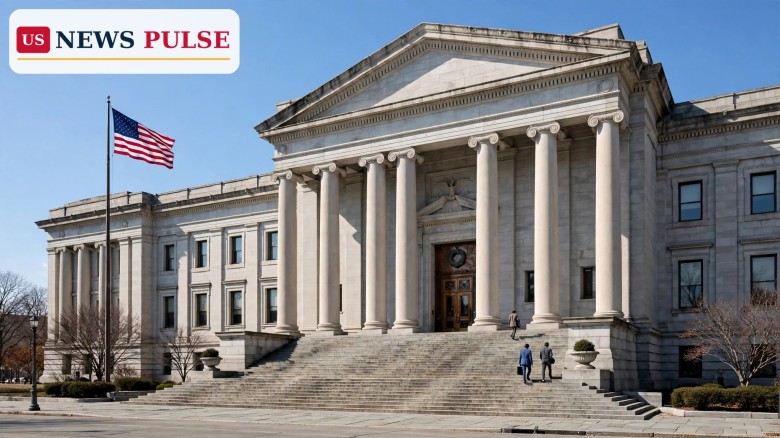
A federal appeals court has refused to rehear Representative LaMonica McIver's claim of legislative immunity, clearing the way for the New Jersey Democrat's criminal trial over a confrontation with federal officers at an immigration detention centre in Newark.
The United States Court of Appeals for the Third Circuit denied McIver's petition for rehearing en banc in a 10-3 decision on Thursday, November 19, 2026, leaving in place an August panel ruling that her immunity defence does not block two of the three federal charges against her. No written opinion accompanied the order.
Key Points
- The Third Circuit voted 10-3 on November 19, 2026 to refuse a rehearing of Rep. LaMonica McIver's legislative-immunity claim.
- The decision leaves intact the August panel ruling that immunity does not block two of the three federal charges.
- The charges stem from a May 2025 confrontation at the Delaney Hall ICE detention centre in Newark, New Jersey.
- McIver faces up to 17 years in prison if convicted, including on counts of assaulting and impeding federal officers.
- Former federal prosecutors had urged a rehearing, calling the indictment a "disturbing departure" from Justice Department norms.
What Happened
McIver asked the full Third Circuit to rehear her case after a three-judge panel ruled against her in August 2026. Ten judges voted against rehearing and three voted in favour, and the panel's ruling stands.
The order came without a written opinion, which is not unusual for a denial of rehearing, but it leaves the public with no judicial reasoning from the full court. The two charges the panel said were not blocked by immunity can now move toward trial, while the third count follows the separate path the panel set. It is a significant defeat for McIver, who has argued that her actions during a congressional oversight visit were legislative work protected by the Constitution.
Background: The Delaney Hall Confrontation
The charges arise from a May 2025 visit to the Delaney Hall ICE detention centre in Newark, where McIver and other lawmakers had arrived for an unannounced congressional oversight visit. The visit turned chaotic when Newark Mayor Ras Baraka was arrested outside the facility, and prosecutors say McIver physically intervened as officers tried to take him into custody.
According to the charges, McIver slammed her forearm into an officer who was trying to arrest Baraka and pushed past another officer to re-enter the facility. She was charged with assaulting and impeding federal officers, among three counts in total. McIver maintains she was carrying out her duties overseeing a federal detention facility. Lawmakers regularly inspect such facilities, and that line has rarely been tested in a criminal courtroom.
McIver Immunity Ruling: What the Third Circuit Decided
The August panel decision, which the full court has now declined to disturb, turned on the Speech or Debate Clause. That clause protects members of Congress from being questioned in court for their legislative acts, such as speeches, votes and committee work. The question was whether physically interfering with federal officers during a facility visit counts as a legislative act.
The panel, by a 2-1 vote, said it does not. Judges Cindy Chung and Stephanos Bibas held that physically interfering with federal officers is not a legislative act protected by the clause; Judge Thomas Ambro dissented. The panel also vacated Count Three and sent it back to the district court. The 10-3 vote suggests the broader court was not persuaded the panel had erred.
Reactions and Quotes
McIver framed the decision as a threat to lawmakers who challenge the administration. She said it brings the country "one step closer to a world in which the president of the United States can try to imprison people simply because he does not like what they stand for". The statement casts the prosecution as political, a theme she has pressed since the charges were filed.
Her position found support before the rehearing vote from former federal prosecutors who tried January 6 cases. In a brief filed on October 16, they urged en banc review, calling the indictment a "disturbing departure" from Justice Department norms. The court's order offered no comment, and no statement from the Justice Department accompanied the ruling. The prosecution's position is that the Speech or Debate Clause does not shield physical interference with officers carrying out their duties. Our report on the incoming representative who accused the defence secretary of war crimes over the boat strikes covered another case where a lawmaker's challenge to the administration has become a criminal-justice flashpoint.
Why It Matters
The ruling matters first because it decides, for now, how far the Speech or Debate Clause reaches. If the panel's reasoning holds, members of Congress cannot invoke legislative immunity for physical conduct during oversight visits, even when the visit itself is plainly part of their job.
It matters second because a sitting member of Congress now faces a criminal trial carrying up to 17 years in prison. Prosecutions of sitting lawmakers are rare, and a representative tried for conduct during an official visit is politically charged. The clause exists to protect legislative independence; the Justice Department argues it has never covered physical obstruction of officers. The Third Circuit's refusal leaves the panel's narrower reading in place.
What Happens Next
The case now returns to the district court in New Jersey, where the two charges the panel said were not blocked by immunity can proceed toward trial. The third count, which the panel vacated, was sent back for further consideration, so the trial court must decide how it proceeds. No trial date was announced, and the district court will set the schedule.
McIver's legal team must decide whether to seek further review of the immunity question or to concentrate on defending the charges at trial. The prosecution will keep being debated in Washington, as an example to her supporters of the administration targeting critics, and to her critics of the principle that no one is above the law. Our report on the looming House vote on impeaching the defence secretary covered a parallel clash.
Frequently Asked Questions
Who is LaMonica McIver?
LaMonica McIver is a Democratic member of the US House of Representatives from New Jersey, facing three federal charges from a May 2025 confrontation at the Delaney Hall ICE centre in Newark.
What did the Third Circuit decide?
On November 19, 2026, the court voted 10-3 against rehearing her immunity claim, leaving intact the August panel ruling. No written opinion accompanied the order.
What happened at Delaney Hall?
During an unannounced oversight visit in May 2025, Newark Mayor Ras Baraka was arrested, and prosecutors say McIver slammed her forearm into an officer and pushed past another to re-enter the facility.
What is the Speech or Debate Clause?
It protects members of Congress from being questioned in court for legislative acts, such as speeches, votes and committee work. The panel held that physically interfering with federal officers is not such an act.
What penalties does McIver face, and what happens next?
Up to 17 years in prison if convicted. The case returns to the district court in New Jersey, where the surviving charges can proceed toward trial.

The US News Pulse newsroom covers breaking news across the United States and the world, working from wire services, official statements and on-the-record sources. Every story is reviewed against our editorial standards before publication. Corrections and tips: info@usnewspulse.com
About our newsroomLeave a Comment