


 | Today's Date:





California Billionaire Tax Headed to Defeat as 55.6% Vote No With 60% Counted
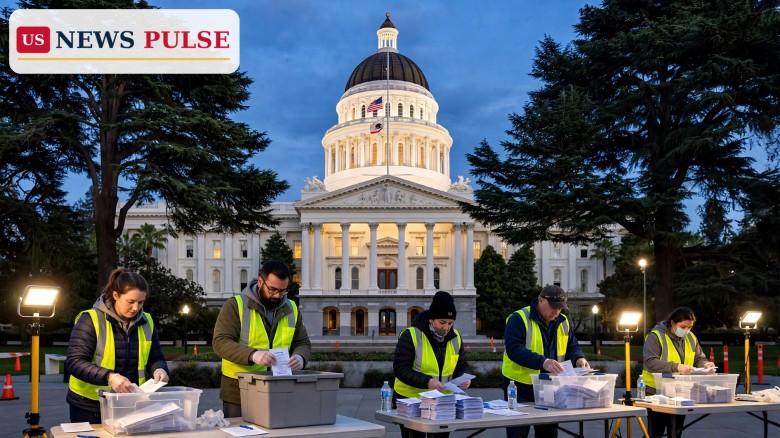
California's proposed billionaire tax is headed to defeat, according to early returns from the 2026 midterm elections. Proposition 40 trailed with 55.6% of counted ballots opposed and about 60% of the estimated vote counted, per Associated Press figures reported by Reuters on Wednesday morning. It is a striking setback for one of the most ambitious wealth-tax experiments ever put to American voters — and it comes even as Democrats swept to major victories elsewhere in California and across the country.
No major outlet had yet formally called the outcome, and California's slow, mail-heavy count means the margin could still move. But the shape of the early vote was clear: Proposition 40 drew only a razor-thin majority in Los Angeles County, the state's largest, and trailed by double-digit margins in each of the next six largest counties. For a measure that needed to win big in the state's population centres, that pattern left little room for a comeback.
Key Points
- Proposition 40, a one-time 5% levy on the assets of California's estimated 250 billionaires, trailed with 55.6% voting no at about 60% counted.
- It won only a narrow majority in Los Angeles County but trailed by double digits in each of the next six largest counties.
- Supporters had projected about $100 billion in revenue, mostly for health care programmes facing federal funding cuts.
- Opponents, backed by more than $300 million in spending, argued the tax would drive the ultrawealthy out of state.
- Rival Proposition 42 led Prop 40 in yes votes, 4.1 million to 3.4 million, and would invalidate it if it finishes ahead.
What Happened
California voters decided Proposition 40 on Tuesday, November 3, 2026, alongside a full slate of federal, state and local midterm contests. The measure proposed a one-time 5% tax on the assets of residents worth $1 billion or more. Supporters said it would raise about $100 billion, with most of the money earmarked for health care programmes now facing federal funding cuts.
By Wednesday morning, the Associated Press figures reported by Reuters showed 55.6% opposed. California counts millions of mail ballots after election night, so no news organisation had yet declared a winner or loser. But the county breakdown told a difficult story for supporters: Los Angeles County gave the measure only a slim majority, while the next six largest counties all rejected it by double-digit margins.
The result also carried a second threat. Competing Proposition 42 had attracted 4.1 million yes votes, about 54% of ballots counted at that stage, compared with 3.4 million yes votes for the billionaire tax. Under California's rules for conflicting measures, if a rival measure passes with more votes, it can invalidate Proposition 40 even if the billionaire tax itself were to recover and win a majority.
Background and Context
Proposition 40 arrived as California's health care system braced for deep federal cuts and as the state's Democratic politics wrestled with a familiar tension: how to pay for expansive public services in a state whose tax base depends heavily on a small number of very wealthy residents. Backers framed it as a question of fairness. A one-time charge on fortunes built in California, they argued, could protect clinics, hospitals and care programmes without raising taxes on anyone else.
That argument found powerful champions. Senator Bernie Sanders and Senator Elizabeth Warren promoted the measure as a national model, arguing that if the most populous state could tax billionaire wealth, other states — and eventually Washington — could follow. For progressives, California was the ideal test case: a deep-blue state where Democrats outnumber Republicans by nearly two to one, and where voters had just delivered Democrats a sweeping midterm victory.
California Billionaire Tax: The $300 Million Campaign Against It
If Proposition 40 fails, the scale of the campaign against it will be part of the story. Google co-founder Sergey Brin and at least 11 other billionaires gave a combined $269 million to the Building a Better California committee, which spent more than $300 million opposing Proposition 40 and supporting rival measures. It was one of the most expensive ballot-measure campaigns in American history, warning that the tax would chase jobs, philanthropy and future tax revenue to states without an income tax.
Supporters could not match that spending, and their message — that $100 billion for health care justified a one-time levy on 250 people — struggled against a simpler counter-argument: that billionaires, unlike factories or offices, can move. Whether voters were persuaded by the economics or simply wary of a novel tax, the early returns suggest the spending and the scepticism worked. A measure that could not win decisively in Los Angeles County, and that lost heavily in the Bay Area suburbs, San Diego and Orange County, was not defeated by one region alone.
Reactions and Quotes
California voters, meanwhile, were not rejecting higher taxes across the board. They separately approved Proposition 3, which makes higher income tax rates permanent for top earners, according to an Associated Press call. That split verdict — no to a one-time wealth tax, yes to permanent higher income taxes on high earners — suggests voters drew a distinction between taxing income, which they accepted, and taxing accumulated wealth, which many found a step too far.
Why It Matters
The stakes extended well beyond California. Had it passed, Proposition 40 would have been the largest wealth tax ever approved by voters in the United States, and a template for campaigns in New York, Washington, Illinois and other states where progressive lawmakers have proposed similar levies. Its defeat, if confirmed, will be cited by opponents in every one of those fights as evidence that voters, even Democratic voters, will not support taxing net worth.
What Happens Next
Counting will continue for days and, for the closest contests, weeks, as officials process mail ballots postmarked by Election Day and update results in daily batches. Proposition 40's fate will become clear as those batches arrive and as the totals for Proposition 42 are finalised. If Proposition 42 finishes with more yes votes, it will invalidate Proposition 40 regardless of the billionaire tax's own final percentage.
Frequently Asked Questions
What is California Proposition 40? A ballot measure proposing a one-time 5% tax on the assets of California residents worth $1 billion or more, an estimated 250 people.
Is Proposition 40 losing? Early returns on Wednesday, November 4, 2026, showed 55.6% voting no with about 60% counted, per AP figures reported by Reuters. No outlet had yet formally called it.
How much would it have raised? Supporters projected about $100 billion, mostly for health care programmes facing federal funding cuts.
Why does Proposition 42 matter? It had 4.1 million yes votes to Prop 40's 3.4 million early on; if it finishes ahead, it would invalidate Prop 40.
Did voters reject all tax rises? No. They separately approved Proposition 3, making higher income tax rates permanent for top earners, per an AP call.
Related midterm coverage: California Proposition 40: billionaire tax vote could reshape state budget; Xavier Becerra wins California governor race, becoming first Latino governor in 150 years; 2026 midterms set to cost a record $11.9 billion, as Musk leads donor surge.
Leave a Comment