


 | Today's Date:



Herzog Accepts Certified Israel Election Results and Opens Government Talks
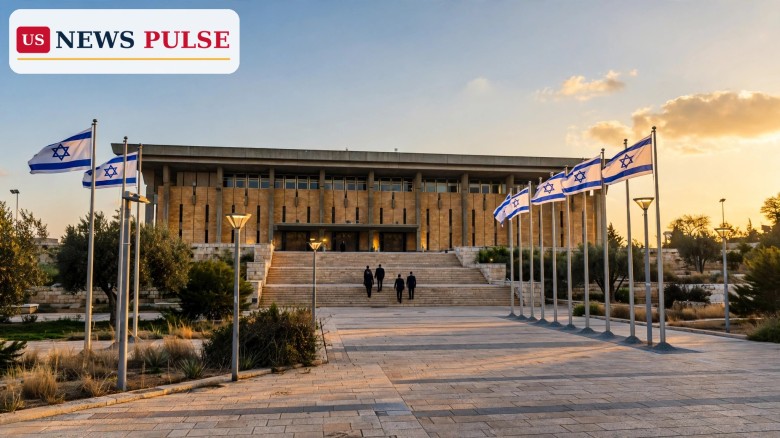
Israeli President Isaac Herzog has accepted the certified results of Israel's October 27 parliamentary election as legally binding and opened formal consultations on forming a new government, dealing a clear blow to Prime Minister Benjamin Netanyahu's effort to discredit a vote in which his bloc lost its parliamentary majority. Herzog received the official results on Wednesday, November 4, 2026, from Central Elections Committee chairman Justice Noam Sohlberg at the President's Residence in Jerusalem, starting the constitutional process that will decide who gets the first chance to build a coalition.
Key Points
- President Isaac Herzog accepted the certified results of Israel's October 27, 2026 parliamentary election on November 4.
- Israel's election commission said it found no evidence of irregularities that compromised the election or affected its results.
- Netanyahu's religious-nationalist bloc won 53 seats, opposition leader Gadi Eisenkot's bloc won 48, and Arab-led parties won a record 19, of 120 seats.
- Herzog will hold two days of consultations with party representatives before choosing the candidate most likely to form a coalition.
- The chosen candidate will have 28 days, extendable by 14, to form a government, or Israel could face another election.
What Happened
The handover at the President's Residence was brief, but its meaning was clear. By accepting the certified results, Herzog confirmed the October 27 outcome as the legal basis for what follows. The commission had investigated post-election fraud claims and found no evidence of irregularities that compromised the election or affected its results.
Herzog then began consultations with representatives of the parties elected to the Knesset, Israel's 120-seat parliament. Over two days, party leaders will formally tell the president whom they recommend to form the next government. Herzog will then choose the candidate he believes has the best chance of assembling a coalition commanding at least 61 seats. The two names most likely to be in contention are Netanyahu and Eisenkot, the leaders of the two largest blocs, neither of which won a majority on its own.
Herzog told party leaders: "The election is over, and now it is time to face reality." He urged compromise, rather than prolonging a dispute over a certified result.
Background/Context
Israelis voted on October 27, 2026, in an election that reshaped the political map. When the final results gave Netanyahu's bloc 53 seats, short of a majority, no single camp could govern alone. Eisenkot's opposition finished with 48 seats, while Arab-led parties won a record 19, a potentially decisive role.
Before certification, coalition talks had already begun, with Eisenkot meeting opposition figures. Those talks were provisional, with no formal mandate yet. Herzog's acceptance changes that: they now move to a formal process with a deadline.
The fraud claims have a history: Netanyahu's camp questioned the result after the vote. The commission examined them, and police had already found no evidence for Likud's fraud claims. Certification reinforces that conclusion formally.
Israel Election Results: What the Certified Numbers Mean
The certified numbers tell a story of a fragmented parliament and a narrow path to government. Netanyahu's bloc, with 53 seats, remains the largest single camp, and Netanyahu himself remains prime minister until a successor government is formed. But 53 is eight seats short of a majority, and the parties that make up his bloc cannot reach 61 without support from outside it. That is the central fact of the new Knesset: the largest bloc is not a governing majority.
Eisenkot's bloc, with 48 seats, also needs outside support. The Arab-led parties, with 19 seats, therefore hold unusual leverage: their votes could carry either camp over the line, or support a minority government from outside.
Reactions/Quotes
Herzog's own words set the tone for the consultations. "The election is over, and now it is time to face reality," he told party leaders, urging them to compromise rather than to relitigate a certified result. The remark was widely understood as a message to all sides: the campaign is finished, the count is certified, and the responsibility now is to form a government or explain to voters why another election is unavoidable.
The election commission's finding was equally plain. After investigating all fraud claims, it found "no evidence of irregularities that compromised the integrity of the election or affected its results." That sentence is the formal answer to weeks of dispute. It does not end political argument in Israel, but it does end the argument about whether the result itself is valid.
For Netanyahu, certification is a setback to casting doubt on the outcome. For Eisenkot, it opens a door, not a government: he must still persuade Herzog he can build a coalition. For the Arab-led parties, it confirms a historic voice in the talks.
Why It Matters
This matters because it moves Israel from dispute to decision. For over a week, competing claims about the vote dominated politics. Certification closes that chapter and forces a different question: who can govern, on what programme, and with whose support. That requires compromise between parties that campaigned against each other.
It matters internationally, too: the next government will shape Israel's approach to regional security, Gaza, the wider Middle East and the United States. A long period without a stable government would leave those questions unanswered. It is also a test of Israel's institutions.
What Happens Next
Herzog will complete two days of consultations, then name the candidate tasked with forming a government. That candidate will have 28 days, with a possible 14-day extension, to negotiate a coalition. If successful, the government faces a Knesset confidence vote. If not, Herzog may turn to another candidate, and if no one succeeds, Israel could face another election.
The negotiations will be the real test: a programme, ministerial posts and the role of the Arab-led parties must all be agreed. For voters, the next few weeks will show whether the certified result can produce a stable government, or whether compromise fails and another election follows.
Frequently Asked Questions
What did President Herzog do on November 4, 2026? He accepted the certified October 27 results as legally binding and began government-formation consultations.
What were the certified results? Netanyahu's bloc won 53 seats, Eisenkot's bloc won 48, and Arab-led parties won a record 19, of 120 Knesset seats. A majority requires 61 seats.
Did the election commission find fraud? No. After investigating all fraud claims, it found no evidence of irregularities that compromised the integrity of the election or affected its results.
Who will form the next government? Herzog will choose the candidate most likely to build a coalition, most likely Netanyahu or Eisenkot. That candidate will have 28 days, extendable by 14, to form a government.
What happens if no government can be formed? Herzog may turn to another candidate, and if all efforts fail, Israel could face another election.
Leave a Comment