Iran on Sunday, November 1, 2026, designated Britain's Royal Navy and Royal Air Force as terrorist organisations and classified the country's foreign intelligence service, MI6, as a hostile group, in a sharp retaliatory step that deepened the diplomatic rift between Tehran and London during the wider United States-Israeli war on Iran.
The Iranian Foreign Ministry said the measures took effect on publication of its statement and were adopted under a resolution of Iran's Supreme National Security Council. Tehran said the move answered what it called Britain's malicious and hostile actions over the past year, above all London's decision on July 13, 2026, to place Iran's Islamic Revolutionary Guard Corps (IRGC) under Britain's State Threats Act 2026.
The announcement was carried on Sunday by Iran's state-run IRNA news agency and reported by Tasnim, Iran International and other outlets. According to the Foreign Ministry statement, the Royal Navy and Royal Air Force are brought under Iran's Law on Countermeasures against the United States' Designation of the Islamic Revolution Guard Corps as a Terrorist Organization, and are accordingly designated as terrorist organisations.
For MI6, the ministry used a different legal route. It said that, as of the issuance of the statement, the Secret Intelligence Service shall be classified as a hostile group under Note 2 to Article 1 of Iran's Law on Enhancing Punishments for Espionage and Cooperation with the Zionist Regime and Hostile Countries Against National Security and Interests, and that the provisions of that law shall apply to the British agency.
The ministry did not spell out, in the statement as reported, how the designations would be enforced in practice against British forces or intelligence officers. That gap matters: designations of this kind are often more political signal than operational instruction, but they can also be used inside Iran to justify prosecutions, asset measures or restrictions on contacts, and they raise the temperature for any British national or entity caught in the widening legal confrontation.
The immediate trigger, in Tehran's account, was Britain's July 13, 2026, decision to place the IRGC under the State Threats Act 2026. That British step followed months of escalating tension over Iran's regional activities, alleged plots on British soil and the wider war that began on February 28, 2026, when the United States and Israel launched strikes on Iran. Tehran has repeatedly said it would respond to what it regards as hostile legal and military moves by Western states.
Iran also pointed to what it described as Britain's participation in the war through access to military and logistical bases and facilities under British jurisdiction. British officials have not accepted that characterisation, and London has framed its own measures as a response to threats to British security, including the IRGC's activities and alleged Iranian-linked plots in the United Kingdom.
The designation also follows a security incident at RAF Fairford, reported more than a month earlier, which British Prime Minister Andy Burnham said involved Iran, and the subsequent appearance in a London court of two men charged under Britain's National Security Act in connection with that incident. Iranian coverage linked the timing of its announcement to that chain of events, although the Foreign Ministry statement itself rested its case on the broader pattern of British policy over the past year.
The legal language is deliberately reciprocal. By placing the Royal Navy and Royal Air Force under the same kind of countermeasures law that Iran created after the United States designated the IRGC, Tehran is signalling that it will answer Western terrorism listings in kind. The MI6 wording, drawn from Iran's espionage law, is framed as a hostile-group classification rather than a terrorist designation, but it carries its own legal consequences inside Iran for anyone accused of cooperating with the agency.
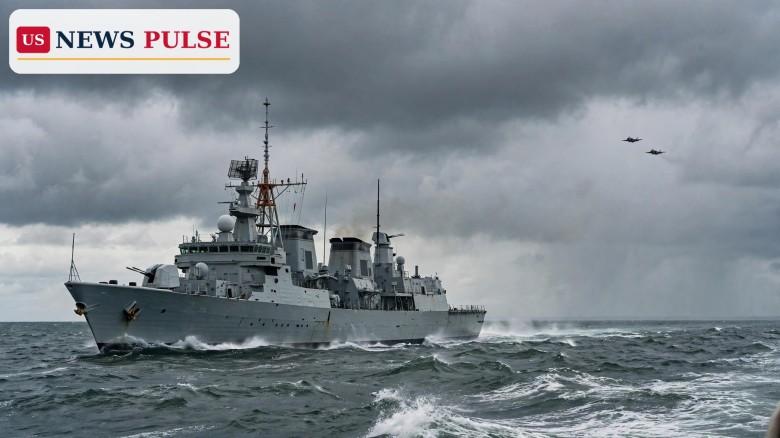
For Britain, the practical effect is likely to be felt first in diplomacy and risk assessments. British forces operating in the Gulf and the wider Middle East already work in a contested environment, with Iranian warnings in recent days that any renewed war could last longer than the previous round and would have no geographical limitations. A formal terrorist designation, even one issued by Tehran alone, adds a legal and rhetorical layer to that threat picture and complicates any contact, deconfliction or consular work that touches the named institutions.
For Iran, the move fits a pattern of using formal legal instruments to answer Western sanctions and listings. It does not, by itself, change the military balance, but it gives Tehran a domestic legal basis to treat the British services as hostile actors and to present its response as proportionate and lawful under Iranian law.
A UK Ministry of Defence spokesperson responded the same day, according to Metro and other reports: "We utterly reject this designation. The UK Armed Forces will continue to defend our people, personnel and interests, working closely with our allies and partners."
No separate Foreign Office or Downing Street statement had been found in the initial reporting, and Iran had still not said how the designations would be enforced. That silence is itself notable: the most consequential question for British personnel, shipping and diplomacy in the region is not the label, but what Tehran intends to do with it.
Iranian officials, by contrast, presented the step as a direct answer to London. The Foreign Ministry said Britain's actions over the past year had been contrary to the principles of the United Nations Charter and international law, particularly respect for national sovereignty and the prohibition of unlawful measures against other countries.
The designation matters for three reasons. First, it widens a war that has already drawn in the United States, Israel and Gulf states to include a formal legal confrontation with Britain, one of America's closest allies. Second, it lands days before the November 3 US midterm elections and amid warnings from Washington and Gulf capitals that strikes on Iran could resume as early as November 4, so any escalation in rhetoric now feeds directly into decisions about war and diplomacy in the coming week.
Third, it tests the limits of reciprocal designations. Western states have long used terrorist listings against the IRGC and other Iranian entities; Iran is now answering with its own listings of Western armed services. If other states follow, or if Tehran acts on the designation against British interests, the legal war could become a practical one for shipping, bases and personnel across the Middle East.
Watch for a fuller British government response, for any Iranian enforcement step or clarification, and for whether Gulf allies or the United States comment on a designation that touches a NATO ally's armed forces. Diplomats in Doha, where Iranian negotiators have been meeting Qatari mediators for a third day, will also be watching whether the announcement hardens Tehran's negotiating position or is meant mainly as a domestic and regional signal.
US News Pulse will update this story as London and Tehran respond and as any enforcement detail emerges.
What did Iran announce on November 1, 2026? Iran designated Britain's Royal Navy and Royal Air Force as terrorist organisations and classified MI6 as a hostile group, effective on publication of the Foreign Ministry statement.
Why did Iran take this step? Tehran cited Britain's July 13, 2026, listing of the IRGC under the State Threats Act 2026 and what it called British support for the US-Israeli war on Iran, including access to bases and facilities.
How did Britain respond? A UK Ministry of Defence spokesperson said Britain utterly rejects the designation and that British forces will continue to defend British people, personnel and interests with allies.
Does the designation change the military situation? Not by itself, but it adds a legal and rhetorical escalation and could affect risk assessments, diplomacy and any future Iranian enforcement action against British interests.
What happens next? Watch for a fuller British response, any Iranian clarification on enforcement, and the effect on Doha mediation and on decisions about renewed strikes after the US midterms.
Related coverage: Powerball Results Oct 31: No Jackpot Winner as $793 Million Rolls to Monday, New York Unemployment System Goes Offline Nov 2, Payments Delayed 9 to 12 Days and Judge Dismisses Alaska Senate Lawsuit in Blow to Trump Bid to Block Certification.
Leave a Comment



 | Today's Date: