California ballots became the centre of a fresh election-eve confrontation on Saturday, October 31, 2026, as Governor Gavin Newsom warned the state's top federal judges that federal agents may try to seize ballots before the midterm results are certified. On the same day, a new court filing by two University of California, Los Angeles data analysts said more than four in ten names on the Trump administration's list of alleged noncitizen voters in California do not appear on the state's voter rolls at all.
Newsom's letter, published by the Governor's Office on Saturday, was described as an extraordinary alert to the courts that cover California. It did not claim that a warrant application was already pending. Newsom wrote: "I am not writing in connection with any warrant application currently pending in your courts, as I am unaware that there are any such matters at this time." His concern, he said, was what could follow in the days before certification.
"I have grave concerns federal agents will seek search warrants to seize ballots and ballot materials before the election results are certified," Newsom wrote. He added: "Indeed, the only reason to do so would be to interfere in a State's lawful counting of ballots and certifying the results of the election." The letter enclosed a nonpartisan legal resource for judges assessing any such application: the UC Berkeley Edley Center on Law and Democracy's September 2026 paper, "Questions for Assessing A Search Warrant for Election Materials."
Newsom's argument rested on California's own safeguards. He wrote that the state's strict chain-of-custody, documentation and retention laws for ballots and ballot materials ensure that any evidence of alleged wrongdoing tied to ballots is preserved and appropriately supervised by a court, "so there is no legitimate law enforcement reason to seize ballots, ballot materials, and equipment needed to process and tabulate ballots."
The letter pointed to the pressure campaign behind it. In recent weeks, Acting Deputy Attorney General Trent McCotter sent letters to state and local election officials warning of potential legal jeopardy if they did not comply with the federal government's demands. Bilal Essayli, First Assistant United States Attorney for the Central District of California, explicitly threatened via social media posts criminal prosecution against election officials who process ballots cast by individuals whom the United States asserts may be noncitizens, according to the Governor's Office summary of the letter.
The dispute began with a list, not a court ruling. The Trump administration delivered a list to California in early October identifying as many as 20,930 people it described as "likely non-citizens" registered on the state's voter rolls. On October 15, the administration sued California, asking the state to sequester any ballots sent to those people, preventing them from being tallied as part of voting results.
California and independent experts have questioned the list from the start, and courts have repeatedly rejected the sequestration demand. On Friday, the 9th Circuit Court of Appeals in San Francisco rejected the complaint a second time, determining it unconstitutional. Separately, a federal judge ordered the Justice Department to stop sending demands to state officials, a decision the administration appealed on Saturday.
That Friday order mattered for another reason: it required the administration to share the list with the plaintiffs, which made Saturday's outside analysis possible. Until then, the list had been the subject of argument but not independent checking. The administration had objected to sharing it, calling the request a "fishing expedition" and noting that it included sensitive information.
Noncitizen voting in federal elections is already prohibited in all 50 states, and documented cases are exceedingly rare, a point critics of the lawsuit, including Newsom, have repeatedly cited. The administration's case does not rest on proven votes cast by noncitizens; it rests on the assertion that the flagged names are likely ineligible and that their ballots should therefore be separated during counting.
The Saturday filing came from the Coalition for Humane Immigrant Rights (CHIRLA), an immigrant-rights group, and was based on work by two data analysts at UCLA's Voting Rights Project. It is the first outside analysis of a list the Justice Department has used to threaten prosecution of election officials, according to reporting on the filing.
The headline finding was stark: 8,880 names, or 42% of the 20,930 examined, do not correspond to anyone in California's current voter file. In other words, more than four in ten people the administration asked California to treat as possible illegal voters could not be matched to a registered voter in the state at all.
The analysts went further. They found at least 22 people on the list who are US citizens, and they estimated that nearly 7,500 naturalised citizens were "highly likely" to be incorrectly flagged as ineligible. The filing, cosigned by Xavier Becerra, the Democratic candidate for California governor and an adviser to the UCLA Voting Rights Project, argued that the mandated voter list "endangers a significant number of eligible California voter[s]."
The researchers also noted a practical obstacle: the administration apparently removed voter identification numbers from the names, making it harder for election officials to check whether those flagged were already on their rolls. That detail, if confirmed, would help explain why a list with so many unmatched names could still be presented as a register of likely noncitizens.
The same pattern, the reporting noted, has appeared elsewhere. The administration urged Washington state to remove what it said were 400 possible noncitizens from its rolls, though state election officials there say that list is also unreliable and includes one voter who cast ballots in the 1990s.
Newsom's letter was the sharpest official response, but it was not the only warning to judges this week. On Tuesday, two former federal judges, J. Michael Luttig and Nancy Gertner, issued an unusual public statement to their working colleagues, warning them to use extreme caution before taking the "uniquely serious" step of granting prosecutors a warrant for seizures. Executing a search warrant for ballots or voting machines before an election is certified, they wrote, would cause irreparable harm to a vital public process: elections.
The Justice Department defended its effort. "Every ballot cast by an ineligible voter cancels out the vote of an American citizen," spokesperson Kiersten V. Pels said, adding: "The Department makes no apology for protecting those votes." Essayli dismissed the UCLA findings on Saturday, describing them as a "bogus report" produced by what he called an activist immigrant-rights group.
Trump criticised the court rulings on Saturday, claiming on social media that the Justice Department had uncovered "20,000, but potentially Hundreds of Thousands, and maybe even Millions" of fraudulent votes. That claim goes far beyond the 20,930 names on the California list and beyond anything the UCLA analysis or the court record establishes; the administration has not said how many people on its list have actually submitted ballots.
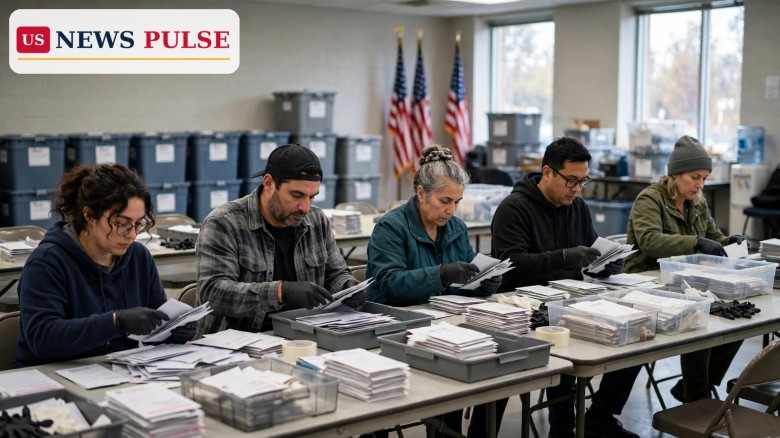
With the midterms on Tuesday, November 3, the timing is the story. Ballots have already been issued, millions of Americans have already voted, and election workers have already begun processing ballots. A warrant to seize ballots or tabulation equipment in that window would not be a routine evidence-gathering step: it could halt counting in the affected jurisdiction, cast doubt on results before they are certified, and create a precedent for federal intervention in state-run elections.
The UCLA analysis also changes the factual footing of the dispute. If 42% of the flagged names are not on the voter rolls, and thousands of naturalised citizens were likely misflagged, then the remedy the administration sought — separating those ballots from the count — would risk excluding eligible voters rather than merely filtering ineligible ones. That is why the filing matters beyond California: the same list-based approach is being pressed in other states, and the same matching problems may recur there.
For California specifically, the clash tests the boundary the Constitution draws. The Constitution assigns the administration of elections to the states, and California runs its own chain-of-custody system for ballots. The administration argues that federal criminal law on noncitizen voting justifies federal demands; the state and the courts that have ruled so far argue that the demands, as framed, are unconstitutional and unsupported by the evidence presented.
Three things will decide how this ends. First, whether any federal agent actually seeks a warrant for ballots or election materials in California between now and certification, and how a judge responds if one is sought — Newsom's letter and the Luttig-Gertner statement were both written to shape exactly that decision. Second, whether the administration's Saturday appeal of the order barring further demands succeeds, and whether the 9th Circuit's rejection of the sequestration bid is taken further, potentially to the Supreme Court, as reporting has suggested a showdown could follow. Third, how California's counting proceeds on and after Tuesday: officials have said the flagged ballots are being processed under existing law, and the courts have so far declined to order them set aside.
Watch also for further outside analyses. Saturday's filing was possible only because a judge ordered the list shared; if other states obtain similar lists, independent checks may follow, and the accuracy question will no longer rest on assertion alone. The broader election fight — over who controls Congress for the final two years of Trump's term — will be decided by voters on Tuesday, but the California ballot fight will help decide how confidently those results are accepted.
Related coverage: DOJ charges green-card holders with illegal voting in 5 states, Trump $1 million voter-fraud reward: tips must lead to arrest and conviction, Trump Texas rallies: Paxton, methane plan and a Talarico surge.
Newsom warned that federal agents may seek search warrants to seize ballots, ballot materials or voting equipment before the midterm results are certified, and said the only reason to do so would be to interfere with a state's lawful counting and certification.
Two UCLA Voting Rights Project analysts, working for CHIRLA, found that 8,880 of 20,930 names on the Justice Department's list, or 42%, do not correspond to anyone in California's current voter file. They also found at least 22 US citizens and estimated nearly 7,500 naturalised citizens were highly likely misflagged.
No. Multiple judges have rejected the demand as unconstitutional, the 9th Circuit rejected it a second time on Friday, and a federal judge ordered the Justice Department to stop sending demands to state officials. The administration appealed that order on Saturday.
Spokesperson Kiersten V. Pels said every ballot cast by an ineligible voter cancels out an American citizen's vote and that the department makes no apology for protecting those votes. Bilal Essayli dismissed the UCLA findings as a bogus report.
Tuesday, November 3, 2026. Ballots have already been issued and early voting is under way, which is why the timing of any ballot seizure is so sensitive.
Leave a Comment



 | Today's Date: