A Colorado woman who says she is still testing positive for Salmonella more than four months after eating raw oysters from a Whole Foods seafood counter has sued the grocer and the Virginia company that harvested the shellfish, in the first lawsuit to emerge from a multistate outbreak that health officials did not announce until October. The oyster Salmonella lawsuit, filed on October 30, 2026, in federal court in Colorado, argues that the oysters that made Sherry DeCrow violently ill in June were sold and eaten months before the public was ever warned to stop eating them.
DeCrow, of Lafayette, Colorado, and her husband, John Hadar, are suing Whole Foods Market Rocky Mountain/Southwest, L.P., and The Little Wicomico Oyster Company, LLC, of Northumberland County, Virginia, over a dozen raw Blue Point oysters DeCrow bought at the Whole Foods store at 303 Marshall Road in Superior, Colorado, on June 5, 2026. The complaint, filed in the United States District Court for the District of Colorado, accuses both companies of strict products liability, breach of implied warranty and negligence, and adds a loss of consortium claim on Hadar's behalf. The lawsuit is an allegation only: neither company has yet responded publicly to the claims in the material released so far, and no damages figure is stated in the filing announcement.
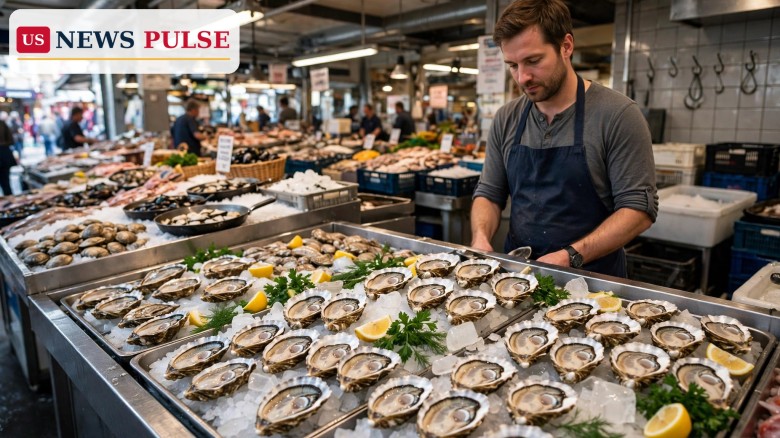
According to the complaint, DeCrow's illness began almost immediately. She bought the dozen raw Blue Point oysters at the seafood counter of the Superior Whole Foods on June 5, 2026, and ate them that day. Within hours, the filing says, she was violently ill with fever, chills, vomiting, diarrhoea and severe abdominal and joint pain. A stool culture came back positive for Salmonella, the bacterium at the centre of the multistate outbreak that federal officials would not announce for another four and a half months.
The most striking claim in the lawsuit is not the illness itself but its duration. More than four months after that June meal, DeCrow is still testing positive for Salmonella, the complaint says, and her doctors are evaluating her for reactive arthritis and other post-infectious complications that can follow a severe Salmonella infection. Before her illness, she worked as a hardwood flooring installer, a physically demanding trade in which joint pain and prolonged illness carry an obvious professional cost.
The complaint also turns on advice DeCrow says she received at the counter. On two occasions, the filing alleges, Whole Foods seafood counter employees told her that raw oysters could be kept and eaten over three to four days. That advice is central to the negligence claim: raw shellfish is among the riskiest foods sold at retail, and its safe handling window is measured in hours under refrigeration, not days on a counter. The complaint does not say whether the employees' statements were written down or witnessed, and Whole Foods has not responded to the allegation in the material released so far.
The case is styled DeCrow v. Whole Foods Market Rocky Mountain/Southwest, L.P., et al., and the plaintiffs are represented by Marler Clark, the food safety law firm that has represented thousands of victims of foodborne illness outbreaks since 1993. The firm announced the filing on October 30, 2026, through a public statement summarising the complaint. The full complaint itself, and any response from the defendants, will become public as the case proceeds through the Colorado federal court.
The lawsuit arrives at the end of a long and confusing timeline for the Little Wicomico outbreak. On October 19, 2026, the Centers for Disease Control and Prevention and the Food and Drug Administration announced the outbreak, reporting 27 people sick in 12 states, including two in Colorado, with illnesses beginning in late May. The Virginia Department of Health, meanwhile, has reported a larger count of 53 people ill in 18 states, a gap that reflects the different ways federal and state agencies count confirmed and suspected cases as an investigation develops.
Five people have been hospitalised in the outbreak, and no deaths have been reported. Recalled oysters were distributed to restaurants and retailers in California, Colorado, Connecticut, the District of Columbia, Florida, Georgia, Illinois, Maryland, Missouri, North Carolina, New Jersey, Nevada, New York, Pennsylvania, Texas and Virginia, and may have been further distributed beyond that list. The strain involved is Salmonella Telelkebir, a less common serotype whose appearance in patients across so many states helped investigators trace the illnesses back to a single harvest area: Virginia's Little Wicomico River.
That harvest area is also where the timeline becomes the heart of the lawsuit. Little Wicomico's recall covers only oysters harvested from September 18 through October 8, 2026. DeCrow's oysters were bought and eaten on June 5, months before that window opened. If her illness is linked to the same harvest area, as the complaint argues, then people were being sickened by these oysters in May and June, long before any recall told the public to stop eating them. That gap between first illnesses and first warning is now the central factual dispute the case will test.
Raw oysters carry a distinctive risk that sets them apart from most recalled foods. Oysters are filter feeders: they pump large volumes of water through their bodies to feed, and in doing so they concentrate whatever bacteria are present in that water. Cooking kills Salmonella and other pathogens, but raw oysters are eaten uncooked by design, so nothing between harvest and consumption removes the bacteria. That is why oyster outbreaks are traced back to harvest waters rather than to a processing plant, and why regulators close harvest areas when water tests or illness patterns point to contamination.
The complaint's three main claims each attack a different link in the chain from river to counter. Strict products liability argues that the oysters were defective and unreasonably dangerous when sold, regardless of how careful anyone was. Breach of implied warranty argues that oysters sold for human consumption carried an implied promise that they were fit to eat. Negligence argues that the companies failed to take reasonable care, whether in harvesting, distributing, handling or advising customers about the product. Hadar's loss of consortium claim, a standard companion claim in serious injury cases, seeks damages for the impact of his wife's illness on their marriage.
For the plaintiffs, the strongest narrative facts are the June purchase date, the positive stool culture and the four months of continued positive tests. For the defence, the case will turn on proof: whether DeCrow's Salmonella can be tied to the Little Wicomico strain, whether the oysters she bought came from that harvest area, and whether the advice she says she received can be established. Foodborne illness cases are notoriously difficult to prove for a single plaintiff, because the contaminated food is long gone by the time a lawsuit is filed, and the evidence usually rests on purchase records, medical tests and the epidemiological pattern of the wider outbreak.
What the lawsuit does not do is ask the court to expand the recall or to order any immediate change in how oysters are sold. It is a damages action, not a regulatory petition. Its practical effect, if it succeeds, would be financial: compensation for DeCrow's medical costs, lost earnings and suffering, and a precedent that other people sickened by the same oysters could cite. If it fails on proof, it would still leave a public record of the timeline gap that the plaintiffs say matters most.
William Marler, the managing partner of Marler Clark, framed the case as a story about a customer who did what she was told. "Sherry did nothing wrong. She bought oysters from a store she trusted, asked how to handle them safely, and followed the advice she was given," Marler said. "Four months later she is still shedding Salmonella and dealing with joint pain that may stay with her for years."
Marler also used the filing to attack the recall's narrow window directly. "The recall window tells you when the problem was caught, not when it started," he said. "People were getting sick from these oysters in May and June. Those oysters were sold and eaten long before anyone told the public to stop."
On the science of raw shellfish, Marler was blunt: "Oysters are filter feeders. If the water is contaminated, the oyster is contaminated, and nothing between the harvest and the consumer kills the bacteria. Growers, distributors, and retailers who sell raw shellfish need to know where it came from and whether it is safe, and they need to give customers accurate advice. That did not happen here."
Neither Whole Foods nor The Little Wicomico Oyster Company has issued a public response to the lawsuit in the material released so far, and the CDC and FDA have not commented on the filing. That silence is normal at this stage: defendants typically respond in court filings rather than press statements, and agencies do not comment on private litigation. Marler Clark has invited anyone who believes they were sickened by the recalled oysters to contact the firm for a free consultation.
The case matters beyond one Colorado couple because it exposes a structural weakness in how oyster outbreaks are handled. Illnesses from a harvest area can accumulate for months before enough cases cluster to trigger an investigation, and a recall can only reach oysters still in the supply chain. Everyone who ate the earlier harvest is left with a medical problem and no warning, and their only remedy is a lawsuit filed long after the evidence has been eaten. DeCrow's case makes that sequence concrete: a June meal, an October announcement, a September-to-October recall window that does not cover her oysters at all.
It also matters for retailers. Supermarkets increasingly sell raw shellfish at seafood counters alongside cooked products, and the advice given at those counters is part of the product as customers experience it. If a jury accepts that DeCrow was told raw oysters keep for three to four days, that advice alone could support a negligence finding even if the harvesting and distribution chain is harder to fault. Retailers, in turn, may respond with stricter counter scripts, clearer labelling or a decision to stop selling raw oysters altogether, a step some grocers have already taken for other high-risk items.
For consumers, the immediate lesson is simpler and older than any lawsuit: raw oysters carry a risk that cooking removes, and that risk is highest for people with weakened immune systems, liver disease or other vulnerabilities. Salmonella sickens an estimated 1.35 million people in the United States each year, and while most recover within days, a minority develop the kind of prolonged or post-infectious complications DeCrow's doctors are now evaluating. Anyone who ate raw oysters from the affected harvest area and developed fever, diarrhoea or abdominal pain should seek medical advice and mention the oyster exposure, since a stool culture is the test that links an individual illness to an outbreak.
The next step is the defendants' response. Whole Foods and The Little Wicomico Oyster Company will file answers or motions in the District of Colorado, and the case will move into discovery, where both sides exchange documents, purchase and supply records, harvest data and medical evidence. That phase will test the complaint's central claims: the origin of DeCrow's oysters, the accuracy of the counter advice, and the medical link between her illness and the outbreak strain.
Other people sickened by the same oysters may file their own cases, and lawyers in food safety cases often watch the first filing closely: an early complaint can set the factual template that later cases follow, or it can reveal weaknesses that later plaintiffs avoid. No class action has been announced, and the DeCrow case is filed as an individual action on behalf of one couple.
Separately, regulators continue to monitor the outbreak's tail. The recall window has closed, but illnesses with long incubation or reporting lags can still surface, and state health departments update their counts as new laboratory confirmations arrive. If further cases emerge from harvests outside the September-to-October window, pressure will grow for a wider explanation of when the contamination began, which is precisely the question DeCrow's lawsuit puts before a court.
Sherry DeCrow and her husband, John Hadar, of Lafayette, Colorado, sued Whole Foods Market Rocky Mountain/Southwest, L.P., and The Little Wicomico Oyster Company, LLC, on October 30, 2026, in the United States District Court for the District of Colorado.
DeCrow says she bought a dozen raw Blue Point oysters at the Whole Foods store in Superior, Colorado, on June 5, 2026, ate them the same day, and fell violently ill within hours. Her stool culture tested positive for Salmonella, and more than four months later she is still testing positive, with doctors evaluating her for reactive arthritis and other post-infectious complications.
The complaint asserts strict products liability, breach of implied warranty and negligence, plus a loss of consortium claim by Hadar. It alleges Whole Foods seafood counter employees twice told DeCrow that raw oysters could be kept and eaten over three to four days.
The recall covers only oysters harvested from September 18 to October 8, 2026, while DeCrow bought hers on June 5. Her lawyers argue people were getting sick from these oysters in May and June, long before the October 19 outbreak announcement told the public to stop eating them.
The CDC and FDA reported 27 people sick in 12 states when they announced the outbreak on October 19, 2026, while the Virginia Department of Health has reported 53 people ill in 18 states. Five people have been hospitalised and no deaths have been reported.
Related coverage: Virginia oysters Salmonella outbreak: 27 sick in 12 states after recall; Virginia oysters Salmonella outbreak: river tests confirm strain; Phoenix Halloween rain forecast: first wet October 31 in nearly 40 years.
Leave a Comment



 | Today's Date: