

 | Today's Date:





Hawaii Army Audit Warns Troops May Not Deploy Fast Enough in China War - US News Pulse
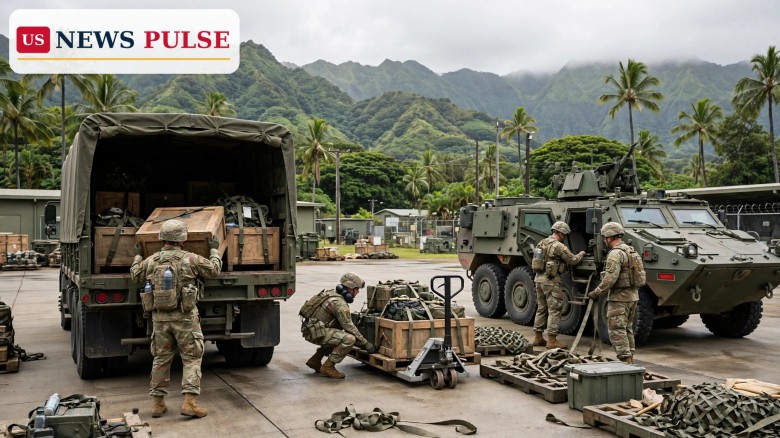
The US Army's own auditors have warned that troops based in Hawaii may not be able to deploy fast enough if war breaks out with China in the western Pacific, casting doubt on the islands' role as America's main launching pad for a Pacific fight. In a report completed in April 2026 and obtained by CNN under the Freedom of Information Act, the Army Audit Agency concluded there is a risk that units "won't be able to effectively deploy from Hawaii in support of a no-notice contingency or other real world mission." The findings, published on Tuesday, November 24, 2026, point to flooded maintenance bays, equipment shortfalls and training gaps.
Key Points
- Army auditors warn Hawaii-based units may not deploy fast enough in a no-notice war with China.
- The April 2026 audit found "unaddressed infrastructure and equipment issues", flooded maintenance bays and training gaps.
- A senior US Army Pacific official requested the review, saying leaders "lacked confidence" in the garrison as a power projection platform.
- Hawaii hosts about 47,000 active-duty troops, including the 25th Infantry Division and US Indo-Pacific Command.
- US Army Pacific says it has acted on the findings and "remains fully prepared" for global contingencies.
What Happened
The audit was carried out by the Army Audit Agency, the service's internal watchdog, and completed in April 2026. CNN obtained it through a Freedom of Information Act request and published the findings on Tuesday, November 24, 2026. Its central warning is blunt: the Hawaii garrison may not be able to get its units out of the islands quickly when a crisis erupts without warning.
Auditors found "unaddressed infrastructure and equipment issues" across the deployment pipeline, administrative confusion over a field support battalion's responsibilities, lacklustre logistics equipment readiness, gaps in deployment-support training and maintenance bays flooded with water — basic failures that slow every step of loading troops and vehicles for movement.
What makes the report striking is who asked for it. A senior US Army Pacific official requested the review because leaders "lacked confidence in U.S. Army Garrison Hawaii's ability to function as a power projection platform" — the military term for a base that can surge forces forward. The commanders who would fight a Pacific war were not sure their own hub could do the job.
Background: Hawaii's Role as America's Pacific Hub
Hawaii is not just another Army posting. The islands host roughly 47,000 active-duty troops, including the 25th Infantry Division, the headquarters of US Army Pacific and the headquarters of US Indo-Pacific Command, which would direct any conflict with China. Planners treat Hawaii as a relatively safe hub, far enough from Chinese missiles to stage troops and equipment and flow them westward toward Taiwan, the South China Sea or the Korean Peninsula.
That hub role is why the audit matters. In a no-notice contingency there is no time to fix broken equipment or settle who is responsible for what. Units must board aircraft and ships within days, sometimes hours. The Army's war plans assume Hawaii can do that. The audit says it may not be able to — and the Pentagon treats China as its pacing threat.
Hawaii Army Audit Exposes Deployment Gaps
The findings are practical rather than abstract. Flooded maintenance bays mean vehicles and equipment cannot be serviced properly. Logistics equipment in poor readiness means the trucks, forklifts and handling gear that move supplies are themselves unreliable. Confusion over a field support battalion's duties means units and support staff may disagree on who does what when deployment orders arrive.
Training gaps add a further risk: deployment-support training teaches soldiers to load, document and move equipment under pressure, and without it even working equipment moves slowly. None of this means Hawaii's troops cannot fight. It means the machinery that gets them to the fight — the bays, the gear, the paperwork, the drills — is not in the shape the Army's own standards require.
Reactions and Quotes
US Army Pacific acknowledged the findings, saying the audit had found "identified opportunities to strengthen unit movement support" and that the command has taken action. It insisted the command "remains fully prepared to meet global contingency requirements" — a direct rebuttal that does not dispute the specific problems the auditors documented.
The response leaves the central tension unresolved: the auditors say there is a risk units cannot deploy effectively from Hawaii; the command says it is fully prepared. What has not been made public is which fixes have been completed since the report was finished in April, or how much infrastructure and equipment work remains outstanding. The Pentagon has not publicly released the full audit; it reached the public only through CNN's Freedom of Information Act request, seven months after completion.
Why It Matters
If Hawaii cannot surge forces quickly, the first days of a Pacific war look different. Reinforcements arrive late, deterrence weakens, and commanders in the western Pacific must fight longer with the forces already in place. In a conflict where China would seek to win fast, before American reinforcements arrive, a slow hub is a strategic liability.
The audit also matters because it was the Army judging itself — not an outside critic, but the service's own audit agency, asked in by the commanders on the ground. That gives the warning a weight outside criticism rarely carries. Fixing the bays, equipment and training gaps will also cost money and time, competing with every other demand on the Army's budget.
What Happens Next
The immediate question is what US Army Pacific has actually fixed since April. The command says it has taken action, but it has not published a list of completed repairs or a timetable for the rest. A follow-up audit — or a public accounting of the fixes — would show whether the risk the auditors identified has closed.
Watch too for wider scrutiny: if Hawaii's garrison has these problems, lawmakers and the Pentagon may ask whether other power projection platforms have the same ones. The Pentagon's readiness debate, already sharpened by its blunt public rebuke of Canada's defence shortfalls and Defence Secretary Pete Hegseth's restrictions on defence cooperation with Ottawa, now has a domestic front as well.
Frequently Asked Questions
What did the Army audit find about Hawaii? The Army Audit Agency warned that units may not be able to deploy effectively from Hawaii in a no-notice contingency, citing infrastructure and equipment issues, flooded maintenance bays and training gaps.
When was the audit completed? The report was completed in April 2026 and obtained by CNN under the Freedom of Information Act, with its findings published on November 24, 2026.
Why did the Army audit its own Hawaii garrison? A senior US Army Pacific official requested the review because leaders "lacked confidence" in the garrison's ability to function as a power projection platform.
How many troops are based in Hawaii? About 47,000 active-duty troops, including the 25th Infantry Division, US Army Pacific headquarters and US Indo-Pacific Command headquarters.
What has US Army Pacific said in response? It said the audit found "identified opportunities to strengthen unit movement support", that it has taken action, and that the command "remains fully prepared to meet global contingency requirements".

The US News Pulse newsroom covers breaking news across the United States and the world, working from wire services, official statements and on-the-record sources. Every story is reviewed against our editorial standards before publication. Corrections and tips: info@usnewspulse.com
About our newsroomLeave a Comment