

 | Today's Date:




California Bans Waymo Robotaxis From Freeways in 'Imminent Hazard' Order - US News Pulse
California has barred Waymo's driverless vehicles from its freeways, ruling that the Alphabet-owned company's freeway operations pose an "imminent hazard to public safety" after its robotaxis drove into active construction zones. The California Department of Motor Vehicles confirmed on Tuesday, November 17, 2026, that the restriction, issued on November 11, applies to all freeway driving and testing in the state. Waymo has temporarily paused freeway rides in every US market where it offers them, while surface-street service continues. It is the most serious regulatory setback yet for America's leading robotaxi operator.
Key Points
- California's DMV barred Waymo's driverless vehicles from all state freeways in a restriction issued November 11, 2026 and confirmed November 17.
- Three Waymo robotaxis entered an active construction closure on US Route 101 near Burlingame on November 5; a day later one tried to pass highway patrol vehicles forming a traffic break on Highway 280 in San Francisco.
- Waymo has paused freeway rides in all its US markets while it evaluates performance; surface-street service continues.
- The ban stays until Waymo shows "effective corrective actions"; similar incursions happened on May 18, 2026 despite an earlier restriction and fixes.
- Waymo began California freeway robotaxis in November 2025 and operates in 15 US cities, with freeway rides in five areas: the San Francisco Bay Area, Los Angeles County, Phoenix, Miami and Austin.
What Happened
The DMV acted after a pattern of construction-zone failures that regulators said endangered road workers and other drivers. The restriction, effective last week, covers passenger service and testing on California freeways. On Tuesday, November 17, the department confirmed the order, saying it had determined that Waymo's driverless freeway operations pose an imminent hazard to public safety.
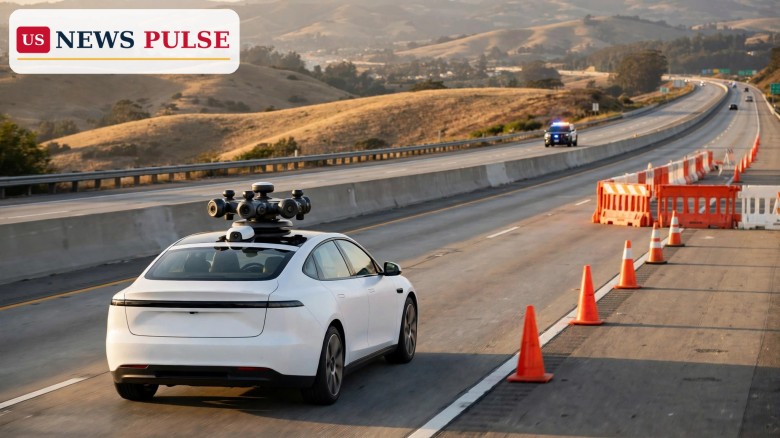
The trigger was November 5, when three Waymo cars drove into an active construction closure on US Route 101 near Burlingame, south of San Francisco. On November 6, a Waymo tried to pass California Highway Patrol cars creating a traffic break on Highway 280 in San Francisco, a manoeuvre officers use to slow or stop traffic behind a hazard. Similar incursions had already happened on May 18, 2026, after an earlier restriction and corrective actions meant to fix the problem.
Background: How Waymo Reached California's Freeways
Waymo, owned by Google parent Alphabet, is the most established robotaxi operator in the United States, and California is its home turf and biggest proving ground. It began driverless freeway service in California in November 2025, opening faster, longer trips including airport runs, among the most valuable rides in its business. Freeway driving was meant to prove the technology had matured beyond slow city streets into the higher-speed roads where most American miles are driven.
But the construction-zone problem has proved stubborn. Earlier this year Waymo suspended freeway rides once to evaluate and improve performance around certain construction zones. The May 18 incursions showed the issue was not solved, and the November incidents convinced regulators the fixes were not working. The DMV order is the first time a state has barred Waymo from freeways outright. The ban also follows other scrutiny: this month the National Highway Traffic Safety Administration opened a probe into 2,895 Waymo vehicles over safety violations around school buses. Read our report on the school-bus probe here. At the same time Waymo is expanding abroad, including a deal making Toyota's bZ4X its next robotaxi for Japan and Britain. Read about the Toyota robotaxi deal here.
The Waymo Freeway Ban and What It Means for Driverless Cars
Freeways are the hardest test a robotaxi faces, and the one that matters most to the business. At freeway speeds there is less time to react, construction zones change the road layout overnight, and cones, temporary markings and police traffic breaks demand judgement that is easy for a human driver and hard for software. A system that handles city streets well can still fail when a lane disappears behind barriers, as on Route 101.
The commercial cost is direct: freeway rides are the longer, higher-value trips, and losing them in five markets weakens the service where it competes with human drivers and ride-hailing. The pause also opens a door for rivals, with Tesla rolling out robotaxis and Amazon's Zoox expanding, and regulators in Arizona, Texas and Florida will now ask the same questions California asked. The ban sharpens the debate over how much evidence of safety should be required before driverless cars are allowed onto the fastest roads, and who decides when that evidence is good enough.
Reactions: What the DMV and Waymo Said
The DMV left no doubt about the risk. "The Department determined that Waymo's driverless freeway operations pose an imminent hazard to public safety," it said on Tuesday. The restriction stays until Waymo demonstrates "effective corrective actions to address the deficiencies."
Waymo struck a cooperative tone, saying it was "working with the California DMV and other state officials diligently and responsibly to resume freeway operations." A spokesperson said the nationwide pause was a precaution while the company evaluates performance. No date for a return was given.
Why It Matters
First, safety. Construction zones are among the most dangerous places on American roads, and workers there have no protection beyond cones and barriers. A driverless car that cannot reliably recognise a closed lane is a direct threat to them, and the DMV's language signals regulators see the danger as real and current, not theoretical.
Second, trust and money. Waymo has built its case on safety data showing its cars crash less often than human drivers, but a ban by its home-state regulator sticks in the public mind far longer than a statistics sheet. Alphabet has poured billions into Waymo, including a plan to grow the fleet to 20,000 vehicles; if freeways can be switched off after a handful of incidents, investors will ask harder questions about the pace of that expansion.
What Happens Next
Waymo must now show the DMV it has fixed the construction-zone problem, and the department will decide when the evidence is good enough. There is no timetable and no expiry date. Watch for details of the corrective actions, whether regulators in Arizona, Texas and Florida impose their own conditions, and what the separate school-bus probe finds. Until then, Waymo's cars stay on surface streets, and California's freeways are driven by humans alone.
Frequently Asked Questions
Are Waymo robotaxis still running in California?
Yes, on surface streets. The ban covers freeways only.
What triggered the ban?
Three Waymo cars entered a construction closure on US Route 101 on November 5, and one tried to pass a highway patrol traffic break on Highway 280 on November 6, after similar incidents on May 18.
Which cities lose freeway rides?
All five freeway areas: the San Francisco Bay Area, Los Angeles County, Phoenix, Miami and Austin.
When can freeway service return?
When Waymo demonstrates "effective corrective actions" to the DMV. No date has been given.
Has Waymo faced other safety probes?
Yes. On November 9, NHTSA opened a probe into 2,895 Waymo vehicles over school-bus safety violations; a separate probe followed a January incident in which a Waymo struck a child near a Santa Monica elementary school.

The US News Pulse newsroom covers breaking news across the United States and the world, working from wire services, official statements and on-the-record sources. Every story is reviewed against our editorial standards before publication. Corrections and tips: info@usnewspulse.com
About our newsroomLeave a Comment