

 | Today's Date:




IRS Opens Four Criminal Probes Into Left-Wing Groups in Post-Kirk Crackdown
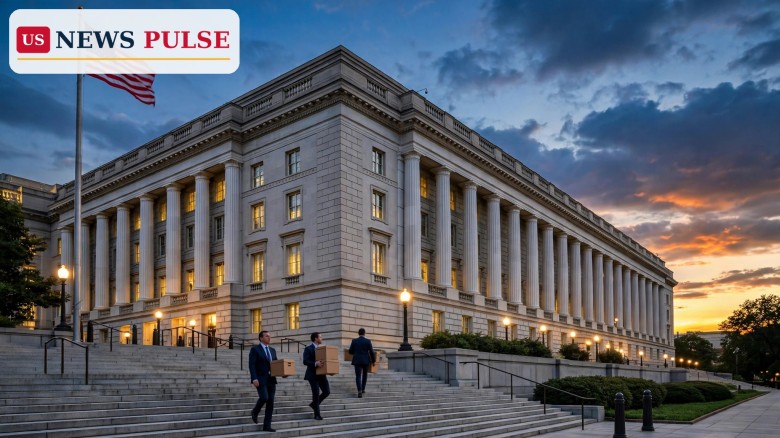
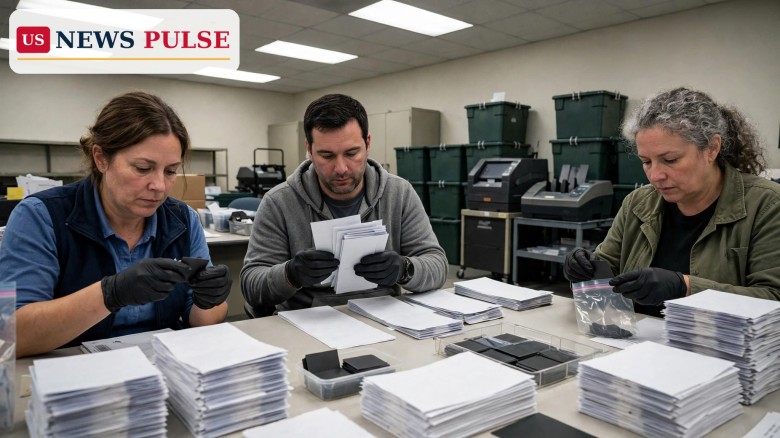
The Internal Revenue Service has opened at least four criminal investigations into left-wing groups as part of the Trump administration's crackdown that followed the killing of conservative activist Charlie Kirk, according to an internal IRS memorandum viewed by The New York Times. The memo, reported on Monday, November 17, 2026, offers the first look at how the tax agency has been drawn into a wider federal effort against groups accused of financing political violence. The subjects of the four IRS criminal probes into left-wing groups have not been named.
Key Points
- The IRS has opened at least four criminal investigations into left-wing groups since Charlie Kirk was killed on September 10, 2025, an internal memo reveals.
- A dozen IRS officials were detailed to a cross-agency task force run from FBI headquarters from March 2026, working on it through July.
- The IRS team also referred at least four tax-exempt groups for civil audits, worked on nine grand juries and reviewed Venmo records from the Delaney Hall protests.
- The targets are named in a two-page appendix the Times did not see, so they remain undisclosed.
- IRS officials discussed a fast-track process to strip tax-exempt status from indicted groups, but agency lawyers objected and it has not been put in place.
What Happened
The New York Times published its account of the internal IRS memorandum on Monday, November 17, 2026. The document is a six-page status report from leaders in IRS Criminal Investigation, the agency's law-enforcement arm, describing work between March and July by about a dozen IRS officials detailed to a task force based at FBI headquarters. It is the first window into what the IRS has actually done to carry out the White House's demands.
The memo records at least four criminal investigations opened by the IRS, the Times says, but not who they target or where each one stands. The six pages reviewed do not include a two-page appendix naming the targets, so the public still does not know which organisations are under scrutiny. The IRS team was also assigned to nine grand juries, reviewed subpoenaed Venmo records from people arrested at protests outside the Delaney Hall detention centre in Newark, New Jersey, and used facial-recognition and tattoo-analysis databases to identify individuals. Separately, it referred at least four tax-exempt groups for civil audits.
Background: The Crackdown After Kirk's Killing
The crackdown began after Charlie Kirk, the conservative activist and founder of Turning Point USA, was killed on September 10, 2025. Weeks later, President Donald Trump ordered federal agencies to investigate antifa and other groups that, in the order's words, espouse "extremism on migration, race and gender". The IRS was told to investigate whether nonprofit organisations were "directly or indirectly financing political violence or domestic terrorism".
The order put the tax agency at the centre of a political fight previously fought through speeches, lawsuits and hearings. The IRS holds detailed financial records on almost every nonprofit, and its criminal investigators carry badges and work routinely with grand juries. That made it a powerful tool for an administration that argues left-wing groups funded a wave of political violence, a claim critics dispute. The Justice Department has meanwhile pressed criminal cases against Democratic lawmakers the president has accused of sedition, a move Attorney General Todd Blanche has publicly pushed back on, as US News Pulse reported. Attacks on Turning Point USA activists have also continued, including the cane attack at the University of Texas at Tyler, where a former student was charged after assaulting students at a campus tent.
IRS Criminal Probes Into Left-Wing Groups: What the Memo Shows
The memo's clearest finding is that the IRS did not simply lend a few analysts to the effort. A dozen officials from IRS Criminal Investigation were embedded in the FBI-led task force for months, working on criminal cases, grand juries and civil audits at once. The four criminal investigations are the sharpest end of that work: a criminal probe can lead to charges, asset seizures and prison, and it signals that investigators believe they have evidence of a crime, not merely a paperwork problem.
The four civil audit referrals matter in a different way. A nonprofit that loses its tax-exempt status can no longer receive tax-deductible donations, an existential threat for many advocacy groups. The memo says IRS officials also discussed a new expedited process to revoke tax-exempt status for groups once indicted. That idea has not been implemented, and the memo records IRS lawyers' concerns about whether such a fast-track process would hold up legally.
Reactions and Quotes
An IRS spokesman confirmed the agency's role, saying its criminal branch "has collaborated with federal law enforcement agencies, including the F.B.I., to investigate individuals and entities that may be funding domestic terrorism or political violence". The statement names no target, confirms no number of investigations, and says nothing about charges.
The White House order framed the mission in sweeping terms, and the administration presents the effort as a response to the killing of Kirk and to violence at protests, arguing the groups behind it must be cut off from funding. The memo itself hints at unease inside the agency: IRS lawyers raised concerns about the legal rigour of the proposed fast-track revocation process, and the plan has not gone ahead.
Why It Matters
The memo matters because it is the first concrete evidence that the IRS, an agency most Americans meet only at tax time, has been turned into a political weapon. A criminal investigation can freeze a group's operations, scare away donors and force it to spend heavily on lawyers long before any charge is filed. Even an investigation ending without charges can do lasting damage to a small nonprofit.
What Happens Next
The four investigations will be watched for charges, and the two-page appendix naming the targets may surface through court filings, congressional oversight or further reporting. If any group is indicted, its tax-exempt status will come to the front, and the fast-track revocation idea could be revived. Congress is already circling the administration's use of federal power, with the new House Oversight chairman facing his own scrutiny, as US News Pulse reported, and lawmakers are likely to demand the full memo and the list of targets.
Frequently Asked Questions
How many criminal investigations has the IRS opened into left-wing groups?
At least four, according to an internal IRS memorandum viewed by The New York Times and reported on November 17.
Which groups are under investigation?
The targets are not publicly known. They are named in a two-page appendix the Times did not see, and the six pages it reviewed do not identify them.
What started the crackdown?
The killing of Charlie Kirk on September 10, 2025, after which President Trump ordered agencies to investigate antifa and groups accused of financing political violence.
What else did the IRS team do?
It referred at least four tax-exempt groups for civil audits, worked on nine grand juries and reviewed subpoenaed Venmo records from the Delaney Hall protests.
Can the IRS take away a group's tax-exempt status?
Yes, through the normal audit process. A faster process for indicted groups was discussed, but IRS lawyers raised legal concerns and it has not been implemented.

The US News Pulse newsroom covers breaking news across the United States and the world, working from wire services, official statements and on-the-record sources. Every story is reviewed against our editorial standards before publication. Corrections and tips: info@usnewspulse.com
About our newsroomLeave a Comment