


 | Today's Date:





PLA-Linked Chinese University Bought Nvidia H200 AI Chips Despite US Blacklist
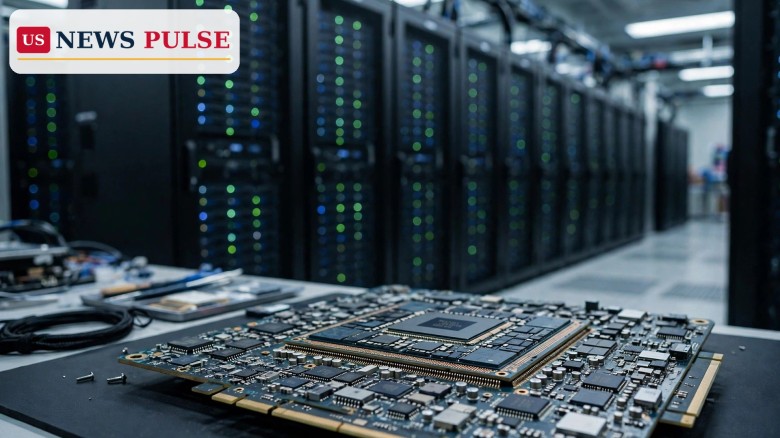
A blacklisted Chinese university bought two of Nvidia's most powerful AI chips anyway. Northwestern Polytechnical University in Xi'an, a defence-focused institution blacklisted by the United States since 2001, purchased two Nvidia H200 chips last month for 874,700 yuan — about $123,000 — according to its own procurement records, showing how America's most advanced AI hardware still reaches the institutions Washington has tried hardest to cut off.
Key Points
- The purchase: Two Nvidia H200 chips for 874,700 yuan ($123,000), per an October 21 procurement record on its website, for its management school, from Chinese supplier Shaanxi Bosuan Network Technology, not directly from Nvidia.
- The university: A member of China's "Seven Sons of National Defense" group, it researches military aircraft, missiles and satellites, and has been on the US Entity List since 2001.
- Rented access too: The university also bought access this year to H200 chips and other Nvidia processors through five rented-computing contracts, including two seven-month January contracts for servers with eight H200 chips.
- A wider market: A Reuters review of 26 Chinese procurement records this year found other universities buying restricted Nvidia chips, including Shenzhen, Wuhan University of Technology and Beihang.
- The timing: The findings land as Nvidia chief Jensen Huang faces mounting scrutiny in Washington, with three Republican committee chairmen seeking a briefing on November 18.
What Happened
Reuters reported on Tuesday, November 11, 2026, that Northwestern Polytechnical University bought two Nvidia H200 chips last month. An October 21 procurement notice on the university's website states the price as 874,700 yuan and names Shaanxi Bosuan Network Technology as the supplier. The chips were bought for the university's management school.
The H200 is among Nvidia's most capable chips for training and running advanced AI systems, and it is subject to US export licence approvals normally denied to blacklisted institutions. The university has been on the Commerce Department's Entity List since 2001 over alleged missile proliferation and military research, with restrictions tightened in 2019 to a policy of denial for most licences.
The purchase was not a one-off. Two seven-month January contracts from the university's cybersecurity school were worth 441,700 yuan and 441,000 yuan, each for servers with eight H200 chips, for AI-model fine-tuning. The university also rented servers with eight A100 and eight A800 chips — processors banned from export to all Chinese entities.
Background and Context
Northwestern Polytechnical University, based in Xi'an, is one of China's "Seven Sons of National Defense", elite universities with deep ties to the People's Liberation Army and China's defence industry. That profile is why Washington placed it on the Entity List more than two decades ago, and why the restrictions were hardened in 2019.
The Trump administration began allowing some H200 exports to China case by case in January 2026. But that did not lift the separate Entity List restrictions, which still bar blacklisted institutions from receiving the chips. The January rules also require safeguards against blacklisted entities remotely accessing exported chips — a provision the findings put in question, since the university obtained both the hardware and rented access.
The findings follow a separate investigation last week in which the Commerce Department had approved about two dozen Chinese companies to buy or handle H200 chips. That story covered approved sales to companies; this one is a blacklisted university obtaining the chips anyway.
Nvidia H200 Chips and the Export Rules Meant to Block Them
The H200 sits at the centre of Washington's chip-control strategy because it is the hardware that makes frontier AI possible. Denying it to China's military-linked institutions has been a stated goal of US export policy for years.
The review suggests the controls are leaking at more than one point. The two chips were supplied by a Chinese company, not by Nvidia itself, raising the question of how the hardware reached a domestic reseller. Rented access raises a second question: cloud-style use of H200 servers can deliver much of the benefit of owning the chips, without any chip crossing a border. Shenzhen University bought three banned H100 processors in September, Wuhan University of Technology bought an H100 server in June, and Beihang University bought four A800 processors in April.
Reactions and Quotes
Northwestern Polytechnical University, Nvidia and the Commerce Department's Bureau of Industry and Security did not respond to requests for comment. None has publicly explained how the chips reached a blacklisted university, or whether any investigation is under way.
The findings arrive at a difficult moment for Nvidia. Huang faces mounting scrutiny in Washington over lobbying for looser restrictions on chip sales to China, after reports alleging he was targeted by a Chinese spying operation. Three Republican committee chairmen have requested a briefing with Huang on November 18, and Nvidia's board has hired an outside law firm to investigate whether he was targeted by a foreign intelligence operation.
Why It Matters
First, the purchase shows the Entity List, Washington's main tool for keeping advanced technology from China's military, can be circumvented through domestic suppliers and rented computing power. A blacklist that stops direct sales but not resale leaves the door open.
Second, the chips are not ordinary hardware. The H200 powers the most advanced AI training, and the university researches military aircraft, missiles and satellites. If blacklisted institutions can obtain this class of chip, the controls are failing at exactly the point they were designed to hold.
Third, the timing sharpens the political fight in Washington. With Congress debating new chip-export restrictions and Huang due before lawmakers on November 18, the findings give critics of looser controls a concrete case: a blacklisted university, a named supplier, a dated receipt and a price.
What Happens Next
The immediate focus is the November 18 briefing, where three Republican committee chairmen are expected to press Huang on the Reuters findings and on Nvidia's lobbying for looser export rules. Lawmakers are also weighing new defence-bill measures to tighten tracking of advanced chips and give Congress more power over export decisions.
Enforcement is the other open question. The Bureau of Industry and Security has not said whether it will investigate how the chips reached the university, or whether the supplier faces action. Any case would have to trace the chips from manufacture to the university.
Frequently Asked Questions
Which university bought the Nvidia H200 chips? Northwestern Polytechnical University in Xi'an, China, of the "Seven Sons of National Defense" group.
How much did the university pay? It paid 874,700 yuan, about $123,000, for two Nvidia H200 chips, per an October 21 procurement record on its website.
Why is the university blacklisted? It has been on the US Entity List since 2001 over alleged missile proliferation and military research, with restrictions tightened in 2019.
Did the university buy the chips directly from Nvidia? No. The record names Chinese supplier Shaanxi Bosuan Network Technology, and the university also rented computing capacity with H200, A100 and A800 chips this year.
What happens next? Three Republican committee chairmen have requested a briefing with Nvidia chief Jensen Huang on November 18, and Congress is weighing new chip-export restrictions.
Read more: Nvidia H200 sales to China-linked firms | Nvidia hires Joon Kim to investigate Huang spy claims | Musk to join Trump at APEC as Huang trip in doubt
Leave a Comment