


 | Today's Date:


Bay Area Transit Funding Wins as Voters Approve Prop H and Regional Tax
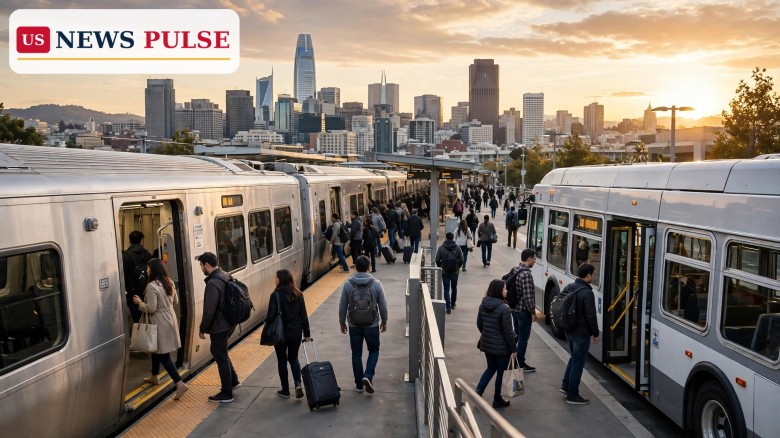
Bay Area voters chose higher taxes over deep cuts to public transport on Tuesday, November 3, 2026, approving two measures that will protect Bay Area transit funding for BART, Muni, Caltrain and more than a dozen other systems across the region. The San Francisco Chronicle called both races on election night, as early returns showed comfortable majorities for the Regional Transit Measure and San Francisco's Proposition H, averting the sweeping service reductions agencies had warned were coming without new money.
Key Points
- The Regional Transit Measure won about 61.3 percent on election night: 601,093 votes in favour, 379,350 against.
- San Francisco's Proposition H won about 72.3 percent: 105,363 votes in favour, 40,360 against, in early returns.
- The regional measure creates a 0.5 percent sales tax in four counties and 1 percent in San Francisco, raising nearly $1 billion a year for 14 years.
- Proposition H creates a parcel tax expected to raise about $177 million a year for Muni over 15 years, from $129 for a single-family home.
- The money funds BART, Caltrain, Muni, AC Transit and other agencies facing combined deficits of more than $800 million a year.
What Happened
Residents of Alameda, Contra Costa, San Francisco, San Mateo and Santa Clara counties voted on the Regional Transit Measure, also known as Measure RTM. As of 9:45 p.m. on election night it had 601,093 votes, about 61.3 percent, in support, against 379,350, about 38.7 percent, opposed.
San Francisco voters also decided Proposition H, a parcel tax for the San Francisco Municipal Transportation Agency, which runs Muni buses, light-rail vehicles, streetcars and cable cars. It won about 72.3 percent in early returns, an even wider margin than the regional measure, reflecting strong city support for protecting Muni. Voters passed both on the same night.
The region's transit systems have warned for years that they face a fiscal cliff. Federal pandemic relief money has been running out while operating costs have risen. BART, Muni, Caltrain and AC Transit together face combined annual operating deficits exceeding $800 million.
Each agency had laid out what failure would look like. BART, with a deficit of about $375 million, warned of closing up to 15 stations and ending daily service at 9 p.m. Muni, facing a gap of more than $300 million, warned it could cut half its lines. Caltrain, with a shortfall of about $75 million, warned of hourly service only and 10 station closures.
Bay Area Transit Funding: What the Two Measures Do
The Regional Transit Measure creates a sales tax of 0.5 percent in Alameda, Contra Costa, San Mateo and Santa Clara counties, and 1 percent in San Francisco, for 14 years. It is expected to generate nearly $1 billion a year, about $980 million on official estimates. The money will be distributed under an expenditure plan overseen by the Metropolitan Transportation Commission and county agencies, with an independent oversight committee required to confirm revenues are spent as promised.
The funds will support more than 20 agencies, including BART, Caltrain, Muni, AC Transit, the Santa Clara Valley Transportation Authority, SamTrans, San Francisco Bay Ferry and Golden Gate Transit. Proposition H works differently: a parcel tax, charged per property rather than on purchases, running 15 years. A single-family home pays $129 a year, with larger properties paying more, up to $400,000 per parcel, adjusted annually for inflation.
Transit advocates celebrated the result as a clear mandate, saying voters had rejected a future in which BART lost 70 percent of its service. In San Francisco, Proposition H supporters said the vote would fully fund Muni.
Agency leaders reacted with relief, followed by planning. The revenue does not arrive overnight, and agencies must still manage budgets, staffing and service restoration before the taxes take effect. But the vote removes the worst-case scenario that dominated board meetings for more than a year, giving agencies a stable, voter-approved revenue base for the next decade and a half. Critics noted sales taxes are regressive, so lower-income households pay a larger share of their income, though supporters said it was the mechanism the Legislature authorised.
Why It Matters
The result matters beyond the Bay Area because it tests a question facing transit systems across the United States. Cities from Chicago to New York face the same post-pandemic maths: fewer fare-paying riders, higher costs and expiring emergency aid. The Bay Area vote shows that voters, given a concrete choice between paying more and losing service, can choose to pay.
It also matters for California's climate and housing goals. The region cannot build enough housing near jobs, cut traffic or meet emissions targets if its transit network shrinks. Every line cut pushes riders into cars, adding congestion. For daily riders the stakes are personal: a cut to evening service strands night-shift workers, a closed station adds a long walk or an expensive ride-share, and a cancelled bus route can mean a missed medical appointment or a lost job.
What Happens Next
County election offices will continue counting ballots and updating results daily at 4 p.m. through November 13, and the measures will be formally certified once counting is complete. Implementation then falls to the Metropolitan Transportation Commission, county agencies and the San Francisco Municipal Transportation Agency, which must set up collection, oversight and spending plans under the terms voters approved.
Riders should not expect overnight changes. Taxes must be collected, the oversight committee seated, and agencies must decide how to restore or protect service, hire operators and maintain vehicles. But the direction has changed: instead of planning cuts, agencies can plan around stable funding, and advocates say the next debate will be about improving frequency, reliability and cleanliness, not which lines to close. The longer question is what happens when the measures expire in 14 and 15 years.
Frequently Asked Questions
What is the Regional Transit Measure?
A five-county sales tax approved on November 3, 2026, raising nearly $1 billion a year for 14 years to fund BART, Caltrain, Muni, AC Transit and other Bay Area transit agencies.
What is San Francisco's Proposition H?
A San Francisco parcel tax approved on the same ballot, expected to raise about $177 million a year for 15 years to fund Muni buses, light rail, streetcars and cable cars.
How much will the new taxes cost residents?
The regional sales tax adds 0.5 percent in four counties and 1 percent in San Francisco. Proposition H charges $129 a year for a single-family home, with larger properties paying more, up to $400,000 per parcel.
More than 20 agencies, including BART, Muni, Caltrain and AC Transit.
When will service improve?
Not overnight. Agencies must first collect the revenue and set up oversight and spending plans, but the funding removes the deep cuts that had been planned without it.
Read more on the 2026 midterms: 2026 midterm ballot measures: voters back abortion rights, reject Trump maps and Obama says midterm voters sent a clear message for unity over division.
Leave a Comment