


 | Today's Date:




Egypt Train Collision Kills 7 and Injures 112 Near Cairo as Sisi Orders Probe
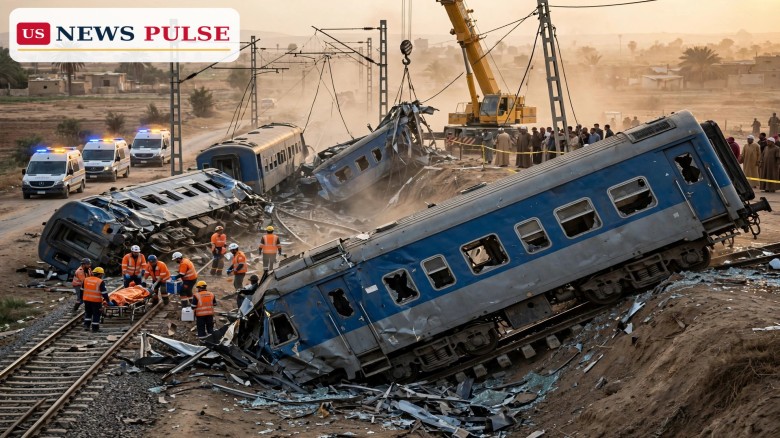
An Egypt train collision near Cairo killed at least seven people and injured more than 100 on Sunday, November 8, 2026, after one passenger train ran into the rear of another between two stations in Giza governorate, derailing several carriages. Egypt's health ministry said 112 people were injured, while the Egyptian Chief Prosecutor's office put the number at at least 125. Dozens of ambulances carried the injured to nearby hospitals, cranes were sent in to clear the wreckage, and rail traffic on the line was disrupted. President Abdel Fattah al-Sisi ordered an investigation into the crash and offered his condolences to the families of those killed.
Key Points
- At least seven people were killed and 112 injured when two passenger trains collided in Giza governorate, near Cairo, on Sunday, November 8, 2026. The chief prosecutor's office put the injured figure at at least 125.
- One train struck the rear of another between Kafr Ammar and Al-Raqqa stations, in the al-Ayyat area, derailing several carriages, the Egyptian National Railways Authority said.
- Dozens of ambulances took the injured to nearby hospitals. Forty-five people had already been discharged after their condition improved, the health ministry said.
- President Abdel Fattah al-Sisi ordered an investigation into the collision and offered his sincere condolences to those killed.
- Egypt's railway is the oldest in Africa and the Middle East, and it has a long history of deadly accidents, including a 2019 fire at Cairo's Ramses station that killed 25 people.
What Happened
The collision happened on Sunday between Kafr Ammar and Al-Raqqa stations in Giza, south of Cairo, in the al-Ayyat area. The Egyptian National Railways Authority said one train collided with the rear of another, and several carriages came off the tracks. Images from the scene showed derailed carriages tilted off the line, with rescue workers, ambulances and a crane working around the wreckage.
Dozens of ambulances were dispatched to carry the injured to nearby hospitals, while cranes were brought in to lift the wrecked carriages and clear the line. Traffic on the railroad was disrupted as the authorities worked to restore movement and account for everyone on board.
The casualty figures were still being updated as hospitals reported in. The health ministry said seven people had been killed and 112 injured, and that 45 of the injured had already been discharged. The chief prosecutor's office gave a higher injury figure of at least 125, and the numbers may change again as hospitals complete their reports.
Background and Context
Egypt's railway is the oldest in Africa and the Middle East, and trains remain a lifeline for millions of Egyptians, carrying commuters and long-distance passengers every day. The busy lines around Greater Cairo, where Sunday's crash happened, are among the most heavily used in the network.
That long history has also been marked by deadly accidents. In 2019, a train lost control while approaching Cairo's main station in Ramses Square, igniting a fire that killed 25 people. Two years earlier, in 2017, a train derailed on the way to Alexandria and collided head-on with another train, killing more than 40 people. Each disaster was followed by an official investigation and renewed pledges to modernise the network.
Sunday's crash is the latest reminder of how high the stakes are on a system that carries so many people. For families in Giza and across Egypt, the railway is how children get to school and workers get to their jobs.
Egypt Train Collision Renews Questions Over Rail Safety
The Egypt train collision will inevitably renew questions about safety on the country's railways. The cause has not yet been announced, and it would be wrong to speculate before investigators have done their work. But a rear-end collision raises the questions any inquiry must answer: how the two trains came to be on the same stretch of line, what the signalling showed, and whether the second train could have stopped in time.
Investigators will also examine the condition of the track, the braking systems and the instructions given to the drivers. In past Egyptian rail disasters, inquiries have pointed to a mix of human error, ageing equipment and gaps in signalling. The investigation ordered by President al-Sisi will need to establish which of those factors, if any, played a part in Giza.
Reactions
President Abdel Fattah al-Sisi ordered an investigation into the Giza collision on Sunday, according to a statement on his official Facebook page. He also offered his "sincere condolences" to those killed, a message shared as rescue teams were still working at the scene.
The health ministry updated the public through the day, confirming seven dead and 112 injured, and reporting that 45 people had been discharged. The chief prosecutor's office, which put the injured figure at at least 125, is expected to play a central role in establishing what happened. No cause had been announced by Sunday evening.
Why It Matters
The crash matters first of all because of the human cost: seven people who set out on an ordinary Sunday journey did not come home, and more than 100 others were hurt. Behind each number is a family waiting for news from a hospital in Giza.
It also matters because of what it says about the safety of a transport system millions of Egyptians depend on. Rail is the backbone of travel in Egypt, and every serious crash shakes confidence in it. Every investigation is a chance to restore it by finding out what went wrong.
What Happens Next
The investigation ordered by President al-Sisi is now the central question. Investigators will gather evidence from the scene, the trains' recorders and the signalling system, and will speak to the drivers, railway staff and survivors.
In the meantime, hospitals in Giza will continue treating the injured, and the casualty figures may still be revised. The railway authority must clear the wreckage and restore full service, while families of the dead and injured wait for answers about how a routine journey ended in disaster.
Frequently Asked Questions
How many people were killed in the Egypt train collision?
At least seven people were killed, according to Egypt's health ministry. More than 100 were injured: 112 according to the ministry, and at least 125 according to the chief prosecutor's office.
Where did the crash happen?
Between Kafr Ammar and Al-Raqqa stations in Giza governorate, in the al-Ayyat area south of Cairo. One train struck the rear of another, derailing several carriages.
What caused the collision?
The cause has not yet been announced. President Abdel Fattah al-Sisi has ordered an investigation, which will examine the signalling, the trains and the instructions given to the drivers.
How many of the injured have been discharged from hospital?
Forty-five people had been discharged after their condition improved, the health ministry said on Sunday.
Has Egypt had deadly train crashes before?
Yes. In 2019 a train lost control approaching Cairo's Ramses station and a fire killed 25 people. In 2017 a derailment and head-on collision near Alexandria killed more than 40 people.
Read more on US News Pulse: Spain Train Crash Kills 68 as High-Speed Trains Collide South of Madrid and Zelenskyy Hopes Democratic Midterm Wins Will Bring More US Aid for Ukraine.
Leave a Comment