

 | Today's Date:




Qeshm Island Explosion: Tasnim Reverses Missile Claim to US Munitions Disposal
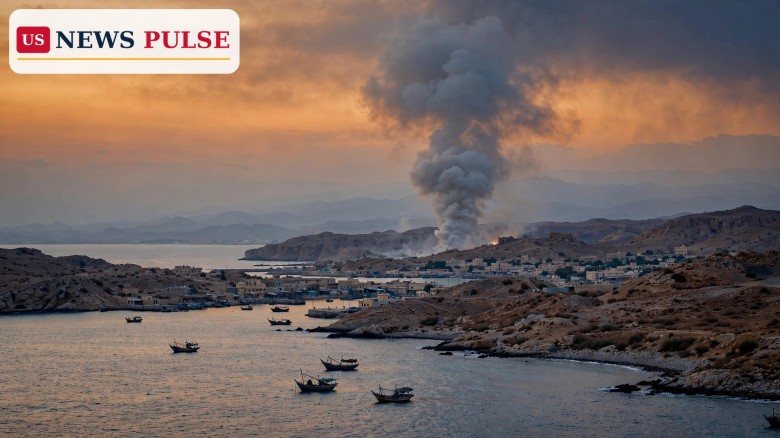
A loud explosion shook Iran's Qeshm Island late on Friday, sending smoke into the sky over the Strait of Hormuz — and within hours the same Iranian news agency that reported it had offered two very different explanations. The Qeshm Island explosion was first described as a missile strike blamed on the United States and Israel, before Tasnim news agency said the blast was the controlled disposal of unexploded American munitions from earlier attacks.
Residents heard the blast and saw smoke rising. What caused it is still not settled, and neither account has been independently verified.
Key Points
- Residents heard a loud explosion late on Friday, November 20, and saw smoke rising; some reported a flash of light.
- Tasnim first reported a missile struck the outskirts of Qeshm city at about 6:50 p.m. local time, blaming the US and Israel.
- Tasnim later said the blast was the controlled disposal of unexploded US munitions, citing deputy governor Ahmad Nafisi.
- It remains unclear whether the reported missile strike and the disposal operation were the same incident.
- Qeshm sits in the Strait of Hormuz and was hit by American strikes on Tuesday, November 17.
What Happened
The explosion came late on Friday evening. Fars News Agency, citing residents, reported a loud blast and smoke rising, with some describing a flash of light in the sky. Video shared on social media showed smoke over the island, though it could not show what had caused it.
Tasnim, a semi-official Iranian news agency, was first with a specific claim: a missile had struck the outskirts of Qeshm city at about 6:50 p.m. local time, and the United States and Israel were to blame. The report spread quickly, three days after American forces had openly struck a target on the same island.
Then Tasnim changed its story. It said the blast was the controlled disposal of unexploded US munitions left over from previous attacks, quoting Hormozgan deputy governor Ahmad Nafisi, who said the disposal was carried out under official supervision. Fars quoted local sources suggesting the blast may have come from the interception of an unidentified aircraft. No casualties were reported, and no American or Israeli response was reported.
Background/Context
Qeshm is Iran's largest island and sits in the Strait of Hormuz, the narrow waterway between Iran and Oman through which about a fifth of the world's seaborne oil passes. It hosts facilities of Iran's Islamic Revolutionary Guard Corps and has been struck repeatedly since the war between the United States, Israel and Iran began in late February 2026.
The latest confirmed strike came on Tuesday, November 17, when a US official told CBS News that American forces had hit an IRGC missile site on Qeshm in self-defence, in response to IRGC aggression against US personnel and assets: US Strikes Qeshm Island Again. American strikes on Qeshm were also reported in early November: WSJ Reports Qeshm Strikes. And the strait itself has become a minefield: a supertanker carrying about two million barrels of oil sank in mid-November after striking a mine: Supertanker Sinks After Mine Strike.
Qeshm Island Explosion: What the Conflicting Reports Tell Us
The most striking feature of Friday's incident is the reversal. Tasnim is a semi-official agency with close ties to Iran's security establishment, and its first report — a missile strike blamed on the United States and Israel — was the version that travelled first. Its second report points the other way.
Both accounts are plausible. Controlled disposal is a routine hazard of war: ordnance that fails to explode must later be destroyed in place, and a controlled detonation produces a loud blast, a flash and a large column of smoke. A fresh strike is equally plausible, given the American attack on the island on Tuesday. Until independent evidence appears — satellite imagery or a comment from US Central Command — the cause cannot be settled.
Reactions/Quotes
The clearest official word so far came through Tasnim's revised report. Hormozgan deputy governor Ahmad Nafisi said the disposal was carried out under official supervision, according to the agency.
No public statement from Washington or Jerusalem about Friday's blast appeared in the reporting reviewed. The latest on-the-record American comment about Qeshm came on Tuesday, when a US official told CBS News that American forces had carried out “self-defence” strikes on an IRGC missile site. Tehran has published no damage or casualty figures.
Why It Matters
The Strait of Hormuz is one of the world's great chokepoints. About a fifth of the world's seaborne oil moves through it, and every explosion, mine strike or tanker fire there feeds into oil prices and shipping insurance. An unexplained blast on Qeshm is therefore news well beyond Iran.
It also carries escalation risk, coming three days after a confirmed American strike on the same island. An ambiguous explosion can be misread, and a misread explosion can draw a response before the facts are known. Tasnim's reversal also shows how hard it has become to establish basic facts about the strait while the war is fought.
What Happens Next
Watch for a comment from US Central Command or the Pentagon, which would confirm or rule out a new American strike, and for satellite imagery of the island, which usually appears within a day or two. Further detail from Tasnim or Fars — the disposal site, the munitions involved, any damage report — would help settle which account is right. Oil markets and tanker traffic will give their own verdict when trading resumes.
Frequently Asked Questions
What happened on Qeshm Island on Friday?
Residents heard a loud explosion late on Friday, November 20, and saw smoke rising. Tasnim first reported a missile strike, then said it was a controlled munitions disposal.
Did a missile hit Qeshm Island?
That is not confirmed. Neither version has been independently verified, and it is unclear whether the two reports describe the same incident.
What are unexploded munitions?
Bombs, missiles or shells from earlier attacks that failed to detonate. Specialists later destroy them in a controlled detonation, which itself makes a large blast and smoke.
Why is Qeshm Island important?
It is Iran's largest island, in the Strait of Hormuz, through which about a fifth of the world's seaborne oil passes. It hosts IRGC facilities and has been struck repeatedly since February.
Was anyone hurt?
No casualties were reported in the accounts reviewed, and no damage assessment has been published.

The US News Pulse newsroom covers breaking news across the United States and the world, working from wire services, official statements and on-the-record sources. Every story is reviewed against our editorial standards before publication. Corrections and tips: info@usnewspulse.com
About our newsroomLeave a Comment