


 | Today's Date:



Venezuela Army Strike Kills 19 at ELN Rebel Camp in Apure Near Colombia Border
At least 19 people were killed when Venezuela's army attacked a camp belonging to Colombia's National Liberation Army (ELN) guerrilla group in the border state of Apure, an NGO and a source close to the operation said on Sunday, November 1, 2026. The Venezuela ELN camp strike, carried out early on Friday, October 30, has raised fresh questions about the role of the United States in Venezuela's border war, after a Venezuelan military source said the operation was supported by US intelligence and ordered from Washington.
The attack struck a camp in Buena Vista del Meta, in the south-west of Apure state, very close to the Colombian border, in a rural, forested area far from inhabited centres. FundaRedes, the Venezuelan NGO that monitors rights violations in Venezuela's border states, first reported nine deaths in the early-morning attack. Its Apure coordinator, Juan Francisco Garcia, then told AFP on Sunday that another 10 bodies had been transported to San Fernando, the state capital, the day after the attack, bringing the reported toll to at least 19.
Key Points
- At least 19 people were killed in a Venezuelan army attack on an ELN camp in Apure state, near the Colombian border.
- The strike took place early on Friday, October 30, 2026, at Buena Vista del Meta, in the south-west of Apure.
- FundaRedes first reported nine deaths, then said another 10 bodies were taken to San Fernando, the state capital.
- A Venezuelan military source said drones and attack helicopters carried out the strike and that it had US intelligence support.
- The source said: "We had help from the CIA and the FBI. This was an order from the United States."
- Most of those killed were reported to be Venezuelan nationals, and the victims' identities have not been officially confirmed.
- Venezuela's interim government, led by Delcy Rodriguez, had not issued a statement on the attack at the time of reporting.
What Happened
According to the accounts gathered by AFP and other outlets, the attack began at dawn on Friday, October 30. Drones and attack helicopters flew over the camp at Buena Vista del Meta and dropped bombs on a site set in woodland, away from inhabited areas and close to the border with Colombia. A Venezuelan military source, speaking on condition of anonymity, said the guerrillas were taken by surprise. "They had no time to react," the source said, adding that most of the people killed were Venezuelan nationals.
Video shared by FundaRedes showed bodies lying on the ground, trees knocked down and the ruins of what appeared to be a campsite, according to the reports. After the attack, bodies were initially transported to the town of Puerto Paez, which lies across a river from the area, before onward transfer to San Fernando de Apure for forensic examination. Residents of Puerto Paez also provided names and identification details reportedly found at the site, Colombian radio station Blu Radio reported, but the victims' identities have not been officially confirmed.
An undetermined number of wounded people were said to have crossed into Colombian territory, according to the early accounts carried by Blu Radio. Venezuelan human rights activist and military affairs expert Rocio San Miguel also referred to reports of the bombing of the ELN camp in Buena Vista del Meta, lending the story further circulation among Venezuelan observers, though no official Venezuelan military communique confirming the operation had been published at the time of the reports.
The timeline matters. FundaRedes initially reported nine deaths on Friday. It was only on Sunday, when Garcia told AFP that another 10 bodies had been transported to San Fernando the day after the attack, that the toll rose to at least 19. That two-stage count is common in remote border operations, where the first reports come from local residents and monitors, and fuller figures emerge only when bodies reach a city morgue. It also means the toll should still be treated as reported, not officially confirmed, until Venezuelan authorities or forensic officials publish their own count.
Background and Context
The ELN, the National Liberation Army, is a Colombian guerrilla group that has operated for decades along the porous border between Colombia and Venezuela. Apure, a largely rural state of plains, rivers and forest in south-west Venezuela, has long been one of the zones where Colombian armed groups maintain camps, move supplies and recruit, often in areas where the Venezuelan state's presence is thin and the border itself is a river or a stretch of forest rather than a guarded line.
FundaRedes exists precisely because of that reality. The NGO monitors rights violations in Venezuela's border states, documenting clashes, displacements and abuses that rarely make it into official statements. Its reporting on Apure has repeatedly described a border region where armed groups, local communities and the military operate in close and often violent proximity, and where the first reliable casualty counts frequently come from residents and local monitors rather than from Caracas.
The strike also lands in a moment of intense US-Venezuela tension. Washington has built up a large military presence in the Caribbean and off Venezuela's coast in recent months, carried out strikes on boats it says were carrying drugs, and pressed Venezuela's interim government over drug trafficking and migration. Venezuela's interim leadership, headed by Delcy Rodriguez, has in turn accused Washington of seeking regime change. Against that background, any claim of direct US involvement in a Venezuelan military operation inside Venezuela is politically explosive, which is why the anonymous source's claim deserves both attention and caution.
It is also worth noting what the reporting does not establish. The military source did not provide documents, orders or other evidence for the claim of CIA and FBI help, and neither Washington nor Caracas had publicly confirmed it at the time of the reports. The claim is reported here as a claim by a single anonymous source close to the operation, not as an established fact. Readers should weigh it alongside the harder facts of the story: a camp was bombed, at least 19 bodies have been counted by monitors, and neither government has yet given its own account.
Venezuela ELN Camp Strike and the US Intelligence Claim
The most consequential sentence in the reporting is the shortest. "We had help from the CIA and the FBI. This was an order from the United States," the Venezuelan military source told AFP. If true, it would mean US intelligence agencies directly supported a Venezuelan army operation against a Colombian guerrilla camp on Venezuelan soil, an arrangement that would blur the already tangled lines of the US campaign against drug trafficking and armed groups in the region.
There are reasons to treat the claim carefully. The source spoke anonymously, and anonymous military sources in Venezuela have, in the past, used the press to send political signals as much as to convey facts. The claim also sits oddly with the public posture of both governments: Washington has framed its Venezuela campaign as a counter-narcotics and pressure operation, not as joint operations with the Venezuelan army, while Caracas has framed US actions as aggression. A joint operation would contradict both public narratives at once.
At the same time, the claim cannot simply be dismissed. The United States and Venezuela have a long, covert history in the region, and intelligence sharing between governments that are publicly hostile is not unknown. The ELN is also a group the United States has long designated as a terrorist organisation, and its camps in Apure are a shared concern for Bogota, Caracas and Washington alike. The honest position, for now, is that the claim is unverified and contested by its absence from any official statement, and that it will only be settled if either government confirms or denies it, or if further evidence emerges.
For Colombia, the strike raises its own questions. The ELN's presence in Venezuela has been a recurring sore in Colombian politics, with successive Colombian governments accusing Caracas of harbouring the group. A Venezuelan army strike on an ELN camp, whatever its sponsorship, could be read in Bogota as a sign that Caracas is willing to act against the group, or as a sign that the border war is escalating in ways Colombia cannot control. No Colombian government statement on this specific strike had been reported at the time of writing.
Reactions and Quotes
The most detailed on-the-record voice in the reporting is Juan Francisco Garcia, the FundaRedes coordinator in Apure and a former Venezuelan lawmaker, who told AFP on Sunday: "Another 10 bodies" had been transported to San Fernando the day after the attack, after the NGO's initial report of nine deaths. Garcia's account is the basis for the toll of at least 19, and it rests on the movement of bodies to the state capital rather than on an official morgue list.
The anonymous military source provided the operational detail and the US claim. Beyond the line quoted above, the source said the attack took the guerrillas by surprise and that most of those killed were Venezuelan nationals. That detail, if accurate, underlines how deeply the ELN's border camps are embedded in local populations: the people in them are often not Colombian fighters who crossed the border, but Venezuelans recruited or drawn into the group's orbit on the Venezuelan side.
Official silence has been the other reaction so far. Venezuela's interim government, led by Delcy Rodriguez, had not issued a statement on the alleged bombing, according to Blu Radio. That silence leaves the field to the NGO count, the anonymous source and the video shared by FundaRedes, and it means the story's central facts — the toll, the target and the question of US involvement — all rest on non-official sources for now.
Why It Matters
This strike matters for three reasons. First, it is a significant loss of life in a border war that usually produces casualties in ones and twos, not nineteens. A single operation killing at least 19 people is, by the standards of the Apure border, a major event, and it suggests either a deliberate escalation by the Venezuelan army or a camp that was larger and more established than the usual temporary hideout.
Second, the US claim, if it gains further support, would reframe the US-Venezuela confrontation. Washington's campaign has so far been presented as American power applied from the sea and the air against drug boats and trafficking networks. A US-supported Venezuelan ground operation would be something different: cooperation, however covert, with the very military Washington has been threatening. It would raise questions in Congress, in Bogota and in Caracas about what the real US strategy in Venezuela is.
Third, the strike is a reminder of how little is officially known about the border war. The toll comes from an NGO, the operational detail from an anonymous source, and the US claim from that same source. In a region where all three governments have reasons to hide or spin their actions, independent monitors like FundaRedes and local residents in places like Puerto Paez are often the only sources for what actually happened. Their work deserves to be reported with its limits stated plainly, as this article has tried to do.
What Happens Next
Several things could clarify the story in the coming days. Venezuela's interim government may issue a statement confirming, denying or reframing the operation, and forensic authorities in San Fernando may publish an official count of the bodies received. Colombia's government may comment on a strike so close to its border, particularly if any of the dead or wounded prove to be Colombian nationals or if wounded fighters crossed into Colombian territory.
Washington may also be pressed to respond. If reporters put the CIA and FBI claim to the White House, the State Department or the Pentagon, a denial would carry weight, and a refusal to comment would leave the claim standing as the only account. Members of Congress with oversight of intelligence and foreign affairs may also ask whether any US agency supported the operation, and under what authority.
For the communities of Apure, the immediate question is simpler and more urgent: whether more operations will follow, and whether civilians living near ELN camps will be caught in them. The camp at Buena Vista del Meta was described as being in a wooded area away from inhabited centres, but border communities live with the knowledge that the next camp, and the next strike, could be closer to home. FundaRedes and local monitors will be watching for displacement, for further body counts and for any sign that this strike was the start of a campaign rather than a single operation.
Frequently Asked Questions
How many people were killed in the Venezuela ELN camp strike?
At least 19, according to FundaRedes and a source close to the operation. The NGO first reported nine deaths on Friday, October 30, and its Apure coordinator then told AFP on Sunday, November 1, that another 10 bodies had been transported to San Fernando, the state capital. The toll has not been officially confirmed by Venezuelan authorities.
Where did the strike take place?
At Buena Vista del Meta, in the south-west of Apure state, Venezuela, very close to the Colombian border. The camp was in a rural, forested area away from inhabited centres, and bodies were first taken to Puerto Paez before being transferred to San Fernando.
Did the United States help carry out the strike?
That is claimed, not confirmed. An anonymous Venezuelan military source said the operation had US intelligence support and said: "We had help from the CIA and the FBI. This was an order from the United States." Neither Washington nor Caracas had publicly confirmed the claim at the time of reporting.
Who are the ELN?
The National Liberation Army (ELN) is a Colombian guerrilla group that has operated for decades along the Colombia-Venezuela border. FundaRedes monitors its presence and the wider pattern of armed-group activity in Venezuela's border states, including Apure.
Has Venezuela's government commented on the strike?
No. Venezuela's interim government, led by Delcy Rodriguez, had not issued a statement on the alleged bombing at the time of the reports, according to Blu Radio. The story therefore rests on NGO reporting, an anonymous military source and video shared by FundaRedes.
Related coverage:
- CENTCOM Says Iran Killed Over 20 Mariners in Deliberate Attacks on Gulf Shipping
- Netanyahu Urges Trump to Strike Iran Right After Midterms, Axios Reports
- G20 Atlanta Ends Without Consensus as Ukraine and Iran Divide Ministers
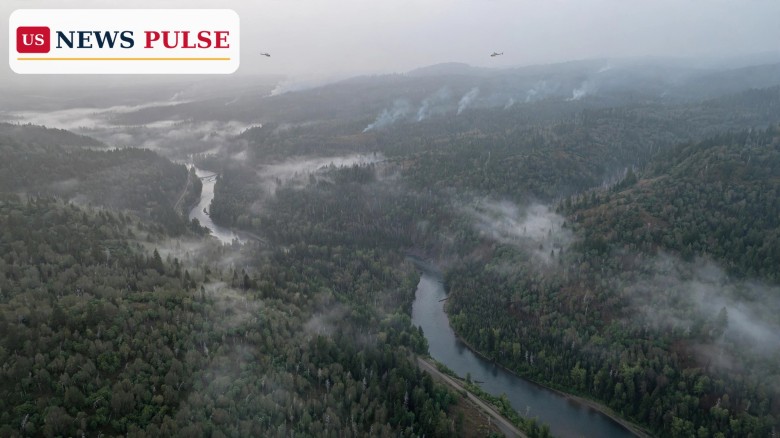
Featured image: an illustrative generated scene of a remote forested border valley, not a photograph of the camp itself.
Leave a Comment