


 | Today's Date:





NTSB: Greenacres Learjet Broke Apart Before Impact, Killing All Nine Aboard
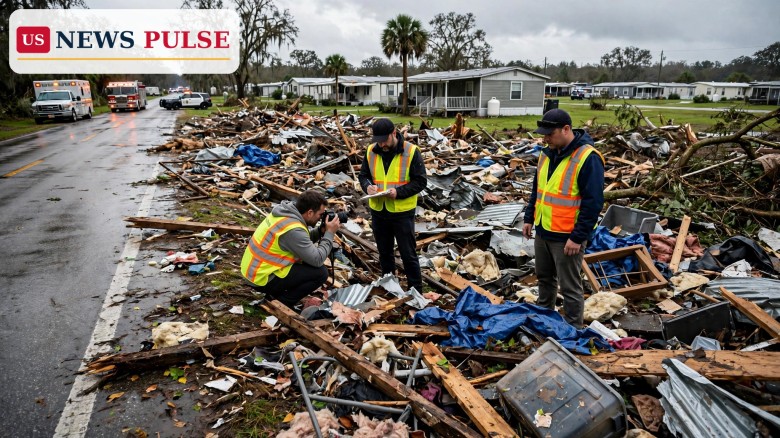
The Greenacres Learjet crash that killed all nine people aboard on Sunday, November 1, 2026, took a decisive turn on Monday, November 2, when federal investigators said they have evidence the aircraft began breaking apart before it hit the ground in Palm Beach County, Florida. The finding, disclosed at the National Transportation Safety Board's first briefing on the crash, is the most important new fact since the Learjet 60 went down beside a roadway near a mobile home community — and it reframes the investigation around what happened in the jet's final two minutes in the air, not only where it landed.
Key Points
- NTSB Member Tom Chapman said investigators have evidence of some breakup of the aircraft before impact, but did not say which parts came off or why.
- The crew reported light, clear ice that was manageable and moderate turbulence at about 35,000 feet at 12:47 p.m. on November 1, with outside air at minus 47 degrees Celsius.
- Less than two minutes later the crew declared a mayday, reported an overspeed condition and a descent of 20,000 feet per minute, and said, “We're going to crash into the ground.”
- All nine people aboard — two crew members and seven passengers on a paid charter from Austin, Texas, to North Eleuthera in the Bahamas — were killed; no cause has been determined.
- Investigators warned that parts of the aircraft may be found some distance from the impact site and asked anyone who finds debris not to touch or move it.
What Happened
The Learjet 60, registration N722BD, left Austin-Bergstrom International Airport at about 10:37 a.m. Eastern Time on November 1, bound for North Eleuthera Airport in the Bahamas, according to the Federal Aviation Administration. It was operated as a paid charter by Aurora Jet, investigators said at the briefing. For most of the flight nothing in the public record suggested an emergency. That changed over Florida, where the aircraft flew into strong thunderstorms that, according to USA TODAY Network reporting, had pushed clouds skyward by 15,000 feet in 20 minutes — conditions that may have led to the rapid freezing of water droplets and hampered the plane's ability to manoeuvre.
At 12:47 p.m., the crew told Miami Center controllers they were picking up light, clear ice that was manageable, with moderate turbulence, at about 35,000 feet. The outside air temperature was minus 47 degrees Celsius, about minus 53 degrees Fahrenheit, and turbulence was pushing the aircraft up and down by as much as 700 feet. Flying into precipitation, the crew asked to climb to 37,000 feet, and controllers cleared the climb. What followed, in the timeline laid out by Chapman and lead investigator Tim Monville, was extraordinarily fast.
At about 12:48 p.m., the crew declared a mayday and said the aircraft was descending at 10,000 feet per minute. Seconds later, at 12:48:33 p.m., they reported an overspeed condition — the aircraft exceeding its maximum permitted speed — and a descent of 20,000 feet per minute. At 12:48:53 p.m., the crew said, “We're going to crash into the ground.” At 12:49:08 p.m., they reported descending 22,000 feet and banking 60 degrees, rolling steeply to one side. At 12:49:22 p.m., the final transmission came: “We're out of time.” The aircraft crashed at about 12:50 p.m. near Military Trail and 10th Avenue North, near Greenacres, leaving a burning crater and a wide debris field. Flight-tracking data cited in the reporting put the descent even higher at its peak, topping 32,000 feet per minute, with a last reading near 8,750 feet at 12:49 p.m. — a reminder that crew callouts and tracking data measure the same plunge in different ways.
Background: The Crash Site and the First Day
The jet came down beside a busy roadway close to homes and passing cars, near the entrance to a mobile home community in the Cresthaven area. About 600 nearby residents were displaced while crews worked the scene, and sheriff's deputies closed Military Trail between Cresthaven Boulevard and 10th Avenue North. At first, officials said nobody on the ground had been hurt. That picture changed slightly at Monday's briefing: Monville said a man driving away from the area next to the crash site suffered a leg injury, and investigators planned to interview him the same day to learn more. Debris landed across ball fields and people's homes, investigators said, and the size of the field was still being reconciled from conflicting early information.
Transportation Secretary Sean Duffy confirmed on Sunday that all nine people aboard had died, calling the crash a horrific tragedy. The identities of the captain and the seven passengers had not been publicly released by the time of Monday's briefing, and Monville said identifying victims was a matter for local authorities. One person aboard has been identified through family confirmation: co-pilot Nathalia Gadelha Filgueiras, 20, from the Boca Raton area, who reportedly earned her pilot's licence at 17 and hoped one day to fly for an airline. The New York Post also reported that Filgueiras had texted her boyfriend about icing and turbulence shortly before the disaster; that account comes from news reporting, not from the NTSB briefing itself, and investigators have not confirmed the content of any private message.
Greenacres Learjet Crash NTSB Briefing: What Investigators Did — and Did Not — Say
Chapman was careful about the limits of the first briefing, and that caution matters. He said investigators have evidence of breakup before impact, and added at a later point in the briefing that parts of the aircraft may be found some distance away from the actual impact site. He did not say which parts separated, when exactly they separated, or whether the breakup caused the plunge or resulted from it. The distinction is central to the investigation: a structural failure, a loss of control in severe weather, icing, or a combination of factors could each produce a steep descent, and early briefings almost never name a cause.
Weather is a major focus, Monville said, but so is a harder question Chapman put plainly: investigators still need to work out “who knew what when” — what the crew knew about the storms ahead, what controllers knew, and what information passed between them. Asked how much responsibility for avoiding the weather falls on the crew versus air traffic control, Chapman said that question gets into the same territory. Asked whether the plane's turn toward Freeport in the Bahamas was the crew's decision or air traffic control's, Chapman and Monville said they could not answer yet because that would be speculation.
Recovering the wreckage will itself be difficult. Monville said pulling the main wreckage from the crater the plane left in the roadway will be a major challenge, and the New York Post reported that the crater was partly filled with water, hampering work at the scene. Investigators will spend the coming days documenting the wreckage, then move it to a secure facility for closer examination. They will look at weather data from the storms over Florida that afternoon, the aircraft's maintenance records, both pilots' training and experience, and the full air traffic control audio.
Reactions and Quotes
“We do have evidence that there was some breakup of the aircraft before impact,” Chapman said at the briefing, in the sentence that now anchors the investigation. He added, in a later update, that “we may find parts of the aircraft some distance away from the actual impact site,” and investigators repeated the public-safety request: anyone who finds debris should not touch or move it and should contact authorities.
On the recorder question, Chapman said the aircraft's records show it had a cockpit voice recorder at some point, but investigators do not yet know whether one was still on board. Having it would make the work easier, he said, but they can find answers either way — a significant point, because the air traffic control audio already gives investigators a minute-by-minute record of the crew's final calls, even without a cockpit recording.
Duffy's Sunday statement set the human scale of the loss before any technical finding was available: all nine aboard were killed in what he called a horrific tragedy. The families' loss is the reason the technical questions matter, and also the reason investigators are refusing to guess. As Chapman made clear, the board will examine the evidence before it assigns a cause, and the public should not treat icing, turbulence, or a structural failure as an established cause on the basis of the first briefing alone.
Why It Matters
A breakup before impact, if confirmed in detail, changes what investigators look for. Instead of examining only the crater and the main wreckage, teams must map a debris field that may stretch across homes and ball fields, recover parts that separated in flight, and determine whether those parts failed, were torn away by aerodynamic forces in a steep descent, or both. It also raises questions that go beyond this one flight: how charter operations assess thunderstorm risk, what weather information reaches a crew in flight, and how quickly a crew can act when icing and turbulence escalate from manageable to unrecoverable in under two minutes.
The case also matters because private and charter flights operate under different rules from scheduled airlines, which are subject to stricter federal rules about flying into areas of known thunderstorm activity. That does not mean this flight broke any rule — investigators have said no such thing — but it is why the “who knew what when” question will be examined so closely. Airline flying in the United States remains extremely safe, and crashes like this one are investigated just as closely, with findings that can lead to changes across the whole industry.
What Happens Next
In the coming days, investigators will document the wreckage at the scene, interview the injured driver and other witnesses, and move the wreckage to a secure facility. The NTSB's preliminary report usually comes out within about a month, and a final report with an official cause often takes a year or more. Between now and then, further briefings may confirm which parts separated, whether a cockpit voice recorder was recovered, and what the weather and maintenance records show. Until then, the established facts are the timeline, the breakup evidence, and the nine deaths — not a cause.
US News Pulse will follow the NTSB investigation, the identification of the victims, and the preliminary report when it is published.
Frequently Asked Questions
What did the NTSB say on November 2 about the Greenacres Learjet crash?
NTSB Member Tom Chapman said investigators have evidence the aircraft began breaking up before impact, but did not say which parts came off or why, and no cause has been determined.
What happened in the jet's final minutes?
At 12:47 p.m. the crew reported light, clear ice and moderate turbulence at about 35,000 feet. By 12:48 p.m. they had declared a mayday; they then reported an overspeed condition and a descent of 20,000 feet per minute, said they were going to crash, and made a final transmission — “We're out of time” — at 12:49:22 p.m. The crash followed at about 12:50 p.m.
Who was aboard the flight?
Nine people: two crew members and seven passengers on a paid Aurora Jet charter from Austin, Texas, to North Eleuthera in the Bahamas. Co-pilot Nathalia Gadelha Filgueiras, 20, has been identified through family confirmation; the other names had not been publicly released at the time of the briefing.
Was anyone on the ground hurt?
Officials initially said nobody on the ground had been hurt, but the NTSB said Monday that a man driving away from the area next to the crash site suffered a leg injury. About 600 nearby residents were displaced while crews worked the scene.
When will the NTSB give a cause?
Not at this stage. A preliminary report usually comes within about a month, and a final report with an official cause often takes a year or more.
Related coverage: NTSB probes icing after 27,000-foot plunge, Co-pilot identified as Nathalia Gadelha, 20, and Storm exploded skyward as jet flew into disaster.
Leave a Comment