


 | Today's Date:



Saudi Houthi Missile Intercept: Air Defences Down Missile and Riyadh Drones
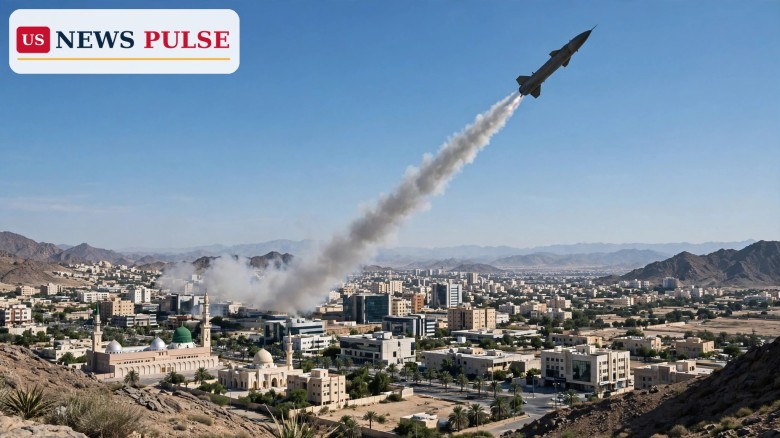
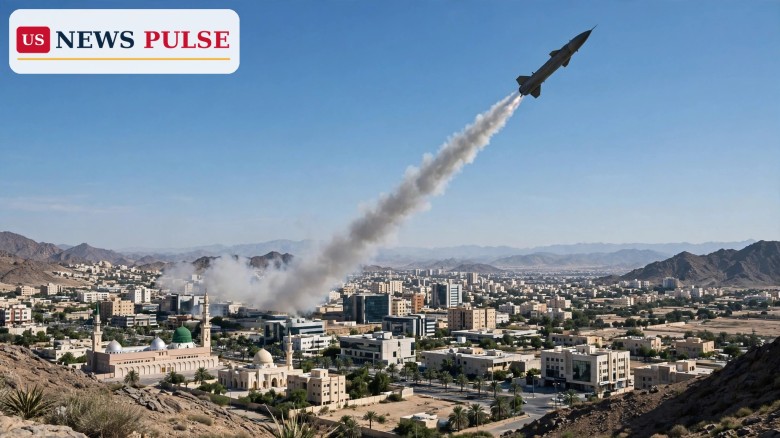
Saudi air defences intercepted and destroyed a ballistic missile launched by Yemen's Houthi militia toward the Kingdom's southern region on Monday, 2 November 2026, after civil defence alerts warned residents in four cities of an aerial threat. The Saudi Houthi missile intercept came hours before the coalition later reported that two drones had been destroyed in the Riyadh region, a day before Americans vote in the 3 November midterm elections and as the wider war involving Iran and its allies continues to unsettle shipping and energy markets across the Middle East.
Key Points
- Saudi air defences intercepted and destroyed a ballistic missile launched by the Houthi militia toward Saudi Arabia's southern region on Monday, 2 November 2026, the Saudi-led coalition said.
- Saudi Civil Defence issued alerts for the southern and western cities of Khamis Mushait, Abha, Taif and Najran, then said the danger had passed shortly afterwards.
- Later on Monday, the coalition said two drones were destroyed in the Riyadh region, according to Arab News.
- No casualties or damage from Monday's missile or the Riyadh drones were reported in the coalition and civil defence statements carried by Reuters and Arab News.
- The interception follows weeks of escalating Houthi attacks on Saudi Arabia and Saudi airstrikes against Houthi targets in Yemen, set against the eight-month US-Israel war on Iran.
What Happened
The sequence on Monday began with warnings, not explosions. Saudi Arabia's civil defence authority said the National Early Warning Platform had issued alerts for Khamis Mushait Governorate, Taif Governorate, Abha City and Najran Province, urging residents in the southern and western cities to follow safety instructions. Shortly afterwards, the authority said the threat had passed in all four areas, while still advising residents to follow official safety guidance.
The Saudi-led Coalition to Restore Legitimacy in Yemen then said Saudi air defences had intercepted and destroyed a ballistic missile launched by the Houthi militia toward the Kingdom's southern region. Coalition spokesperson Major General Turki Al-Malki was cited in the coalition announcement carried by Arab News and other outlets. The coalition described the missile as aimed at the southern region; the statements carried on Monday did not name a specific target city, and did not report any impact, injury or damage from the missile itself.
Later in the day, the coalition added a second development: two drones were destroyed in the Riyadh region. Arab News updated its report on Monday evening to carry that announcement, with a file image noting that two drones were destroyed in the Riyadh region on Monday. As with the missile, no casualties or damage were reported in the accounts available on Monday. The distinction matters: the Riyadh drones were reported as destroyed by air defences, not as successful strikes, and nothing in the Monday statements suggests they reached a target.
Background and Context
Southern Saudi Arabia borders Yemen and has come under repeated Houthi missile and drone attacks targeting military installations and energy infrastructure, Reuters noted in its Monday report. The region includes Jazan, home to a 400,000-barrel-per-day oil refinery on the Red Sea coast, a reminder of why even intercepted attacks carry economic weight: the Kingdom's oil production and exports are a central prize in the conflict, and any threat to them moves markets even when defences hold.
The Houthis are an Iran-aligned movement that has fought the Saudi-led coalition in Yemen for years, and the current round of fighting has intensified alongside the wider regional war. Saudi Arabia has also carried out airstrikes against Houthi targets in Yemen, Reuters reported on Monday, and the two sides have traded attacks across the border for weeks. Just days earlier, on 30-31 October, Saudi air defences intercepted a cruise missile toward the western region and a ballistic missile toward the southern region, plus drones toward Riyadh, Makkah and Madinah, in a multi-day round of attacks that US News Pulse covered at the time.
The Yemen front is also connected to the Gulf shipping crisis. Since the US-Israel war on Iran erupted with strikes on Iran in late February 2026, Tehran has sought to choke the Strait of Hormuz, through which roughly a fifth of the world's oil and liquefied natural gas passed before the war. Washington has responded with a blockade on Iranian ports, and vessels in the Gulf have repeatedly been hit: a Qatari LNG carrier was attacked in late October, two tankers exploded after hitting mines in the Strait on 1 November, and US Central Command said on Monday that Iran had deliberately attacked civilian mariners, killing more than 20 in recent months. Monday's Saudi interception sits inside that same pattern of pressure on shipping, energy and allied territory, even though it took place on land rather than at sea.
Saudi Houthi Missile Intercept: What the Statements Do and Do Not Say
The Saudi Houthi missile intercept is, on the evidence available on Monday, a defensive success with limited detail. The coalition's account attributes the launch to the Houthi militia and reports its destruction; the civil defence account confirms alerts in four cities and then an all-clear. Neither account, as carried by Reuters and Arab News, gives a launch site, a flight path, debris locations, or any assessment of what the missile was aimed at beyond the southern region. That restraint is normal in the first hours of an interception, when authorities prioritise warnings and wreckage checks over speculation, but it also means readers should treat any more specific claims circulating online about targets or damage as unverified unless the coalition or civil defence confirms them.
The same caution applies to the Riyadh drones. The coalition said two drones were destroyed in the Riyadh region, but the Monday updates did not say where they were launched from, what they were targeting, or whether debris fell in a populated area. Earlier in the war, debris from intercepted missiles over Riyadh has fallen in parts of the capital, a risk that is real even when an interception succeeds. Monday's statements, however, reported no such incident, and this article does not assume one.
It is also worth being precise about attribution. The coalition attributes both the missile and, by implication, the pattern of attacks to the Houthi militia. The Houthis have in the past both claimed attacks on Saudi territory and denied others. No Houthi claim or denial specific to Monday's missile or the Riyadh drones appeared in the Reuters and Arab News accounts read for this article, so this report attributes the launch to the Houthis only as the coalition's statement does, and does not present a Houthi confirmation as fact.
Reactions and Quotes
Saudi Civil Defence's message to residents was brief and practical: alerts were issued, then the danger was declared passed, with residents advised to continue following safety instructions. Reuters carried the authority's all-clear in these terms: the threat had passed shortly after the alerts were issued for Khamis Mushait, Abha, Taif and Najran, amid weeks of escalating hostilities with Yemen's Houthis.
The coalition's announcement, as carried by Arab News, was equally spare: Saudi air defences intercepted and destroyed a ballistic missile launched by the Houthi militia toward the Kingdom's southern region, the Coalition to Restore Legitimacy in Yemen said on Monday morning. Coalition spokesperson Major General Turki Al-Malki has been the regular voice of such announcements in recent days, including the 30-31 October interceptions, and his name is attached to the coalition's account of the wider air-defence effort.
There was no immediate public reaction from the Houthis to Monday's specific interception in the accounts reviewed, and no statement from Washington on Monday's Saudi events alone. The wider American context, however, is loud: President Donald Trump said on Monday that a deal with Iran "could happen", in remarks at the Lincoln Memorial Reflecting Pool that formed his closing midterm argument, while his administration has also warned allies to prepare for renewed strikes on Iran after the midterms. Riyadh, for its part, has previously urged Washington to give diplomacy more time before any new round of strikes, fearing retaliation against Saudi water, power and energy infrastructure.
Why It Matters
Monday's interception matters for three reasons, none of which requires exaggerating what happened. First, it shows the war reaching Saudi civilians directly on election eve in the United States: four cities received formal warnings, and the capital region saw drones destroyed on the same day. Even without casualties, alerts disrupt daily life, close airspace in practice if not in law, and remind residents that the Yemen war is not a distant front.
Second, it tests the air-defence shield on which Saudi energy security depends. Interceptions over the southern region and around Riyadh have become routine, but routine does not mean costless: every interception consumes expensive interceptors, strains crews, and leaves open the question of what happens if a missile or drone gets through, as Houthi attacks have done in the past against Saudi airports and oil facilities. The Kingdom's $1 billion reported offer to the Houthis in late October, via Iran, for a ceasefire and a halt to attacks on Saudi airports and oil facilities, underlines how much Riyadh would pay for quiet.
Third, the timing links the Saudi front to the Iran endgame. With Qatari mediators shuttling between Washington and Tehran, a draft US-Iran proposal circulating, and Trump alternating between threats of "the hammer" and talk of a deal, every Houthi attack is read in Washington and Tehran as a signal about whether the wider war is cooling or heating. A day in which Saudi defences shoot down a missile and two drones, while oil prices fall on hopes of diplomacy, captures that contradiction exactly: the shooting has not stopped, but the market is betting, for now, that it might.
What Happens Next
The immediate next steps are practical. Saudi Civil Defence will continue to issue alerts through the National Early Warning Platform if further threats are detected, and residents in the southern and western regions should expect further warnings as long as the Houthi campaign continues. The coalition will normally follow an interception with a fuller statement if debris is recovered or a launch site is identified; if neither emerges, Monday's account may remain the full public record.
Diplomatically, the question is whether the Houthi attacks continue, pause or escalate around the US midterms on Tuesday, 3 November. The Axios report that Israeli Prime Minister Benjamin Netanyahu pressed Trump to strike Iran immediately after the midterms, while Trump preferred to let negotiations play out, means the days after the vote are the most dangerous window: a major Houthi attack on Saudi territory in that window could be used by either side to argue for escalation or for restraint. Conversely, a quiet few days would strengthen the hand of those, including senior Saudi officials, who have asked Washington for more time for diplomacy.
For shipping and energy markets, the Saudi front is one of several to watch alongside the Strait of Hormuz, where a vessel was reported struck by an unknown projectile off Oman at the weekend. Oil prices fell sharply on Monday on hopes that diplomacy could prevent a new round of fighting, but a single successful strike on a Saudi refinery or a Gulf tanker could reverse that move in hours. US News Pulse will follow the Saudi air-defence picture, the Hormuz shipping incidents and the US-Iran talks as they develop.
Frequently Asked Questions
What happened in Saudi Arabia on Monday, 2 November 2026?
Saudi air defences intercepted a Houthi ballistic missile aimed at the southern region, after civil defence alerts in Khamis Mushait, Abha, Taif and Najran. Later on Monday, the coalition said two drones were destroyed in the Riyadh region.
Was anyone hurt or was anything damaged?
No casualties or damage were reported in the coalition and civil defence statements carried by Reuters and Arab News on Monday. The missile and the drones were reported as intercepted and destroyed.
Who launched the missile?
The Saudi-led coalition said the ballistic missile was launched by Yemen's Houthi militia. No Houthi claim or denial specific to Monday's missile appeared in the accounts reviewed for this article.
Why did four cities receive alerts?
Saudi Civil Defence issued alerts through the National Early Warning Platform for Khamis Mushait, Taif, Abha and Najran because of the aerial threat, then said the danger had passed shortly afterwards.
How does this fit the wider Iran war?
The interception comes during weeks of escalating Houthi attacks and Saudi airstrikes in Yemen, alongside the eight-month US-Israel war on Iran, Hormuz shipping attacks and US-Iran talks mediated by Qatar, with a possible new round of strikes discussed for after the US midterms.
Related coverage: Saudi air defences intercept Houthi missiles and drones, 30-31 October, CENTCOM says Iran killed over 20 mariners in deliberate attacks on Gulf shipping, and Trump Reflecting Pool closing speech opens with pool talk on midterm eve.
Leave a Comment