


 | Today's Date:



US Sanctions Iran Missile Network Spanning Belarus, Russia and Nigeria
The United States has imposed sanctions on two men and one company in Belarus, Russia and Nigeria accused of helping Iran buy Chinese shoulder-fired anti-aircraft missiles, the State Department announced on Wednesday, in the latest American effort to choke off Tehran's weapons supply during the ninth month of the US-Iran war.
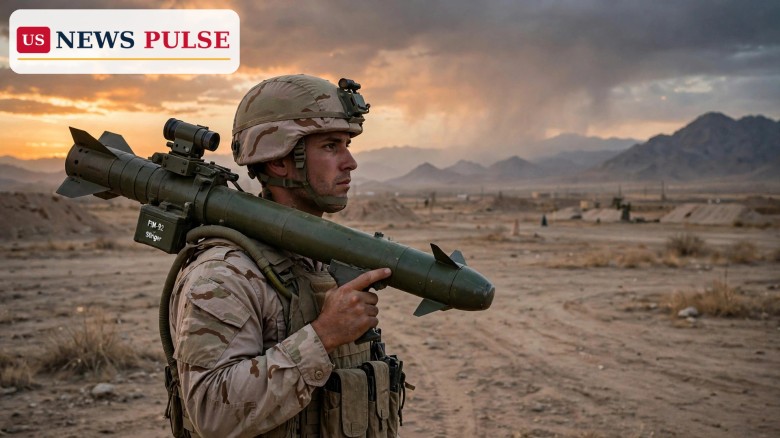
The designations target a procurement network that Washington says tried to arrange the purchase of man-portable air-defence systems, known as MANPADS, for Iran, using false end-users to hide the identity of the real buyer. One operator can carry and fire it, and it can bring down low-flying aircraft and helicopters.
The announcement did not say whether any missiles were actually delivered to Iran.
Key Points
- The State Department announced the sanctions on Wednesday, November 4, 2026, against two individuals and one company in Belarus, Russia and Nigeria.
- The targets are Mohammed Ali Tolibov, chief executive of Belarus-based Armoury Alliance; Alisher Domullodzhanov of Russia; and Nigeria-based Vanguard Tactical Supply Limited.
- The network allegedly tried to arrange the purchase of Chinese-origin MANPADS for Iran, using false end-users to disguise the real destination of the weapons.
- The action was taken under Executive Order 13949, which targets conventional arms activities, and follows earlier designations on May 8, June 10 and July 15, 2026.
- Officials did not say that any missiles were successfully delivered to Iran, and the announcement establishes no completed transfer.
What Happened
The State Department announced on Wednesday, November 4, 2026, that it had designated two individuals and one entity for their involvement in Iran's procurement of man-portable air-defence systems. The three targets are spread across three countries on three continents: Belarus, Russia and Nigeria.
The first is Mohammed Ali Tolibov, identified as the chief executive of Armoury Alliance, a company based in Belarus. The second is Alisher Domullodzhanov, based in Russia. The third is Vanguard Tactical Supply Limited, a company based in Nigeria. Under the sanctions, any property they hold in the United States is blocked, and Americans are generally barred from doing business with them.
Background: Iran's Arsenal and a War in Its Ninth Month
The sanctions land as the war between the United States and Iran enters its ninth month. The conflict began on February 28, 2026, and has since spread from direct strikes on Iranian military sites to a grinding campaign against shipping in the Strait of Hormuz, the narrow waterway carrying a large share of the world's traded oil.
Iran's air defences have been a central target of the war. American strikes have hit air-defence batteries, radar sites and missile facilities, and Tehran has been working to rebuild its arsenal even as the fighting continues. Shoulder-fired missiles would not replace the large air-defence systems Iran has lost, but they would give Iranian forces and allied militias a cheap, mobile way to threaten helicopters, transport aircraft and drones flying at low altitude.
US Sanctions Iran MANPADS Network: How the False End-User Scheme Worked
At the heart of the case is a familiar pattern in the illicit arms trade. A buyer who cannot purchase weapons openly because of sanctions finds a broker in a third country. The broker approaches a supplier and presents paperwork naming an end-user who is not the real buyer. If the paperwork passes inspection, the weapons move. Only later, if at all, does the true destination come to light.
That is what the State Department says happened here. The network allegedly sought Chinese-origin MANPADS for Iran, using false end-users to conceal the deal. The three targets span the chain: a company chief in Belarus, an individual in Russia and a company in Nigeria. By spreading the work across several countries, a procurement network can make each step look ordinary and keep any single government from seeing the whole picture.
Reactions
The State Department framed the designations as a warning to anyone else tempted to help Tehran rearm, saying the action would "close off more of the channels Tehran uses to try to rebuild its arsenal and raise the risk for third-country brokers and suppliers." There was no immediate public response from the people and the company named, and none of them has been reported as commenting on the allegations. Iran has not commented publicly on this specific designation, and China, whose weapons the network allegedly sought to buy, has not responded to the claim. The governments of Belarus, Russia and Nigeria also had no immediate comment.
Why It Matters
First, the sanctions show that Washington believes Iran is still actively trying to buy new air-defence weapons nine months into a war that has already damaged much of its arsenal. That suggests Tehran expects the fighting to continue, or at least wants the ability to defend itself if it does.
Second, the case shows how far Iran's procurement network reaches. The three targets are in Belarus, Russia and Nigeria, three countries with no obvious connection to one another beyond the alleged scheme. That spread shows sanctions enforcement is a global exercise.
Third, the weapon at the centre of the case is a particular worry for American planners. Shoulder-fired missiles threaten the helicopters and transport aircraft that American forces rely on, and they are the kind of weapon that can be passed on to allied militias. Keeping them out of Iran's hands is therefore about what comes after the war as well.
What Happens Next
The immediate effect of the designations is financial. Any assets the three targets hold in the United States are frozen, and American companies and individuals are barred from dealing with them. The bigger effect is commercial: banks and suppliers that do business in dollars will now treat the three names as toxic.
Whether the designations stop the procurement effort is another question. Brokers who lose one channel often look for another, and American officials have described the effort as a rolling one, with new names added as investigators map the network. The wider question is whether the sanctions track and the diplomacy track can move together. If the Qatar-mediated talks succeed, the need for new weapons may fade. If they fail, the fight over Iran's arsenal will only intensify.
Frequently Asked Questions
What are MANPADS?
MANPADS are man-portable air-defence systems, shoulder-fired missiles designed to shoot down low-flying aircraft and helicopters. They are small enough for one person to carry and fire.
Who was sanctioned on Wednesday?
Two individuals and one company: Mohammed Ali Tolibov, chief executive of Belarus-based Armoury Alliance; Alisher Domullodzhanov of Russia; and Nigeria-based Vanguard Tactical Supply Limited.
Did Iran actually receive any missiles?
The State Department's announcement does not establish that any weapons were successfully delivered. It says the network sought to facilitate the procurement of Chinese-origin MANPADS for Iran, using false end-users.
What is Executive Order 13949?
It is the US authority for targeting conventional arms activities connected to Iran.
What happens to the people and company named?
Any property they hold in the United States is blocked, Americans are barred from dealing with them, and banks worldwide will generally avoid them for fear of secondary sanctions.
Related coverage: US Sanctions Iran Shadow Fleet Network in India Over False Flag Fraud; Trump Extends Iran National Emergency for Another Year as Sanctions Stay in Force.
Leave a Comment