


 | Today's Date:



Congo Ebola Outbreak Passes 11,000 Cases, Now Second-Deadliest on Record
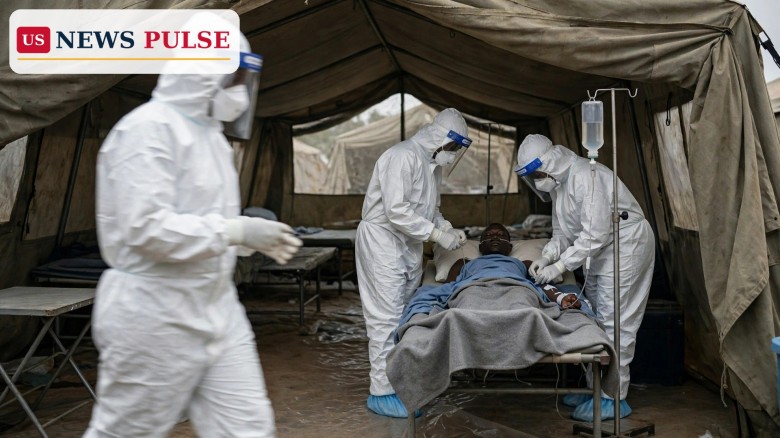
The Congo Ebola outbreak has passed 11,000 confirmed infections, government data released on Tuesday showed, making it the second-deadliest Ebola epidemic in history. The figures — 11,042 cases and 5,387 deaths — mark another grim milestone in the widest-spreading Ebola outbreak Africa has seen, and one for which there is still no approved vaccine or treatment.
Key Points
- Government data released on Tuesday, November 10, 2026, put confirmed Ebola infections in the Democratic Republic of Congo at 11,042, with 5,387 deaths.
- The toll is up from 10,910 cases and 5,234 deaths a day earlier — a rise of 132 cases and 153 deaths in one day.
- The outbreak is now the second-largest and second-deadliest Ebola outbreak on record, behind only the 2014-2016 West African epidemic.
- Eight of Congo's 26 provinces are affected, with Ituri province accounting for about 70 percent of all cases recorded so far.
- The outbreak is caused by the rare Bundibugyo species of the virus, for which there are no approved treatments or vaccines.
What Happened
The new figures were released by the Congolese government on Tuesday, November 10, 2026, and reported by Reuters. They show the outbreak still growing steeply more than six months after it was declared in mid-May 2026, even as health workers struggle to reach some of the worst-hit areas.
The milestone carries a stark historical weight. With 11,042 cases and 5,387 deaths, the outbreak has overtaken every Ebola epidemic except the 2014-2016 West African epidemic, which infected more than 28,600 people and killed more than 11,000. It is already the largest and deadliest Ebola outbreak in Congo's own history. The overall fatality rate stands at about 49 percent — close to one death for every two confirmed infections — and many people are dying outside treatment centres, where care can improve a patient's chances even without a specific cure.
Background and Context
The outbreak was declared in mid-May 2026, and the World Health Organization declared it a public health emergency of international concern that same month — the highest level of alarm the agency can sound. The virus behind it is the Bundibugyo species, a rarer form of Ebola than the Zaire species behind most previous outbreaks, and one for which no vaccine or approved treatment exists.
Several forces have sped the spread: detection was delayed in the early weeks, armed conflict in eastern Congo has made it dangerous for health teams to reach some areas, and strained health services have struggled to trace contacts and isolate patients. As a result, the disease has now been reported in East, Central and West Africa — the widest geographic spread of any Ebola outbreak on the continent.
Congo Ebola Outbreak: What the New Numbers Mean
Eight of Congo's 26 provinces are now affected, but the burden is heavily concentrated: Ituri province accounts for about 70 percent of cumulative cases, while North Kivu has become the main source of new notifications — and North Kivu is also one of the regions most affected by armed conflict, where health workers face the greatest danger.
The numbers also show the limits of the current response. With no approved vaccine or treatment for the Bundibugyo species, the fight depends on the basics: finding cases early, tracing their contacts, isolating the sick, and giving supportive care. Many deaths occurring outside treatment centres suggest that too many patients are still being found too late, or are never reaching care at all.
Reactions and Response
The World Health Organization's emergency declaration in May put the outbreak on the highest international footing. Since then, the response has run into the same obstacles again and again: conflict, difficult terrain, and communities that are hard to reach or wary of outsiders.
The strain on health workers has been visible in recent weeks. A British doctor who became infected while working on the epidemic in the Democratic Republic of Congo was evacuated to London for treatment at the Royal Free Hospital, arriving on November 5. Days earlier, an attack by militants linked to Islamic State on a village in North Kivu killed at least 33 people and sent Ebola patients fleeing from a clinic, underlining how violence and disease are feeding each other in the east of the country.
Why It Matters
This outbreak matters for three reasons. First, it is now the second-deadliest Ebola epidemic in history, and the deadliest ever in the country where the virus was first identified. Second, it has spread further across Africa than any Ebola outbreak before it, appearing in East, Central and West Africa — a reminder that the virus is not a local problem but a continental one. Third, it is caused by a species of the virus for which medicine has no approved answer, leaving health workers to fight it with isolation, contact tracing and supportive care alone.
The combination is dangerous: a fast-growing outbreak, a virus with no vaccine, conflict zones blocking the response, and cases across three regions of Africa. Without a major change in the response, the numbers will keep climbing — and the risk of the virus reaching new areas will keep growing.
What Happens Next
The immediate question is whether the response can catch up with the spread. Health officials will be watching North Kivu, now the main source of new cases, and Ituri, where most infections have occurred, for any sign that the daily counts are slowing. Faster detection, wider contact tracing and more treatment beds are the priorities, along with reaching the patients who are still dying outside care.
Research is also under way: a trial launched in late October in Bunia is testing vaccines against the Bundibugyo species, but no approved product is available yet. For now, the outbreak's course depends on the basic public health work that has contained Ebola before — done faster, and where armed conflict makes it hardest.
Frequently Asked Questions
How many Ebola cases are there in Congo now?
Government data released on November 10, 2026, put confirmed cases at 11,042, with 5,387 deaths — up from 10,910 cases and 5,234 deaths a day earlier.
Is this the worst Ebola outbreak ever?
It is the second-largest and second-deadliest on record, behind the 2014-2016 West African epidemic (more than 28,600 cases, more than 11,000 deaths), and the largest and deadliest in Congo's history.
Why is there no vaccine for this outbreak?
The outbreak is caused by the rare Bundibugyo species of the Ebola virus, for which there are no approved treatments or vaccines. A trial testing vaccines began in Bunia in late October.
Where is the outbreak spreading fastest?
Ituri province accounts for about 70 percent of all cases so far, while North Kivu is now the main source of new notifications. Eight of Congo's 26 provinces are affected.
What is the WHO doing about the outbreak?
The World Health Organization declared the outbreak a public health emergency of international concern in May 2026, its highest level of alarm, to coordinate the international response.
Related coverage: British doctor with Ebola evacuated from DR Congo to London; IS-linked militants kill at least 33 in DR Congo raid; Firm linked to Trump's sons won nearly $40m in federal Ebola contracts.
Leave a Comment