


 | Today's Date:



AI Music Awards Debut in Los Angeles as Xania Monet Sweeps Top Honours
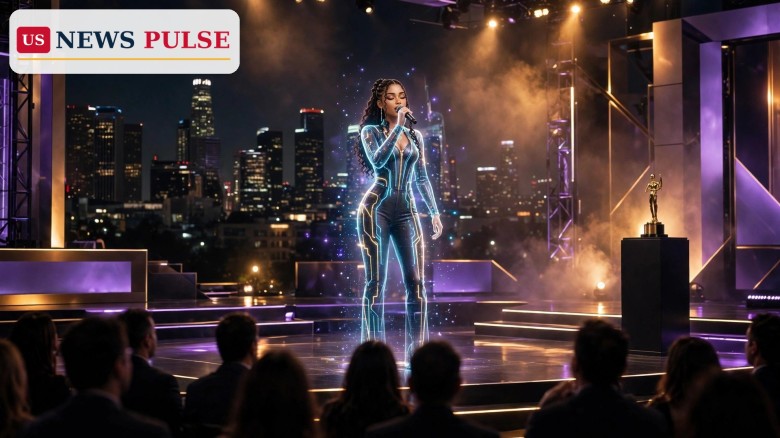
The first AI Music Awards in the United States handed its biggest prizes to a singer who does not exist. On Friday night in downtown Los Angeles, the AI-generated avatar Xania Monet swept artist, song and album of the year, in a ceremony that treated artificial intelligence not as a gimmick but as a new genre — and in a week when the music industry's fight over AI is still raging in court.
Key Points
- Xania Monet, an AI-generated avatar, won AI artist, song and album of the year at the first US AI Music Awards on Friday, November 13, 2026, in downtown Los Angeles.
- Her R&B song "How Was I Supposed to Know?" was the first by an AI-based act to earn a spot on one of Billboard's radio charts.
- Monet was created by Telisha "Nikki" Jones, who wrote all of the lyrics herself and used AI to set them to music.
- The winners were chosen by AI artists who belong to the Sonic Intelligence Academy, which runs AI music charts and tools that identify songs made with AI.
- The night came as record labels sue AI companies over copyrighted training material, while musicians warn AI could take work from human artists.
What Happened
The ceremony took place on Friday in downtown Los Angeles, the first awards show in the United States devoted entirely to music made at least partly with AI. Presenters and winners called AI-created music a new genre, one that still needs real artistry and hours of prompting.
The night belonged to Xania Monet. The AI-generated avatar took the three top honours — AI artist of the year, AI song of the year and AI album of the year — for "How Was I Supposed to Know?", an R&B song that Billboard said was the first by an AI-based act to earn a place on one of its radio charts.
Monet was created by Telisha "Nikki" Jones, who wrote every lyric herself before turning to AI to build the music around them. On the red carpet before the ceremony, Jones said the moment felt like the start of something permanent. "I just feel like AI music is a new thing that people just have to get used to," she said. "I don't see it going anywhere anytime soon."
Background and Context
AI's role in music goes back further than most people realise. Experiments with machine-made music can be traced back to the 1950s. But the latest wave of generative AI, capable of producing full songs in minutes, has divided the industry in a way nothing before it has.
On one side are the creators who see a tool. Many of Friday's nominees said they had stories to tell but did not have all of the skills needed to put them to music. AI, they said, helped bring those songs to life, and they hoped the awards would show audiences that there are humans behind AI music.
On the other side are the labels and musicians who see a threat. Record labels have sued AI companies including Anthropic and OpenAI, arguing that they are illegally using copyrighted works to train their models. The Elvis Presley estate has also filed a lawsuit. The companies say they are protected by the "fair use" doctrine in US copyright law, which allows unlicensed use in some cases. Musicians worry AI blocks human artists and takes work from producers, singers, engineers and songwriters.
AI Music Awards: A New Genre or a New Threat?
The ceremony's central claim was that AI music is a genre, not a shortcut. Human presenters and winners repeated the point through the night: behind every AI voice and AI arrangement is a person making choices — writing lyrics, shaping a sound, spending hours on prompts to get a single song right.
That argument matters because the industry's legal fight turns on it. If AI music is a creative tool in human hands, its defenders say, it belongs on the same stages and charts as any other music. If it is a machine copying the work of others, its critics say, it belongs in court.
Reactions and Quotes
The night's most quoted line came from music producer Drake Murphy, who presented the award for best AI hip-hop song. "In a world where everybody calls AI fake, the human behind it is real," he said.
Jones, accepting on Monet's behalf, struck a similar note about permanence, saying AI music was "a new thing that people just have to get used to" and that she did not see it going "anywhere anytime soon".
Nominee J. Frequency pushed back on the idea that AI music is easy. "A lot of things we do behind the scenes is hard work, contrary to popular belief," he said. "Art is art, and I think this is just another expression of that."
Why It Matters
The awards are a milestone because they give AI music something it has not had before: its own institution. A chart breakthrough can be dismissed as a novelty. A ceremony with categories, presenters and a red carpet is harder to ignore.
That matters for the lawsuits too. Courts and lawmakers deciding whether AI training is fair use, and whether AI voices need consent, will be watching how audiences and the industry treat the music itself. A genre with fans, awards and chart hits is a different legal and cultural question from a laboratory demo.
What Happens Next
The test now is whether the awards return — and whether the industry's legal fight changes the rules before they do. The lawsuits by the record labels and the Elvis Presley estate are still working through the courts, and the fair-use question at their centre has no answer yet. For Jones and the other winners, the next step is simpler: more music. Monet's chart breakthrough has already put an AI act on the radio, and the awards have put the whole field on a stage. The question is how long the rest of the industry takes to join it there.
Frequently Asked Questions
Who won the top awards at the AI Music Awards?
Xania Monet, an AI-generated avatar, won AI artist of the year, AI song of the year and AI album of the year at the first US ceremony.
What song did Xania Monet win for?
"How Was I Supposed to Know?", the first song by an AI-based act on a Billboard radio chart.
Who created Xania Monet?
Telisha "Nikki" Jones, who wrote all of the lyrics herself and used AI to set them to music.
Why is AI music controversial?
Labels have sued AI firms over copyrighted training material, and musicians fear AI takes their work.
Who chose the winners?
AI artists from the Sonic Intelligence Academy, which runs AI music charts.
The awards come as the industry's legal fight over AI music continues. Read more: Eminem's Publisher and Elvis Estate Sue AI Music Generator Suno in Twin Copyright Lawsuits Seeking Over $41 Million. The AI boom is also reshaping the wider tech world: Anthropic IPO About Six Times Oversubscribed in Largest Stock Debut Ever.
Leave a Comment